What is the Best Version of the Bible for Beginners?
What is the Best Version of the Bible for Beginners?
Choosing your first Bible can feel overwhelming. With so many translations available, it's natural to wonder which one is right for you. This guide will help you navigate the options and find a version that suits your needs as a beginner. We'll explore different translation philosophies and their impact on readability, helping you make an informed decision.
The key to choosing a Bible lies in understanding the translation spectrum. This spectrum ranges from translations that prioritize word-for-word accuracy (formal equivalence) to those that prioritize conveying the meaning in a natural and understandable way (dynamic equivalence). Understanding this spectrum is crucial for selecting a version that's both accurate and accessible.
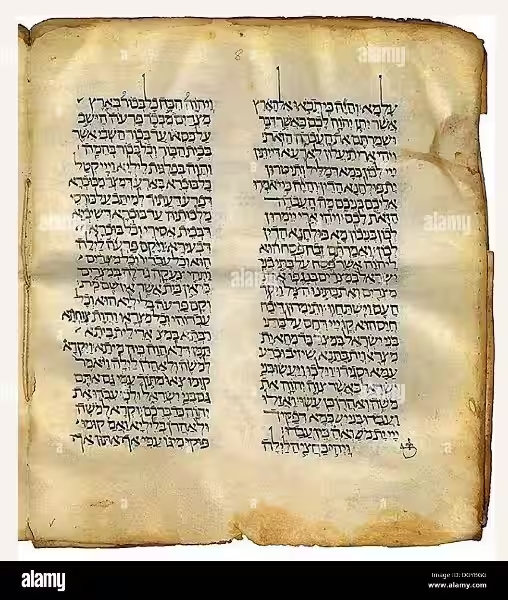
At one end of the spectrum, we find interlinear Bibles. These provide a word-for-word translation alongside the original Hebrew, Aramaic, and Greek texts. While incredibly useful for scholars and those studying biblical languages, they are not ideal for casual reading. They're dense and require a significant knowledge of ancient languages to fully understand.
On the other end of the spectrum are paraphrase Bibles. These aren't direct translations but rather retellings of the biblical text. While incredibly readable, these versions, such as The Message, reflect the author's interpretation and should be used cautiously. They are excellent for getting a general idea of the story, but for in-depth study, a more literal translation is recommended. They can serve as a great starting point, sparking your interest, but shouldn't be the only version you use.
Finding Your Place on the Spectrum
Between these extremes lie a vast array of translations, each with its own approach to balancing accuracy and readability. Some popular examples include:
English Standard Version (ESV): This translation prioritizes textual accuracy, resulting in a more literal, sometimes less fluid reading experience. It's great for detailed study and comparison with other translations but might be challenging for new readers. It's known for its consistent use of masculine pronouns, even when the original text might allow for a more gender-neutral reading.
King James Version (KJV): Historically significant and beautiful in its prose, the KJV utilizes archaic language, making it challenging for modern readers. While its textual accuracy is respectable, its language barrier means it's often not recommended for beginners. Its beauty and historical significance, however, are undeniable.
New Revised Standard Version (NRSV): This translation aims for a balance between accuracy and readability, making it a popular choice for both study and devotional reading. It's widely used in many North American churches.
New International Version (NIV): The NIV strikes a strong balance between accuracy and readability, making it a very popular choice for beginners. It's considered a good middle ground, accessible yet retaining a high degree of fidelity to the original texts.
New Living Translation (NLT): The NLT sits firmly on the meaning-focused side of the spectrum. It prioritizes clarity and contemporary language, making it exceptionally accessible for beginners. While sacrificing some nuance for readability, its ease of understanding makes it a great way to engage with the Bible for the first time.
The translation spectrum is a valuable tool, but other factors should also inform your choice.
Readability and Modern Language
For beginners, readability is paramount. A version with clear, contemporary language will significantly enhance your understanding and enjoyment. The NLT and NIV excel in this area, offering a smooth and engaging reading experience. The ESV is more challenging but still accessible to most readers.
Translation Philosophy: Formal vs. Dynamic Equivalence
As mentioned earlier, formal equivalence (like the ESV) prioritizes a word-for-word translation, while dynamic equivalence (like the NLT) prioritizes conveying the meaning naturally. Beginners often find dynamic equivalence easier to understand. However, understanding the nuances of formal equivalence can be very rewarding as your study progresses.
Intended Audience
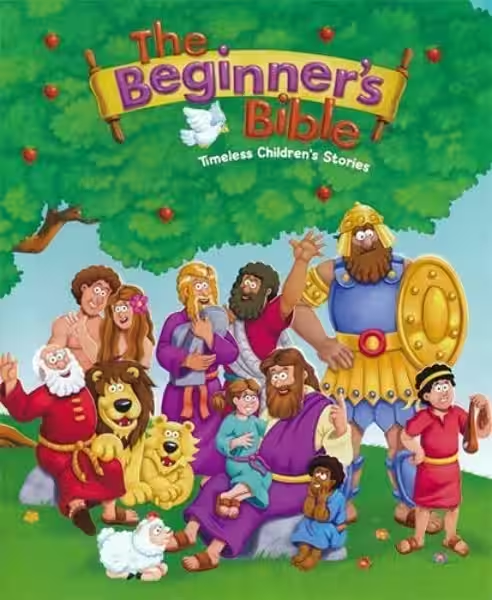
While many translations are suitable for general audiences, some are specifically tailored for children or young adults. These offer simplified language and explanations, but they might lack the depth needed for more in-depth theological study later on. For most adult beginners, a standard translation like the NIV or NLT is a great place to start. This allows you to naturally grow into a deeper understanding.
Access and Format
Finally, consider the format. Many translations are available in print, online, as apps, and as audio Bibles. Choosing a format that suits your reading habits and preferences can make a big difference in whether you stick with your Bible reading plan.
The Best Version for You
Ultimately, the "best" version is the one that you will consistently read and engage with. There is no universally perfect answer. Experiment with a few different versions using free online resources or Bible apps before committing to a purchase. Start with the NIV or NLT, known for their readability, and see if they resonate with you. If you find yourself drawn to a more literal translation later, the ESV is an excellent choice. The most important thing is to begin your journey of faith and discovery.
Frequently Asked Questions: Choosing Your First Bible
What is the best Bible version for beginners?
There's no single "best" Bible version for beginners, as the ideal choice depends on individual reading goals and preferences. However, versions prioritizing readability and clarity, such as the New International Version (NIV) and the New Living Translation (NLT), are frequently recommended. The NIV offers a good balance between accuracy and easy understanding, while the NLT prioritizes clarity, sometimes sacrificing some nuance for accessibility.
What are the key factors to consider when choosing a Bible?
Several factors influence the choice of Bible version:
Readability: Beginners benefit from translations using contemporary language. Consider how easily you understand the text.
Translation Philosophy: Formal equivalence translations (like the English Standard Version, ESV) aim for word-for-word accuracy, while dynamic equivalence translations (like the NLT) prioritize conveying meaning naturally.
Intended Audience: Some translations are specifically designed for children or young adults, while others cater to more mature readers.
Access and Format: Consider whether you prefer print, online, app, or audio versions.
Should I start with a literal or a more paraphrased translation?
Literal translations, like the ESV, strive for word-for-word accuracy, potentially making them challenging for beginners. Paraphrased translations, like The Message, prioritize conveying the meaning in contemporary language, but they are interpretations and may not represent the original text as precisely. For beginners, a balance like the NIV or the clearer NLT is usually a better starting point. More literal translations can be explored later.
What is the difference between the NIV, NLT, and ESV?
NIV (New International Version): Strikes a balance between accuracy and readability, making it a popular choice for a wide range of readers, including beginners.
NLT (New Living Translation): Prioritizes clarity and ease of understanding above all else. It's excellent for beginners but may sacrifice some nuances of the original text.
ESV (English Standard Version): Focuses on textual accuracy and is a good choice for those wanting a more literal translation, although it might be more challenging for absolute beginners due to its more formal language.
Are there Bibles specifically for children or young adults?
Yes, many publishers offer Bibles specifically tailored for younger audiences with simplified language, illustrations, and study aids. These are helpful for introducing children to the Bible, but for most adult beginners, a standard translation like the NIV or NLT serves as a better foundation for continued study.
How can I access different Bible versions to try them out?
Many Bible versions are available online for free through websites and apps. This allows you to sample different translations before committing to purchasing a physical copy. This is a great way to find a version that resonates with you and encourages continued engagement with the text.