Anoint in Hebrew: Unpacking the Richness of משח (mashach)
Anoint in Hebrew: Unpacking the Richness of משח (mashach)
Understanding the Hebrew word for "anoint" requires more than a simple translation. The seemingly straightforward act of applying oil holds layers of profound religious and cultural significance within the Hebrew Bible. This article delves into the various Hebrew words and their nuances to unveil the multifaceted concept of anointing.
The Core Verb: משח (mashach) – To Smear, to Anoint
The primary Hebrew root word associated with anointing is משח (mashach) (Strong's 4886). While literally translating to "to smear" or "to grease," its implications far surpass the simple physical act. The application of oil, often infused with fragrant spices, was a ritualistic action, a symbolic gesture with deep spiritual meaning.
Think of it not merely as applying a substance, but as a sacred act of consecration. The oil itself wasn't merely a lubricant; it represented a divine presence, a conduit for blessing and empowerment. This is crucial for understanding the word's use in various biblical contexts.
Derivatives of משח (mashach): Expanding the Meaning
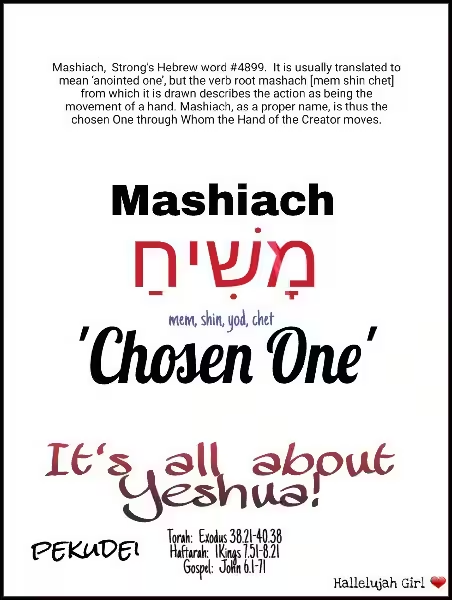
Several words derive from the root משח (mashach), further illuminating the concept of anointing. One key derivative is מָשִׁיחַ (mashiach) (Strong's 4899), meaning "anointed one." This is the very word from which we get "Messiah," highlighting the profound significance of anointing in conferring a special status or role. The Messiah, anointed by God, was designated for a specific, divinely ordained purpose.
Another derivative, מִשְׁחָה (mishchah) (Strong's 4888), refers to the anointing substance itself – the oil, the balm, the fragrant mixture. This emphasizes the material component of the ritual, reminding us that the physical act was integral to the spiritual experience. The very composition of this oil, often including precious ingredients, added to its sacred nature.
Beyond משח (mashach): Other Verbs of Anointing
The act of anointing wasn't always described solely with משח (mashach). Other verbs contribute to a richer understanding of the ritual. For instance, סוּך (suwk/suk) (Strong's 5480, 5480a), meaning "to pour," adds another layer. This verb suggests a more fluid action, perhaps emphasizing the libation aspect of the anointing, pouring the oil as an offering.
The verb בָּלַל (balal) (Strong's 1101), meaning "to mingle, mix," hints at the careful preparation of the anointing oil. The blending of different oils and spices could have symbolized the unification of various elements, or the complexity of the divine nature itself. This process was not a casual one; it likely required specific knowledge and ritualistic precision.
The Act of Pouring: יָצַק (yatsaq)
Another significant verb is יָצַק (yatsaq) (Strong's 3332), which means "to pour, cast, flow." This emphasizes the act of pouring the oil, perhaps in a more deliberate and controlled manner than the broader pouring suggested by סוּך (suwk/suk). The specific verb used might reflect the context of the anointing, highlighting the intention and the manner in which it was performed.
The Anointing Oil: Ingredients and Significance
The type of oil used in anointing also held significance. שָׁ֫מֶן (shemen) (Strong's 8081), simply "oil," is frequently used, but the specific type of oil could vary. יִצְהָר (yitshar) (Strong's 3323), meaning "fresh oil," suggests a higher quality, potentially indicating a greater sanctity or purity for sacred use.
The addition of aromatic components further enhanced the ritual. בְּשָׂמִים (bosem) (Strong's 1314), "spice, balsam," and סַמִּים (samim) (Strong's 5561), "spice (used in incense)," were commonly included, adding to the sensory experience and emphasizing the sacred nature of the occasion. The fragrant essence served to elevate the ritual, making it a multi-sensory experience.
The effect of anointing extended far beyond the physical application of oil. Words like קָדַשׁ (qadash) (Strong's 6942), "to be set apart or consecrated," and נֵ֫זֶר (nezer) (Strong's 5145), "consecration, crown," highlight the ritual's purpose: consecration. Anointing wasn't just about applying a substance; it was about setting individuals or objects apart for a sacred purpose.
The act bestowed authority and power. Words like כָּהַן (kahan) (Strong's 3547), "to act as a priest," and נָגִיד (nagid) (Strong's 5057), "a leader, ruler, prince," illustrate how anointing established sacred office and leadership. It wasn't a mere formality; it was a transformative act, imbuing the anointed with a divine mandate.
Conclusion: A Multifaceted Ritual
The Hebrew Bible's treatment of "anoint" reveals a rich and complex concept far exceeding a simple act of applying oil. The various words – משח (mashach), מָשִׁיחַ (mashiach), מִשְׁחָה (mishchah), and others – along with the descriptions of the oils and spices used, and the verbs detailing the act itself, all paint a picture of a multifaceted ritual signifying consecration, the bestowal of authority, and the setting apart of individuals and objects for sacred purposes. Understanding these subtleties is essential for comprehending the depth and richness of the Hebrew Bible's narrative.
Frequently Asked Questions: Anointing in Hebrew
What is the most common Hebrew word for "anoint"?
The most frequent Hebrew verb for "anoint" is מָשַׁח (mashach) (Strong's #4886). While literally meaning "to smear" or "to grease," it captures the physical act of applying oil or a similar substance. However, the true meaning of anointing in Hebrew goes far beyond this simple definition, encompassing significant religious and cultural weight.
Does the meaning of "anoint" in Hebrew extend beyond the physical act?
Absolutely. While מָשַׁח (mashach) describes the physical action, the significance of anointing in the Hebrew Bible is deeply spiritual and ritualistic. It symbolizes the introduction of sacred influence, a divine power, or a holy emanation. It's viewed as a ritualistic cleansing, removing negative influences.
Are there other Hebrew verbs used to describe anointing?
Yes. Several other verbs offer nuanced meanings depending on the context. For example, למשוח בשמן (lim'shoach b'shemen) means "to anoint with oil," specifying the substance used. Other options like לִמְשׁוֹחַ (lim'shoach), לִנְסוֹך (lin'sokh), לִמְרוֹחַ (lim'roach), לָסוּך (lasukh), and לְהַסִיך (l'hasiykh) provide further variations based on the type of substance, the method of application, or the specific ritual involved.
What are some related Hebrew nouns associated with anointing?
מָשִׁיחַ (mashiach) (Strong's #4899): This is the noun form of מָשַׁח (mashach), meaning "anointed one," the root of the word "Messiah." It highlights the special status conferred through anointing.
מִשְׁחָה (mishchah) (Strong's #4888): This noun refers to the anointing substance itself, usually oil, emphasizing the material aspect of the ritual.
What kinds of substances were used in anointing?
The most common substance was שָׁ֫מֶן (shemen) (Strong's #8081), meaning "oil." Sometimes, יִצְהָר (yitshar) (Strong's #3323), "fresh oil," was used, possibly suggesting a higher quality or purity for sacred purposes. Aromatic ingredients like בְּשָׂמִים (bosem) (Strong's #1314), "spice, balsam," and סַמִּים (samim) (Strong's #5561), "spice (used in incense)," were frequently added, contributing to the sacred significance of the anointing oil.
What was the significance of the anointing ritual?
Anointing was a ritual of consecration (קָדַשׁ (qadash), Strong's #6942), setting individuals or objects apart for a sacred purpose. Words like נֵ֫זֶר (nezer) (Strong's #5145), "consecration, crown," further illustrate this. It was used to establish authority and sacred office, as evidenced by its connection to roles like כָּהַן (kahan) (Strong's #3547), "priest," and נָגִיד (nagid) (Strong's #5057), "leader, ruler, prince."
How can I learn more about the nuances of anointing in Hebrew?
Consulting resources like Strong's Hebrew Concordance provides detailed information on the various Hebrew words and their contextual meanings. Studying biblical texts where anointing is mentioned will also offer further insights into this rich and multifaceted ritual.