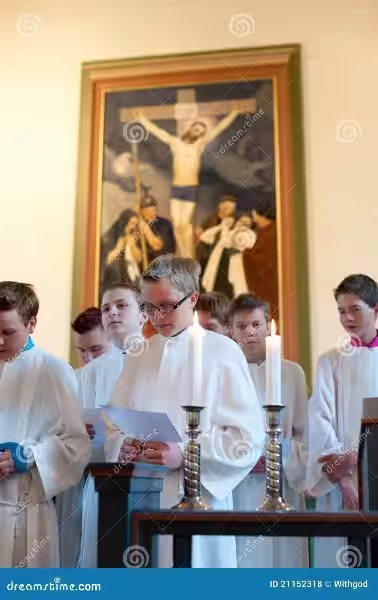
Confirmation in the Lutheran Church: A Reaffirmation and a Beginning
Confirmation in the Lutheran Church: A Reaffirmation and a Beginning
Confirmation in the Lutheran Church, sometimes called "Affirmation of Baptism," is a significant rite with a rich history and evolving understanding. It's a moment of personal commitment, but its meaning and implementation vary across congregations and even denominations. This article will explore the purpose, practices, and evolving interpretations surrounding confirmation within the Lutheran tradition.
The primary purpose of confirmation is the reaffirmation of the baptismal vows. At baptism, parents and godparents promise to raise the child in the Christian faith. Confirmation provides an opportunity for the individual, usually a teenager, to consciously and publicly embrace those promises made on their behalf. This isn't merely a rote repetition; it's a personal acknowledgment of faith and a commitment to live a life guided by Christian values.
This process of reaffirmation isn't haphazard. It typically involves a period of preparation, including classes that delve into Lutheran theology, scripture study, and opportunities for increased engagement within the church community. These classes aim to equip young people with the knowledge and understanding necessary to confidently make their affirmation of faith. The goal is to move beyond passive participation and into active engagement with one's faith.
Beyond Repetition: Confirmation as a Catalyst for Growth
The significance of confirmation extends far beyond a simple recitation of vows. Many believe its true value lies in its potential to act as a catalyst for meaningful engagement with faith in everyday life. The teenage years are a time of significant personal and spiritual growth, and confirmation ideally supports this journey. It encourages young people to integrate their faith into their schools, workplaces, social circles, and relationships, helping them navigate the challenges and opportunities of adulthood with a strong foundation in faith. A successful integration of faith into everyday life, as seen in examples such as individuals pursuing creative Christian ministry, exemplifies the transformative potential of a meaningful confirmation experience.
A Shifting Historical Perspective
Historically, confirmation held a more formalized role, marking a young person's transition into full membership within the church, conferring rights such as voting privileges. However, with the increasing practice of earlier communion, the unique significance of confirmation as a marker of full membership has diminished.
Despite this shift, the core intention remains: to provide a framework for ongoing faith formation. The challenge, many argue, isn't with the rite itself, but with how congregations approach it. Instead of viewing confirmation as a conclusion, it should be understood as a launching point – a “starting gate” rather than a “finish line” – for a lifetime of active faith engagement. The ideal outcome is not just the public declaration of faith, but the empowered and informed living out of those promises in all aspects of the confirmand's life.
Variations in Practice and Interpretation
While the core purpose of confirmation remains consistent across Lutheran denominations, the specific practices and interpretations can vary significantly. There's no universally accepted Lutheran definition or approach, unlike some other Christian traditions. This lack of uniformity reflects the Lutheran emphasis on the freedom of conscience and the diversity of interpretations within the faith.
Age and Instruction
The age at which confirmation takes place varies widely. Some congregations introduce children to the Eucharist at a younger age (around 7) and begin confirmation instruction several years later, while others start instruction around ages 12-14, with confirmation typically occurring around age 14 or during 8th grade (as is common in some LCMS synods). The length and content of the instructional period naturally vary accordingly.
The Role of the Pastor
A significant difference between Lutheran confirmation and some other traditions, such as Anglicanism, is the role of the pastor. In Lutheran churches, pastors, not solely bishops, can perform the confirmation rite, even in those churches that claim apostolic succession. This underscores the emphasis on the local congregation as the primary context for faith formation and practice. The discussion regarding confirming/chrismating at baptism, as seen in some Eastern Orthodox traditions, remains a topic of ongoing theological and pastoral discussion within Lutheranism.
Confirmation and Lutheran Theology
The confirmation instruction typically covers key elements of Lutheran theology, including:
The Ten Commandments: Providing a moral framework for living.
The Apostles' Creed: Articulating core beliefs about God and salvation.
The Lord's Prayer: Teaching how to approach God in prayer.
The Sacraments: Emphasizing the importance of baptism and communion.
These core elements form the basis for a deeper understanding of faith and provide a framework for living a life committed to Christ. The aim is not just intellectual understanding but also the integration of these beliefs into daily life.
Confirmation: A Continuing Journey of Faith
Confirmation, therefore, is not a singular event but a significant milestone on a continuing journey of faith. It's a public profession of faith built upon the foundation of baptism and years of instruction, intended to empower young people to actively engage with their faith in all aspects of their lives. The varied practices and interpretations within Lutheranism reflect the vibrant and evolving nature of the faith itself, emphasizing the ongoing nature of spiritual growth and personal commitment to Christ. The truly effective confirmation experience is one that inspires lifelong engagement with the faith, empowering individuals to live out their baptismal promises in the world.
What is Confirmation in the Evangelical Lutheran Church in America (ELCA)?
Confirmation, often renamed "Affirmation of Baptism" in the ELCA, is a multifaceted process where individuals, typically teenagers, reaffirm the baptismal promises made on their behalf by parents and sponsors. It's not a single, universally defined rite, but a process involving preparation classes and increased participation in congregational life, aiming to equip young people to confidently embrace their faith.
What is the purpose of Confirmation?
The core purpose is the reaffirmation of baptismal promises. However, it's also seen as a catalyst for meaningful faith engagement in daily life, supporting young people as they navigate adulthood and integrate their faith into all aspects of their lives. Historically, it marked a transition to full congregational membership, but this significance has lessened with the practice of earlier communion. Ideally, confirmation serves as a starting point for lifelong faith engagement, not an end point.
What does Confirmation preparation involve?
Confirmation preparation usually involves classes focusing on key Lutheran theological elements such as the Ten Commandments, the Apostles' Creed, the Lord's Prayer, and the sacraments of Baptism, Confession, and Eucharist. It also often includes increased participation in the life of the congregation.
At what age does Confirmation typically occur?
The age of confirmation varies across congregations. Some begin instruction around ages 12-14, with confirmation occurring around age 14. Others introduce young children to the Eucharist earlier and then begin confirmation classes several years later. There's no single mandated age.
Unlike some traditions, Lutheran pastors, not solely bishops, can perform confirmation.
How does Confirmation differ from other traditions?
Unlike some traditions (like the Roman Catholic Church), there's no universally accepted Lutheran definition or approach to Confirmation. There is ongoing debate among Lutherans about its scriptural basis and its historical development. The practice of confirming/chrismating at baptism, similar to Eastern Orthodox traditions, is also a subject of ongoing discussion. Additionally, the significance of Confirmation as a rite of passage into full congregational membership has diminished in many ELCA congregations.
Is Confirmation a necessary step for full membership in the ELCA?
No. While Confirmation is a significant event for many Lutherans, it is not a requirement for full membership in the ELCA. Baptism is the foundational sacrament of membership.
What is the ideal outcome of Confirmation?
The ideal outcome is not simply the recitation of promises, but the empowered and informed living out of those promises in all aspects of the confirmand's life. It's about a mature, personal commitment to the faith, built upon prior baptism and instruction, and lived out within the context of the local congregation.