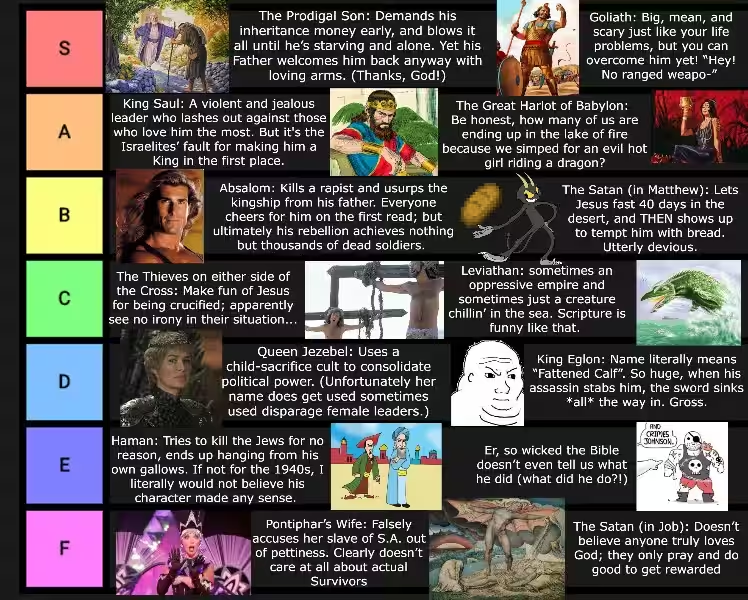
Evil People from the Bible: Exploring the Dark Side of Scripture
Evil People from the Bible: Exploring the Dark Side of Scripture
This article delves into the lives of ten individuals from the Bible often considered "evil," examining their actions, motivations, and the lasting consequences of their choices. We'll move beyond simple listings to explore the complex narratives behind their wickedness and understand the moral lessons embedded within their stories. Understanding these figures helps us grapple with the complexities of good and evil presented throughout scripture.
The Manipulative and the Betrayer: Delilah and Haman
Delilah: Betrayal for Personal Gain
Delilah, a Philistine woman, stands out as a master manipulator driven by personal greed. Her story, found in Judges 16, recounts her betrayal of Samson, the Israelite strongman, a figure blessed with extraordinary strength. Entranced by Philistine bribes, she relentlessly pressured Samson to reveal the secret to his power.
Ultimately, Delilah succeeded, leading to Samson’s capture, blinding, and eventual demise. Her actions highlight the devastating consequences of betrayal motivated by selfish ambition rather than loyalty or love. Delilah's story serves as a stark warning against the corrupting influence of greed and the destructive power of dishonesty.
Haman: Pride and Genocide
Haman, a high-ranking official in the Persian empire, provides a chilling example of unchecked pride and hatred. In the Book of Esther, his story unfolds as a plot of immense scale: the systematic annihilation of the entire Jewish population.
His deep-seated resentment stemmed from Mordecai, a Jew, refusing to bow down to him. This seemingly minor act of defiance ignited a rage that fueled Haman’s genocidal scheme. His ambition and hatred, however, were thwarted by Queen Esther's courageous intervention, leading to Haman's own swift and just execution. Haman's fate serves as a powerful reminder that pride often precedes a fall and that hatred can lead to catastrophic consequences.
The Reign of Wickedness: Jezebel, Abimelech, and Athaliah
Jezebel: Idolatry and Corruption
Jezebel, wife of King Ahab of Israel, represents a potent force of evil in the Old Testament. A Phoenician princess, she brought with her the worship of Baal, a pagan deity, leading to widespread idolatry and moral decay within the Northern Kingdom. Her influence corrupted the court and fostered an environment of wickedness and oppression.
Her machinations, including her role in the unjust seizure of Naboth’s vineyard (1 Kings 21), exemplify her ruthlessness and disregard for justice. Jezebel's legacy extends to her daughter Athaliah, who inherited her mother's cruelty and lust for power.
Abimelech, in the Book of Judges, embodies the dangers of unchecked ambition and violence. His ascent to power was marked by the brutal murder of his 70 half-brothers, a horrific act of fratricide. This act cemented his ruthless nature and disregard for human life.
His reign, characterized by tyranny and oppression, ended in a violent death, a fitting end for someone who rose to power through bloodshed. Abimelech's story serves as a cautionary tale about the destructive nature of ambition when divorced from morality and justice.
Athaliah: Usurpation and Tyranny
Athaliah, daughter of Jezebel and Ahab, inherited her parents' wickedness. Upon the death of her son, she seized the throne of Judah, eliminating the entire royal line to secure her rule. Her six-year reign was characterized by ruthless tyranny and the suppression of true worship.
Athaliah’s reign, however, eventually met its end, showcasing the ephemeral nature of power gained through violence and oppression. This illustrates the cyclical nature of evil and the eventual downfall of those who prioritize power over justice and morality.
The First Murderer and Other Notable Figures
Cain: Envy and Fratricide
Cain, the firstborn son of Adam and Eve, committed the first murder in human history. Driven by jealousy over God’s preference for his brother Abel, he killed him in a fit of rage. This act represents the earliest manifestation of human wickedness and underscores the destructive nature of envy and unchecked anger.
Cain's story serves as a profound exploration of the capacity for evil inherent in humanity, a stark reminder of the consequences of unchecked negative emotions. It also introduces the concept of divine judgment and the potential for repentance, even in the face of such a grave sin.
King Herod: Paranoia and Massacre
King Herod, a ruler known for his paranoia and cruelty, is infamous for the massacre of the innocents in Bethlehem (Matthew 2:16). Driven by fear of a prophesied rival, he ordered the slaughter of all male infants under two years old, an act of unspeakable violence.
Herod's story highlights the destructive nature of fear and unchecked power. His actions underscore the potential for cruelty and injustice when leaders prioritize their own interests over the well-being of their people.
The Pharaoh of the Exodus narrative embodies the defiance of God's authority and the oppression of God's chosen people. He subjected the Israelites to brutal slavery, refusing to release them despite numerous divine interventions. His stubborn heart led to the ten plagues and the ultimate demise of his army in the Red Sea.
Pharaoh's story underscores the consequences of rejecting God's will and acting with cruelty and injustice. His fate serves as a powerful testament to God's judgment against those who persecute His people.
Herodias and the Murder of John the Baptist: Manipulation and Revenge
Herodias, wife of Herod Antipas, is another example of a manipulative and vengeful figure in the Bible. She orchestrated the murder of John the Baptist, using her daughter's dance as a means to secure his death. Her actions showcase a thirst for revenge and a disregard for human life.
Her story reveals the destructive power of ambition, manipulation, and the devastating consequences of unchecked anger and resentment. It also serves as a reminder of the importance of moral integrity and resistance against unjust authority.
Satan: The Embodiment of Evil
Finally, Satan, the ultimate antagonist in the Bible, represents the embodiment of evil, constantly working against God and humanity. His schemes, ranging from the temptation of Adam and Eve to the persecution of the faithful, exemplify the forces of opposition to good and divine order.
Satan's presence in the biblical narrative highlights the constant struggle between good and evil, reminding us of the spiritual battles we face throughout our lives. His ultimate defeat, however, offers hope and reassurance that ultimately, good will triumph over evil.
In conclusion, these ten figures represent a range of evil, from personal betrayals to large-scale atrocities. Their stories serve as cautionary tales while also illuminating the complexities of human nature and the enduring power of faith in the face of adversity. Studying their lives helps us appreciate the moral lessons embedded within the biblical narrative and navigate the ethical challenges we encounter in our own lives.
Frequently Asked Questions about Evil People in the Bible
This FAQ section addresses common questions about the portrayal of "evil" characters in the Bible, drawing from various biblical narratives and interpretations. It's important to remember that the Bible presents a complex view of human nature and divine judgment, and interpretations of these figures can vary.
What makes a biblical character "evil"?
The Bible doesn't use a single definition of "evil." Characters are considered "evil" based on their actions and motivations relative to God's commands and the overall biblical narrative. Their deeds, often driven by pride, ambition, jealousy, or cruelty, contradict God's principles of love, justice, and mercy. This judgment considers the context of their time and culture, but ultimately measures their actions against divine standards.
Are all "evil" characters presented as irredeemably wicked?
No. While some characters represent unrestrained wickedness, others show potential for change or experience the consequences of their actions without explicit mention of repentance or forgiveness. The Bible emphasizes both human fallibility and God's capacity for mercy, but it also shows the real-world consequences of choices.
Why are stories about "evil" characters included in the Bible?
The Bible's inclusion of "evil" characters serves several purposes. These narratives offer cautionary tales, exploring the consequences of unchecked ambition, hatred, and disregard for God's law. They also demonstrate the power of divine justice and, in some cases, mercy. Furthermore, they provide a fuller picture of human nature, showcasing both its capacity for good and evil. Studying these figures helps us examine moral choices and their impact.
How do different interpretations affect our understanding of these characters?
Interpretations of biblical characters and their actions can vary depending on theological perspectives, cultural context, and the translation used. For instance, the understanding of Jephthah's sacrifice of his daughter differs significantly across interpretations. Considering multiple viewpoints helps develop a more nuanced understanding of the complexities within the biblical narratives.
What is the significance of Satan's role?
Satan, often depicted as the adversary, represents the ultimate force of evil opposing God and humanity. His role illustrates the constant struggle between good and evil, and his eventual defeat signifies the ultimate triumph of God. His actions are not presented as an excuse for human wrongdoing but rather as an explanation of the presence of temptation and opposition.
Are there any "evil" characters who experience redemption or forgiveness?
The Bible does not explicitly detail redemption for all characters deemed "evil." However, the overarching theme of God's mercy suggests the possibility of forgiveness, even for those who committed grave sins. The possibility of repentance and forgiveness is a central theme in many biblical narratives. While the text may not explicitly state redemption for a character, the broader narrative leaves open the possibility.