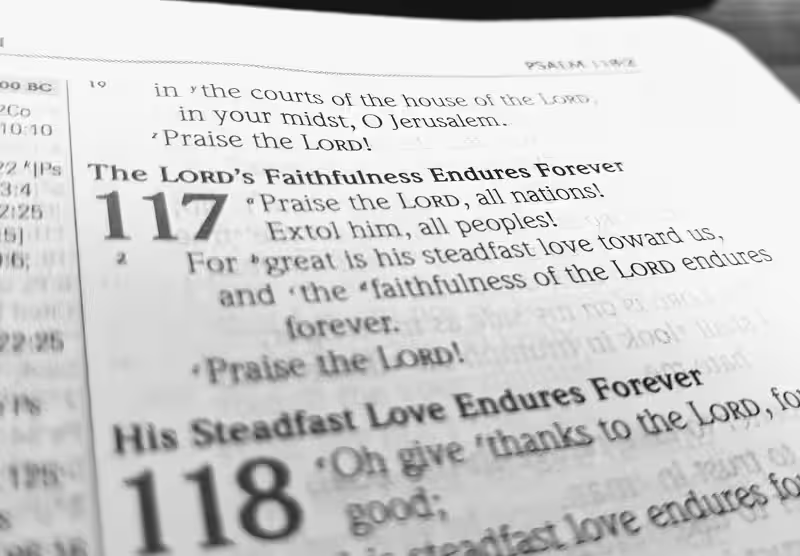
Finding the shortest chapter in the Bible might seem like a trivial pursuit, but exploring Psalm 117 reveals a surprisingly profound message packed into its concise verses. This seemingly insignificant passage, with its brevity, actually holds a significant position within the larger context of scripture, both thematically and structurally.
Psalm 117 is famous for its succinctness. Containing only two verses and a mere seventeen words in its original Hebrew, it's the shortest chapter in the entire Bible. This brevity, however, doesn't diminish its impact; instead, it enhances the power and memorability of its message. Imagine trying to memorize a lengthy passage—the sheer volume can be daunting. But this short chapter is easily committed to memory, making it readily accessible for reflection and meditation.
The impact of this brevity is further amplified by the powerful message it conveys: a universal call to praise God. This simple yet potent message transcends cultural and temporal boundaries, resonating with believers across ages and nations. Its concise nature allows its core message to be instantly grasped, leaving a lasting impression on the reader.
Psalm 117’s Strategic Placement
Beyond its length, the placement of Psalm 117 within the Bible is truly noteworthy. It sits precisely at the midpoint of the Bible (chapter 595 out of 1189 chapters), a remarkable positioning that underscores its symbolic importance. This central location suggests a pivotal role in the overarching narrative of the Bible, highlighting the centrality of praise and worship within the larger biblical story. It’s as if the Bible itself is emphasizing the importance of this simple, yet powerful, message of praise.
This deliberate positioning serves as a potent reminder of the importance of acknowledging God's unwavering love and faithfulness throughout our lives. The placement acts as a fulcrum, balancing the Old and New Testaments, and highlighting the continuous thread of praise that runs through the entirety of scripture.
Psalm 117 isn't the only exceptionally short chapter in the Bible. The Book of Psalms, in particular, boasts several remarkably concise chapters. In fact, the first four shortest chapters in the Bible are all found within the Book of Psalms. This isn't a coincidence; it likely reflects a deliberate stylistic choice emphasizing the power of concise and direct worship.
Other Concise Psalms
Psalm 134: With three verses, this psalm is a simple call to bless God.
Psalm 131: This psalm focuses on humility and trust in God, beautifully expressed in its brevity.
Psalm 133: A short but powerful meditation on the beauty of unity and brotherhood.
This clustering of short psalms suggests a potential thematic connection—perhaps emphasizing the potent impact of focused, direct worship. The brevity is not a sign of lesser importance, but rather a rhetorical technique to amplify the impact of their core message.
Short Chapters Beyond the Psalms
While the Psalms contain many short chapters, other books also contain short passages. The shortest chapter in the New Testament, Revelation 15, is significantly longer than Psalm 117. This difference highlights the diverse writing styles and thematic focuses across the two testaments. It emphasizes that brevity is not a universal characteristic of the shortest chapters, but rather a stylistic choice reflecting the specific context and message.
The Theological Significance of Psalm 117
Despite its minimal length, Psalm 117 carries a weighty theological message. The two verses work together to deliver a powerful call to praise God and to reflect on His attributes.
Verse-by-Verse Breakdown
Verse 1: "Praise the Lord, all nations; extol him, all peoples." This verse establishes the universality of God's worthiness of praise. It's a call to global worship, transcending national or ethnic boundaries. The scope is immense, a powerful declaration of God's sovereignty over all creation.
Verse 2: "For great is his love toward us, and the faithfulness of the Lord endures forever." This verse provides the reason for the praise in verse 1. God's immense love and enduring faithfulness are the foundation for this universal call to worship. The enduring nature of God's faithfulness is emphasized, offering comfort and assurance to believers.
These two verses, though few in number, encompass fundamental aspects of Christian faith: the importance of worship, God's boundless love, and the unwavering reliability of His promises. The sheer simplicity of the language makes the message easily accessible and memorable, reinforcing its enduring impact.
Psalm 117: A Call to Action
Psalm 117 isn't simply a passive reflection; it's a call to action. The repeated command, "Praise the Lord," actively engages the reader. It is an invitation, a challenge, and a command to express gratitude for God's love and faithfulness. This call to praise is not limited to a specific time or place; it's a continuous, ongoing act of worship, reflecting the eternal nature of God's love. The shortest chapter in the Bible is a powerful reminder to actively engage in expressing our gratitude to God. Its brevity should not be interpreted as a lack of significance, but rather as a focused, intense expression of faith. Its small size contains a message of immense importance, easily memorized and readily available for reflection and meditation.
Frequently Asked Questions: The Shortest Bible Chapter
What is the shortest chapter in the Bible?
The shortest chapter in the Bible is Psalm 117. It contains only two verses and, in its original Hebrew, a remarkably concise seventeen words.
How many words are in Psalm 117?
While the original Hebrew contains seventeen words, translations vary. Modern English translations typically render Psalm 117 with a slightly higher word count, but it remains exceptionally brief.
What is the significance of Psalm 117's brevity?
The brevity of Psalm 117 doesn't diminish its importance. Its conciseness powerfully conveys a universal call to praise God, emphasizing the enduring nature of God's love and faithfulness. This succinctness makes its message easily memorable and impactful.
Psalm 117 holds a unique position as the 595th chapter in the Bible (depending on the version used, however, the number of chapters can vary slightly). This places it almost exactly in the middle of the Bible, which some interpret as symbolically significant.
What is the main message of Psalm 117?
Psalm 117's central message is a call for all nations to praise the Lord because of His great love and enduring faithfulness. It emphasizes the universal scope of God's love and the lasting nature of His commitment to humanity.
Are there other short chapters in the Bible?
Yes, the Book of Psalms contains several other very short chapters (e.g., Psalms 131, 133, 134). The New Testament also has shorter chapters, though none as short as Psalm 117. Revelation 15 is often cited as the shortest in the New Testament. The presence of multiple short chapters highlights the importance of concise religious expression within the Bible.
What is the theological significance of Psalm 117's placement in the Bible?
The near-central placement of Psalm 117, as the approximately 595th chapter, is often seen as symbolically highlighting the central theme of praise and worship within the entire biblical narrative. It suggests that praise is a core element of the relationship between God and humanity.
Does the brevity of Psalm 117 lessen its importance?
Absolutely not. The brevity of Psalm 117 actually enhances its impact. Its concise message is easily remembered and powerfully communicates the core tenets of faith, love, and praise. Brevity doesn't equate to less importance in the Bible. Many short passages offer profound theological truths.