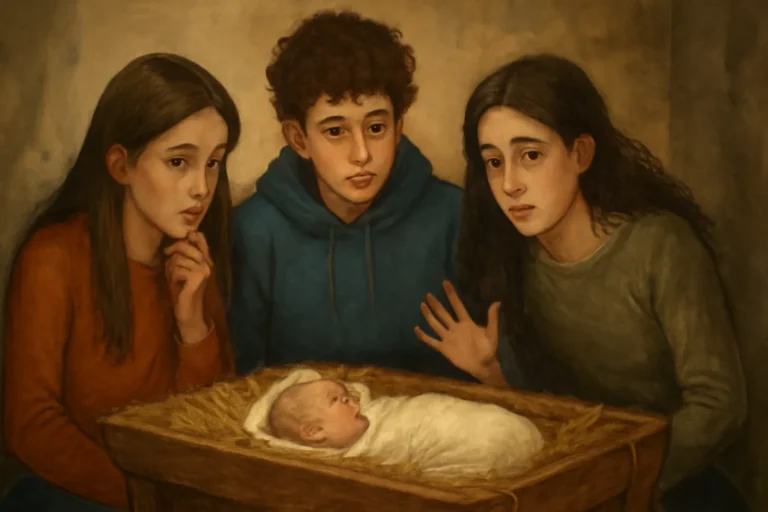
What Hour Was Jesus Born? Unraveling the Mystery of the Nativity
What Hour Was Jesus Born? Unraveling the Mystery of the Nativity
The exact hour of Jesus' birth remains one of the enduring mysteries surrounding the Nativity. While the Bible doesn't explicitly state the time, careful examination of the Gospel accounts, particularly Luke's narrative, provides clues that suggest a likely timeframe. This article will explore the evidence to shed light on this fascinating question.
The Shepherds’ Night Watch and the Angelic Announcement
Luke's Gospel offers the most detailed account of the events surrounding Jesus' birth. Luke 2:8 states that the shepherds were “keeping watch over their flock by night.” This is a crucial detail, indicating that the events unfolded during the nighttime hours.
The angel's announcement, recorded in Luke 2:11, is equally significant: "For unto you is born this day in the city of David a Saviour." It's important to understand that the Jewish reckoning of a "day" extended from sundown to sundown. The angel's use of "this day" implies the birth had already occurred within that timeframe. The birth wasn't a simultaneous event with the announcement.
This understanding allows us to build a framework. The shepherds weren't present at the exact moment of Jesus' birth. The angel's message found them already keeping watch and their subsequent journey to Bethlehem, though swift (“they came with haste,” Luke 2:16), took time.
Therefore, the fact that Jesus was already lying in a manger when the shepherds arrived strongly indicates that the birth occurred several hours before their arrival and the angelic announcement. A timeframe sometime before dawn seems the most plausible scenario. It is important to remember that nothing in the biblical text supports a midnight birth.
What Hour Was Jesus Born? Considering the Shepherds’ Journey
The distance between the shepherds' fields and Bethlehem, although not precisely specified, was likely a relatively short journey. Even a short journey requires time, especially considering the urgency of the situation and the need to locate the stable in Bethlehem.
The combination of the shepherds' nighttime vigil, their hurried journey, and the fact that Jesus was already in a manger when they arrived, points towards a birth that occurred several hours before dawn. The phrase "this day" in Luke's narrative, within the context of the Jewish day's commencement at sunset, further supports this conclusion.
Dispelling Common Misconceptions: Birthdate and Time
Many people associate Jesus' birth with midnight on December 25th. However, this date is not directly supported by the Bible. The December 25th date emerged later in history, partly influenced by existing pagan festivals and calendar systems. The exact date of Jesus' birth remains a matter of scholarly debate, with some suggesting dates in the autumn, like September.
Furthermore, the commonly accepted "midnight" birth is not explicitly stated in the Bible. The focus of the narrative is on the events surrounding the birth, rather than on the precise hour. The available evidence from Luke's Gospel strongly points towards a nighttime birth, likely several hours before dawn, but pinpointing the exact hour remains beyond our reach.
While the hour of Jesus' birth is difficult to ascertain, several scholars have proposed alternative dates for the event. One theory proposes a September birth date, based on a detailed analysis of the Jewish calendar and the timing of John the Baptist's conception relative to Jesus'. Another theory, using astronomical and historical data, suggests September 11th, 3BC as a plausible date.
These alternative birthdate theories, while interesting, don't inherently impact the likelihood of a nighttime birth, several hours before dawn, as suggested by Luke's account. The core evidence in Luke's Gospel remains consistent regardless of the specific date chosen for the event.
Conclusion: The Importance of the Narrative, Not the Exact Time
While we may never know the precise hour what hour was Jesus born, the available evidence strongly suggests a nighttime birth, likely several hours before dawn. The focus should not be solely on establishing a precise time, but rather on appreciating the narrative itself: the angelic announcement, the shepherds' journey, and the humble circumstances of Jesus' birth. The mystery of the exact time adds to the wonder and significance of the event, reminding us of the miraculous nature of the birth of Christ. The true essence of Christmas lies in the theological message of hope, love, and redemption, timeless truths that transcend the specifics of the historical date and time.
Frequently Asked Questions: The Time of Jesus’ Birth
What time was Jesus born?
The Bible doesn't state the exact hour of Jesus' birth. While the Gospel of Matthew doesn't mention the time, Luke's account offers clues suggesting a nighttime birth, likely several hours before dawn. This conclusion is drawn from several factors: the shepherds keeping watch over their flock at night, the angel's announcement occurring after the birth, and the shepherds' swift but not instantaneous journey to Bethlehem, finding Jesus already in a manger. A midnight birth is not explicitly supported by the text and is considered less likely.
Does the Bible give any clues about the time of day?
Yes, Luke 2:8 mentions the shepherds "keeping watch over their flock by night," indicating the birth happened during nighttime. The angel's announcement in Luke 2:11, stating Jesus was born "this day," uses the Jewish reckoning of a day (from sunset to sunset). The shepherds' hasty journey to Bethlehem, finding Jesus in a manger, rather than being born, suggests the birth had already occurred some time before their arrival.
The combination of the shepherds' nighttime vigil, their journey to Bethlehem, and the fact that Jesus was already in a manger when they arrived, strongly suggests the birth took place several hours before dawn. The time it would have taken them to travel and locate the stable would not have allowed them to arrive at the exact moment of birth.
Are there any different opinions on the time of Jesus' birth?
While the evidence points towards a nighttime birth before dawn, the exact hour remains unknown and open to interpretation. Some might suggest a later time in the night, but the available biblical details strongly favor a birth several hours prior to dawn.
Why is there so much uncertainty about the time of Jesus' birth?
The uncertainty stems from the fact that the Gospels do not provide a precise time. The focus of the narrative is on the theological significance of Jesus' birth, rather than detailing the exact moment. The available details allow for a strong inference about the time of day but not the specific hour.
Does the date of Christmas (December 25th) relate to the actual time of Jesus’ birth?
The December 25th date is a later tradition, not directly supported by biblical accounts. It's likely a date chosen later, with competing dates existing in the early Church. The connection to pagan festivals is debated by historians.