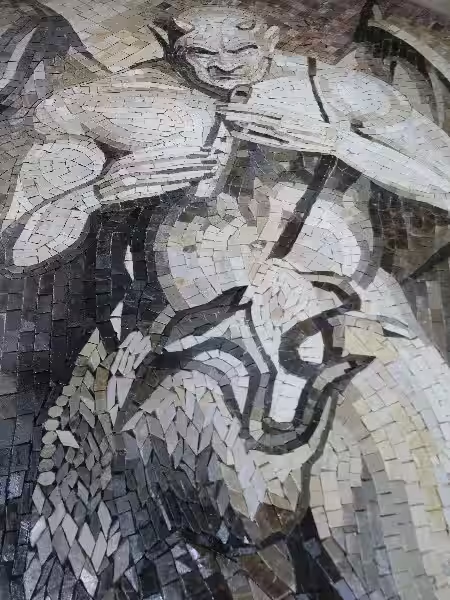
Who is Like God? Exploring the Multifaceted Role of Saint Michael the Archangel
Who is Like God? Exploring the Multifaceted Role of Saint Michael the Archangel
The question, "Who is like God?", resonates deeply within the religious landscape. It's not a boastful claim, but a profound expression of awe and reverence, a sentiment perfectly encapsulated in the name Michael. This article delves into the multifaceted nature of Saint Michael the Archangel, exploring his significance beyond the common image of a warrior angel and revealing his profound influence across religious and cultural contexts.
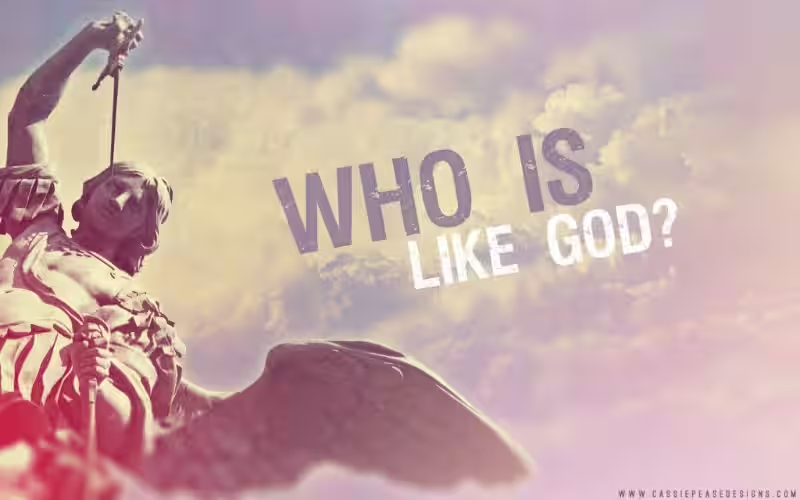
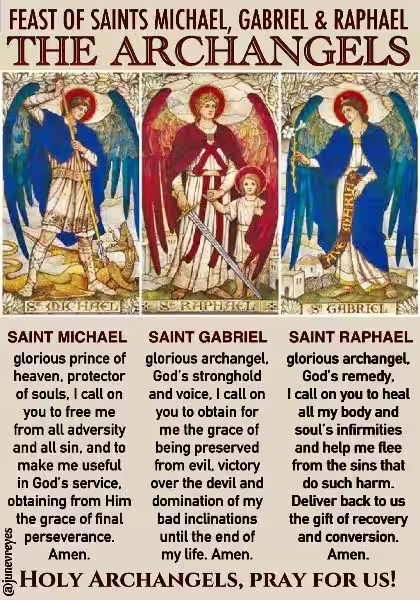
Saint Michael, whose name literally translates to "Who is like God?", is frequently depicted as a valiant warrior, battling against evil. This imagery, though powerful, only scratches the surface of his multifaceted role. He's not merely a battlefield commander; he's a protector, a guide, and a symbol of unwavering faith in the face of adversity. His titles – Protector of Israel, Guardian of Purgatory, Prince of the Heavenly Host – highlight his widespread influence and protection across diverse contexts.
His role extends beyond the historical battlefield. Today, individuals encounter their own daily battles between good and evil, mirroring the continuous spiritual warfare Michael embodies. The choices we make each day, the small acts of kindness or selfishness, are all part of this ongoing conflict, a struggle that requires constant vigilance and a commitment to choosing good over evil, as Bishop Vann so powerfully stated: "[Spiritual warfare] is a fact; it is a reality; it is a constant; and it is pervasive."
The Ongoing Spiritual Warfare and the Example of Job
The triumph of Michael over Lucifer is a pivotal moment, reflecting a battle that continues to this day. Michael's unwavering loyalty to God serves as an example of steadfast faith, reminiscent of Job's enduring perseverance despite unimaginable suffering. The trials we face – sickness, fear, uncertainty – find resonance in the ongoing spiritual conflict that permeates our lives. It’s in these moments that Michael's unwavering stance becomes a beacon of hope and a testament to the strength found in faith.
Job's unwavering faith, even in the face of immense personal loss and suffering, offers a powerful parallel to Michael's unwavering commitment to God, even during the confrontation with Lucifer. Both figures represent steadfast loyalty and perseverance in the face of adversity, highlighting the importance of faith as a powerful weapon in the spiritual battle. Their stories serve as a testament to the enduring power of faith in the face of overwhelming opposition.
A Bridge Between Faiths: Michael’s Influence Across Cultures
Saint Michael transcends denominational boundaries, acting as a bridge between Judaism and Christianity. His presence is evident in Jewish literature, such as "The Life of Adam and Eve," where he guides Adam and Eve after their expulsion from Eden. In Christian history, his influence is equally profound, inspiring figures like Constantine and shaping pivotal moments throughout French history.
Michael's Deep Connection to France
France holds a particularly strong connection to Saint Michael. He's deeply entwined with the nation's history, particularly impacting pivotal figures like Joan of Arc and Thérèse of Lisieux. Thérèse's play, "The Triumph of Humility," showcases Michael's victory not through brute force, but through the power of humility, ultimately leading to Lucifer's defeat. This underscores a crucial aspect of Michael's character: his strength doesn't come from power alone, but also from unwavering faith and submission to God's will.
The Angel of Fatima: A Possible Identity for Saint Michael
The possibility of Saint Michael being the unnamed Angel of Peace from Fatima is a compelling consideration. The angel, described with a flaming sword, mirrors the angel guarding Eden, a connection that resonates with the pending judgment mentioned in Cardinal Ratzinger's commentary on the third secret of Fatima. Michael's interventions throughout history, particularly during national crises and times of spiritual challenge for nations like Rome, France, and Portugal, strengthen this hypothesis. His consistent presence during times of national and spiritual trial makes him a strong candidate for this identity.
The description of the Angel of Peace, particularly the flaming sword, evokes powerful imagery, reminiscent of the cherubim guarding the entrance to Eden. This imagery, coupled with the pending judgment alluded to in the third secret of Fatima, suggests a powerful celestial being involved in both the protection and the judgment of humanity. The parallels between this description and Michael’s traditional iconography make his identification as the Angel of Peace a compelling hypothesis.
Saint Michael’s Constant Vigilance: A Symbol of Hope
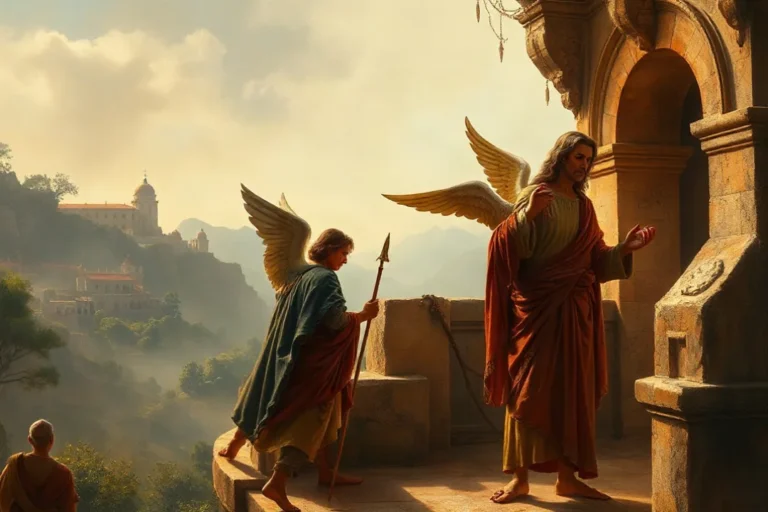
The parallel between Christ's experience on the Mount of Olives and Michael's role suggests that even the unnamed angel ministering to Christ might have been Michael. This underscores Michael's constant vigilance, his unwavering readiness to guide souls toward heaven. He represents hope and guidance during times of uncertainty and spiritual struggle, a constant companion on our journey toward salvation.
Readiness and Guidance
The image of Saint Michael stands as a powerful symbol of readiness and unwavering commitment to God's will. He exemplifies a constant state of vigilance, prepared to offer guidance and support to those who seek it. This perpetual state of readiness offers comfort and assurance to those navigating the complexities of life and the ongoing spiritual battles we face. He is a constant reminder of the divine protection and guidance available to those who seek it. In conclusion, the name "Who is like God?" is not a proclamation of self-importance, but a humble acknowledgement of God's unparalleled power and glory. Saint Michael, through his actions and unwavering faith, embodies this sentiment, serving as an enduring symbol of hope, guidance, and unwavering devotion in the face of adversity.
Frequently Asked Questions: Who is Like God?
What does the name "Michael" mean, and what does it signify?
The name "Michael" means "Who is like God?" This is not a boastful declaration of equality with God, but rather a humble question expressing profound awe and reverence before God's unmatched power and majesty. It reflects the Psalmist's sentiment of recognizing God's supreme authority and unique position. The question highlights the inherent difference between God and creation.
How is Saint Michael's role understood in relation to the concept of "Who is like God?"
Saint Michael's name, "Who is like God?", underscores his complete dependence on and submission to God. His strength and power derive entirely from God, not from a desire for self-exaltation. Unlike Lucifer, whose rebellion stemmed from a desire to be "like the Most High," Michael's humility and service to God are the source of his strength and effectiveness in spiritual warfare.
Who else, besides Saint Michael, embodies the question "Who is like God?" in a meaningful way?
The prophet Micah's name also translates to "Who is like God?". His prophetic book explores the theme of God-likeness, emphasizing that true godliness is achieved not through self-assertion or worldly power, but through justice, kindness, humility, and walking in obedience to God. Furthermore, Christ, through his humility and self-sacrifice, ultimately embodies the true meaning of being like God in a way that no other being can. His actions exemplify the love and grace that are the ultimate expression of God's nature.
How does the ongoing spiritual battle relate to the question "Who is like God?"?
The ongoing spiritual battle between good and evil highlights the fundamental difference between God and His creation. Lucifer's rebellion, his attempt to be "like God," is a perversion of the divine nature. Saint Michael's unwavering loyalty and service to God represent the opposite: a humble acceptance of creaturely status and a commitment to God's will. This battle continues in our daily lives, requiring constant vigilance in choosing good over evil.
Does the question "Who is like God?" suggest that no one can be like God?
Yes, absolutely. The question "Who is like God?" is a rhetorical question that emphasizes the absolute uniqueness and incomparability of God. No created being can ever equal God in power, holiness, or glory. The question serves to highlight God's transcendence and majesty, underscoring the vast difference between the Creator and creation. Even those who strive for godliness, like Micah, or who serve God with unwavering faithfulness, like Saint Michael, do so in complete dependence on God’s grace and power.