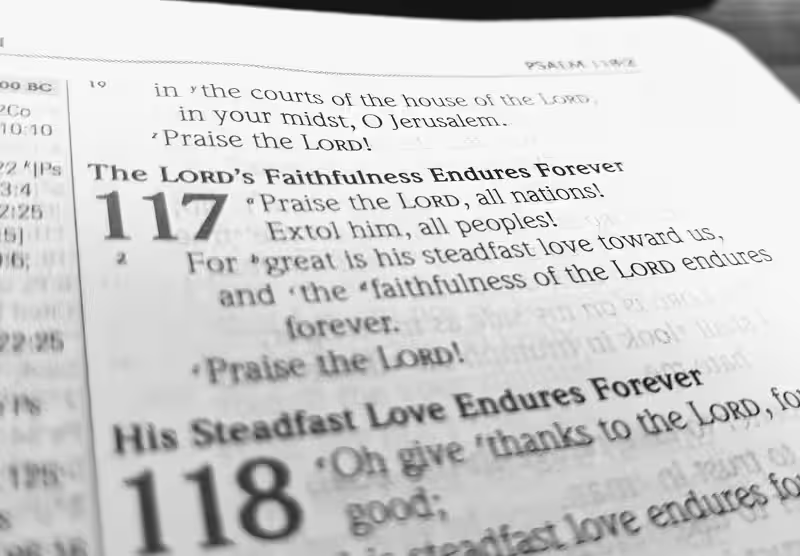
Finding the shortest chapter in the Bible might seem like a trivial pursuit, but it reveals a fascinating aspect of the text's structure and theological depth. The brevity of certain passages, far from diminishing their importance, often amplifies their impact and memorability. This exploration will not only answer the question of what is the shortest chapter in the Bible, but also delve into the significance of concise biblical passages.
The title of the shortest chapter in the Bible belongs decisively to Psalm 117. With a mere two verses and only seventeen words in the original Hebrew, this psalm's impact far surpasses its length. Its succinctness is striking, and it stands in stark contrast to many of the longer, more elaborate passages found elsewhere in scripture.
The brevity isn't just a stylistic quirk. The incredibly short length of Psalm 117 forces the reader to confront the core message directly, without distractions. The simple, repetitive phrasing emphasizes the universality of its call to praise. No elaborate metaphors or complex theological arguments are needed; the message is pure and potent.
The Significance of Psalm 117’s Position
The significance of Psalm 117 extends beyond its brevity. Interestingly, it occupies a pivotal position within the entire Bible, serving as the approximate midpoint. This central placement subtly underscores the importance of its concise message. It's as if the Bible itself highlights the power of this short, impactful call to praise.
This central placement reinforces the idea that the core message of praise and worship is fundamental to the entire biblical narrative. It's not a footnote or an aside, but a central theme that resonates throughout both the Old and New Testaments.
Other Short Chapters: A Testament to Concise Power
While Psalm 117 holds the record for brevity, several other chapters are remarkably short. This isn't merely a random occurrence; the concentration of short chapters, particularly within the Book of Psalms, suggests a deliberate stylistic choice emphasizing the power of concise expression.
The Book of Psalms, known for its lyrical and poetic nature, frequently utilizes short, impactful verses to convey profound spiritual truths. The brevity isn't a sign of lacking depth but a testament to the power of potent language and carefully chosen words. This stylistic choice enhances the memorability and impact of the message delivered.
Short Chapters in the Psalms
The Psalms contain several other impressively short chapters. For instance:
Psalm 131: This short psalm focuses on humility and quiet trust in God.
Psalm 133: Known as the "Song of Ascents," it celebrates the unity and fellowship of God's people.
Psalm 134: A brief call to praise from temple servants.
These Psalms, while distinct in their themes, share the common thread of conveying profound religious experiences with remarkable efficiency. They demonstrate that less can indeed be more within the context of spiritual expression.
Short Chapters Beyond the Psalms
The phenomenon of short chapters isn't limited to Psalms. Other books, such as Job and Revelation, also contain chapters that rank among the shortest in the Bible.
Job 25: A concise reflection on God's greatness and humanity's insignificance.
Revelation 15: A powerful vision of God's judgment and future glory.
These examples show that brevity in the Bible's structure isn't confined to a single book or genre. It's a stylistic device employed across various biblical texts to create a specific impact.
The Impact of Brevity: A Theological Consideration
The brevity of these chapters highlights the principle that theological depth isn't dependent on length. Short, punchy verses can be just as powerful—perhaps even more so—than lengthy theological treatises. The concise nature of these chapters allows them to be easily memorized, making them readily accessible for reflection and devotional use.
The repetitive use of key phrases, as in Psalm 117, reinforces the central theme, etching it into the reader's memory. This stylistic approach contrasts with longer passages which might require more sustained effort to grasp their essence. The shorter chapters, therefore, offer a unique and powerful approach to communicating profound spiritual truths.
Conclusion: The Power of Concise Worship
The quest to determine what is the shortest chapter in the Bible leads to a richer understanding of the Bible's stylistic diversity and theological depth. The brevity of Psalm 117 and other short chapters isn't a sign of lesser importance but rather a testament to the power of concise language to convey profound spiritual truths. These short passages offer easily memorized verses for devotional use, highlighting the effectiveness of impactful brevity in spiritual expression. The Bible's use of short chapters showcases its sophistication in communicating the divine message.
Frequently Asked Questions: The Shortest Chapter in the Bible
What is the shortest chapter in the Bible?
Psalm 117 is generally considered the shortest chapter in the Bible. It contains only two verses and a remarkably small number of words, depending on the translation. In its original Hebrew, it contains only seventeen words.
How many words are in Psalm 117?
The exact word count varies depending on the translation and the method of counting. In the original Hebrew, it has seventeen words. Modern English translations will naturally have more.
What is the message of Psalm 117?
Psalm 117's core message is a simple yet powerful call to universal praise of the Lord. It emphasizes God's unwavering love and enduring faithfulness as the reasons for this praise, urging all nations and peoples to give thanks.
The brevity of Psalm 117 is impactful. Its conciseness highlights the power of a few carefully chosen words to convey a profound spiritual truth. Furthermore, its placement near the center of the Bible (often cited as the 595th chapter) emphasizes its importance.
Are there other very short chapters in the Bible?
Yes, several other chapters are exceptionally short. The Book of Psalms contains a cluster of short chapters near Psalm 117. Other short chapters exist in the Old Testament (like Job 25) and the New Testament (like Revelation 15), demonstrating that brevity was sometimes a stylistic choice used to convey significant theological points.
Does the shortness of a chapter diminish its theological importance?
No. The shortest chapters, including Psalm 117, demonstrate that profound spiritual truths can be expressed with remarkable brevity. The impact of a message is not directly proportional to its length. The concise nature of these passages can even enhance their memorability and impact.
What is the significance of Psalm 117's placement in the Bible?
Psalm 117's placement near the middle of the Bible (often cited as the 595th chapter) is considered significant by many. This central location highlights the universality of its message of praise and worship, applicable to all people throughout all of history.
What makes Psalm 117 so memorable?
The repetition of "Praise the Lord" at the beginning and end, combined with its clear and simple message makes Psalm 117 easily memorable and suitable for devotional use. Its brevity also contributes to its memorability.