Villains in the Bible: A Study of Evil and its Consequences
Villains in the Bible: A Study of Evil and its Consequences
The Bible, a cornerstone of Western civilization, is not simply a collection of moral parables; it’s a rich tapestry woven with threads of both good and evil. While the narratives often focus on figures of faith and righteousness, understanding the villains in the Bible is crucial to grasping the complex moral landscape presented within its pages. These antagonists, ranging from demonic entities to flawed human beings, aren't simply cardboard cutouts of wickedness. They represent the multifaceted nature of evil and its consequences, providing cautionary tales and exploring the eternal struggle between good and evil.
The Old Testament Villains: A Spectrum of Wickedness
The Old Testament introduces us to a diverse cast of characters whose actions challenge God's authority and the well-being of his people. Their stories offer insights into various forms of evil, from individual sins to systemic oppression.
Satan: The Ultimate Adversary
Satan, the most prominent villain in the Bible, is the embodiment of rebellion against God. His temptation of Adam and Eve in the Garden of Eden set in motion the consequences of original sin, a pivotal event shaping the entire biblical narrative. While never explicitly described as omnipotent, his power to deceive and corrupt is undeniable. His ultimate defeat is a central theme of Christian theology, promising a final victory for good.
But Satan's influence extends beyond this initial act. He is portrayed throughout the Old Testament as a subtle manipulator, an insidious force that tempts and corrupts, working through human agents to achieve his goals. He’s not just a powerful being but a skilled strategist, consistently seeking to undermine God’s plan.
Cain: The First Murderer
Cain’s story, the first instance of murder in the Bible, is a stark portrayal of jealousy and its devastating consequences. His envy of his brother Abel, fueled by a perceived lack of divine favor, leads him to commit fratricide. God’s curse upon Cain highlights the severity of his sin, yet also reveals a surprising element of divine mercy in providing protection. Cain’s story remains a tragic example of how unchecked emotions can lead to horrific acts.
The story serves as a powerful reminder of the destructive nature of envy and the importance of managing our emotions. God's response, balancing judgment with mercy, offers a complex theological viewpoint on dealing with sin and its aftermath.
Other Notable Old Testament Villains:
The Old Testament presents many other examples of villains, each with their own unique motivations and fates:
Pharaoh: His defiance of God's commands, culminating in the enslavement of the Israelites, leads to the ten plagues and the destruction of his army in the Red Sea. This illustrates the consequences of rejecting divine authority.
Achan: His disobedience in keeping spoils from Jericho resulted in a divine judgment, emphasizing the importance of obedience to God's commandments.
Delilah: Her betrayal of Samson, motivated by greed, is a classic example of treachery and female villainy within the biblical narrative.
Abimelech: His ambition and violence lead to his death, showcasing the destructive nature of unchecked power.
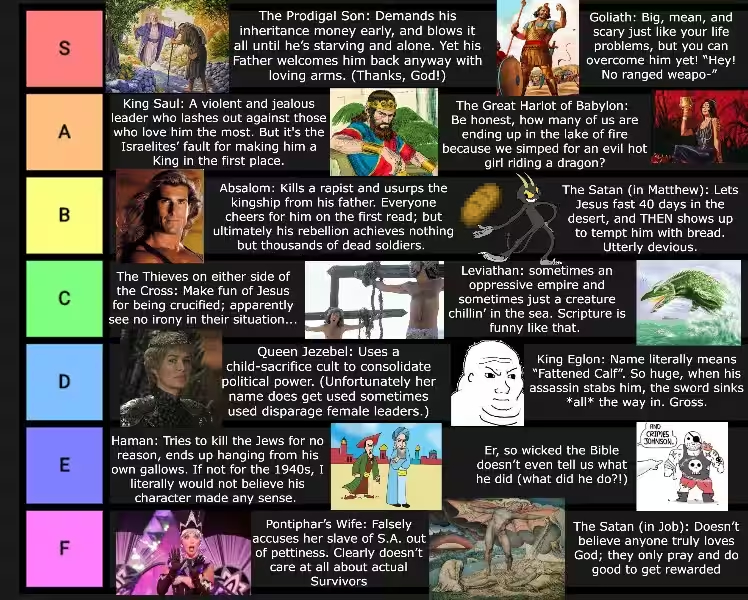
Goliath: His arrogance and defiance are overcome by David's faith, demonstrating that even seemingly insurmountable obstacles can be overcome through faith.
Absalom: His rebellion against King David highlights the destructive nature of familial conflict and ambition.
Queen Jezebel: Her promotion of pagan worship and involvement in Naboth’s murder showcase the corrupting influence of power and idolatry.
Athaliah: Her usurpation of the throne demonstrates the dangers of unchecked power.
King Nebuchadnezzar: His conquest and oppression of the Israelites, ultimately leading to his humbling, illustrates the limitations of human power when opposed to divine authority.
Haman: His plot to exterminate the Jews highlights the dangers of unchecked hatred and prejudice.
The New Testament continues this exploration of evil, focusing on individuals who directly opposed Jesus and his message. These villains often represent the dangers of moral compromise, hypocrisy, and the perversion of religious authority.
Herod the Great and Herod Antipas: Oppression and Cruelty
Herod the Great's cruelty, culminating in the Massacre of the Innocents, signifies the extreme lengths to which oppression can extend. Herod Antipas’ involvement in the death of John the Baptist, driven by lust for power and fear, offers another harrowing example of the consequences of moral compromise.
These figures represent the dark side of political power and its devastating consequences for those who stand in its way. Their stories serve as warnings against tyranny and the abuse of authority.
Judas Iscariot: The Ultimate Betrayal
Judas Iscariot's betrayal of Jesus is a pivotal moment in the New Testament, the ultimate act of treachery. His actions, driven by greed and possibly internal conflict, highlight the destructive power of selfishness and the consequences of rejecting divine grace.
The story of Judas serves as a timeless exploration of betrayal and the profound consequences of choosing personal gain over faith. His story continues to inspire reflection on the nature of human weakness and the capacity for both great good and great evil.
Pontius Pilate and the Pharisees: Moral Weakness and Hypocrisy
Pontius Pilate, though initially hesitant, succumbed to pressure, condemning Jesus to crucifixion. This highlights the weight of moral responsibility and the potential consequences of choosing expediency over justice. The Pharisees, while outwardly upholding religious law, are often criticized for their hypocrisy and rejection of Jesus' inclusive message. They represent a perversion of religious authority, prioritizing adherence to rules over genuine compassion and understanding.
Their actions serve as cautionary tales, warning against the dangers of political pressure and the pitfalls of rigid adherence to religious law without genuine faith and compassion.
Abaddon: A Demonic Force
Abaddon, a demonic figure mentioned in the Book of Revelation, symbolizes the destructive forces of evil and underscores the ultimate confrontation between good and evil. He represents the concentrated power of the forces that oppose God.
The figure of Abaddon serves as a reminder of the constant spiritual battle between good and evil, highlighting the need for vigilance and faith in the face of overwhelming opposition.
Conclusion: Lessons from Biblical Villains
The diverse range of villains in the Bible, from demonic entities to flawed human beings, offers a rich tapestry of moral complexity. Their stories aren't merely tales of wickedness; they serve as cautionary tales, exploring the consequences of human actions, the struggle between good and evil, and the importance of faith, obedience, and moral responsibility. By examining these figures, we gain a deeper understanding of the human condition and the enduring battle between light and darkness. Understanding these villains is not simply about condemning their actions but about learning from their mistakes and striving to make better choices in our own lives.
Frequently Asked Questions: Villains in the Bible
Who are some of the most prominent villains in the Bible?
The Bible features a diverse cast of antagonists, ranging from powerful figures like Satan, Pharaoh, and King Herod to individuals like Cain, Delilah, and Judas Iscariot. Satan is the ultimate adversary, tempting humanity and embodying rebellion against God. Pharaoh's defiance led to the ten plagues, while Herod's cruelty culminated in the Massacre of the Innocents. Cain committed the first murder, Delilah betrayed Samson, and Judas betrayed Jesus. Others, like Haman and Jezebel, represent the dangers of unchecked ambition and wickedness. These figures, and many others, illustrate the various faces of evil and its consequences.
The motivations of biblical villains are complex and varied. Some, like Satan, are driven by a fundamental opposition to God and a desire to corrupt humanity. Others are motivated by personal ambition (Abimelech, Absalom, Athaliah), jealousy (Cain), greed (Delilah, Herodias), hatred (Haman), or a lust for power (Herod, Pilate). Many are driven by a rejection of God's law and a preference for their own desires and worldly gain, ultimately demonstrating the destructive nature of unchecked human passions.
What are the consequences faced by these villains in the biblical narratives?
The consequences faced by biblical villains vary but generally reflect the principles of divine justice and mercy. Some, like Cain, received a divine curse but also experienced a measure of divine protection. Others, such as Pharaoh and his army, faced utter destruction for their defiance. Many experienced violent deaths (Jezebel, Abimelech) or suffered public disgrace and humiliation (Haman, Nebuchadnezzar). Judas Iscariot's betrayal led to his suicide. While some characters might not face immediate earthly punishment, the narratives often emphasize the lasting spiritual and moral consequences of their actions, highlighting the ultimate triumph of good over evil.
Do any biblical villains experience repentance or redemption?
While some villains, such as Nebuchadnezzar, experience humbling and a degree of repentance, leading to a change in their behavior, most do not explicitly demonstrate true remorse or redemption within the biblical narratives. The focus is often on the consequences of their actions rather than their potential for redemption. The stories serve as cautionary tales emphasizing the importance of obedience, righteousness, and the consequences of rejecting God's will.
What is the significance of studying these figures?
Studying biblical villains provides valuable insight into the nature of evil, the complexities of human morality, and the consequences of choices. These narratives serve as cautionary tales, illustrating the destructive power of sin and the importance of upholding God's law. They show the dangers of unchecked ambition, hatred, and the rejection of divine authority. By examining these figures, we can better understand the ongoing struggle between good and evil, and the importance of faith, righteousness, and repentance. Furthermore, it allows us to explore the themes of justice and mercy within the divine framework.