Book of Daniel Summary by Chapter: A Comprehensive Guide
Book of Daniel Summary by Chapter: A Comprehensive Guide
Understanding the Book of Daniel can feel like navigating a labyrinth of prophecies and historical accounts. This article provides a chapter-by-chapter summary, aiming to unravel its complexities and reveal its enduring message. We'll explore both the biographical narratives and the apocalyptic visions, making this Book of Daniel summary by chapter as accessible as possible.
These chapters form the biographical section of the Book of Daniel, focusing on the prophet's life and the experiences of his three companions, Shadrach, Meshach, and Abednego, during their exile in Babylon. The narratives showcase their unwavering commitment to God despite the intense pressures of assimilation into a foreign culture.
The first chapter establishes their resolve from the outset. Faced with the king's rich but ritually unclean food, they steadfastly refuse to compromise their faith, demonstrating a commitment to God's law above all else. Their obedience is rewarded with wisdom and favor from God, setting the stage for the rest of the biographical sections.
This initial demonstration of unwavering faith is followed by a series of trials illustrating God's protective power and the consequences of defying Him. Each chapter presents a distinct challenge to their faith and loyalty, ultimately underscoring the theme of God's sovereignty over earthly kingdoms.
Chapter 1: A Choice of Faith
The opening chapter introduces Daniel and his friends, highlighting their commitment to remain faithful to God even within the Babylonian court. Their refusal to defile themselves with the king's food demonstrates their obedience and commitment to God’s law, resulting in divine favor and wisdom.
Chapter 2: Nebuchadnezzar's Dream
Nebuchadnezzar, the Babylonian king, has a disturbing dream he cannot remember. Only Daniel, through God's gift, can interpret it. The dream reveals a succession of world empires, culminating in God's everlasting kingdom. This interpretation foreshadows the apocalyptic visions in later chapters.
This chapter narrates the famous story of Shadrach, Meshach, and Abednego's refusal to worship Nebuchadnezzar's golden image. Their unwavering faith leads to their miraculous deliverance from the fiery furnace, demonstrating God's protective power and the ultimate futility of human defiance against God.
Chapter 4: Nebuchadnezzar's Humiliation
King Nebuchadnezzar's pride leads him to forget God's sovereignty. He is humbled by a period of madness, during which he learns a valuable lesson about God's ultimate authority over even the mightiest kings. This chapter emphasizes the importance of humility and acknowledging God's power.
Chapter 5: Belshazzar's Feast
Belshazzar, Nebuchadnezzar's successor, desecrates sacred vessels during a lavish feast. A mysterious handwriting appears, which only Daniel can interpret. The interpretation, foretelling Belshazzar's demise and the fall of Babylon, highlights the consequences of rejecting God and His judgment on those who disregard His warnings.
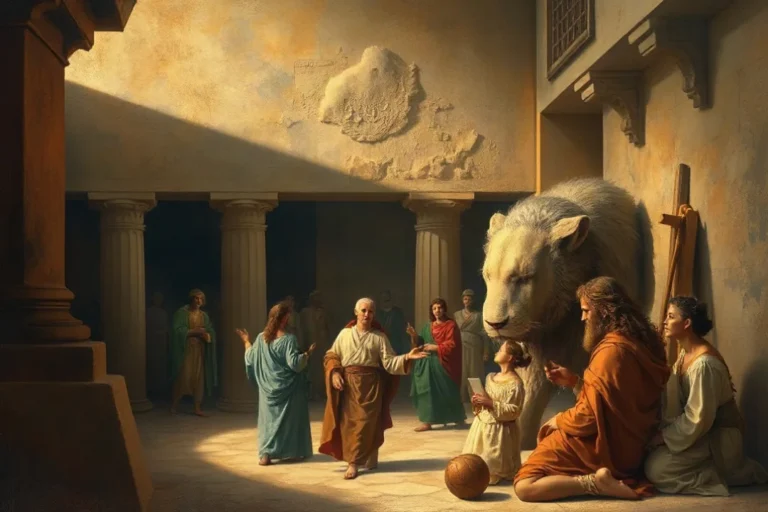
Chapter 6: The Lion's Den
Daniel’s unwavering commitment to prayer despite a royal decree leads to his being thrown into a lion's den. His miraculous survival demonstrates God's protection of the faithful even in the face of mortal danger. This chapter underscores the importance of unwavering prayer and God's protective power over His devoted servants.
Chapters 7-12: Apocalyptic Visions and End-Times Prophecies
This section shifts from historical narrative to apocalyptic prophecy, presenting a series of symbolic visions that foretell future events leading up to the establishment of God’s eternal kingdom. These visions are complex and open to various interpretations, but they consistently emphasize God's ultimate sovereignty and the triumph of His people.
The language shifts from Aramaic (Chapters 2-7) back to Hebrew, reflecting a change in focus and audience. This suggests a deliberate structuring to engage different groups of readers. The core message, however, remains consistent: God's ultimate victory and the need for unwavering faithfulness amidst tribulation.
Chapter 7: Four Beasts and the Son of Man
This chapter details a vision of four beasts representing successive world empires. The vision culminates in the appearance of the "Ancient of Days" and the "Son of Man," symbolizing God's judgment and the establishment of His eternal kingdom. This vision offers a powerful image of God's ultimate authority and the resulting hope for His people.
Chapter 8: Ram, Goat, and Little Horn
Chapter 8 presents another vision, this time featuring a ram and a goat, representing different empires. The vision further introduces the "little horn," a symbol often interpreted as an Antichrist figure who persecutes God's people. The overall message speaks of the cyclical nature of empires and the ultimate triumph of God's kingdom.
This chapter reveals a detailed prophecy concerning the "seventy weeks," a time period calculated to lead to the arrival of the Messiah. This highly debated prophecy has been interpreted in various ways throughout history, making it one of the most discussed passages in the book.
Chapter 10: Daniel's Prayer and Heavenly Warfare
Daniel's intense prayer and fasting in this chapter highlight the power of prayer and its impact on spiritual warfare. The vision he receives emphasizes the ongoing conflict between good and evil and the importance of seeking God's guidance during times of crisis.
Chapter 11: King of the North and King of the South
This chapter provides a detailed prophecy of conflicts between the "king of the north" and the "king of the south," interpreted by many as representing various empires throughout history. These conflicts ultimately lead to the rise of the Antichrist and increased persecution of God's people.
Chapter 12: Resurrection and End-Times Events
The final chapter summarizes the ultimate triumph of God's kingdom, including the resurrection of the righteous and the wicked. It also offers further details on the timeline of end-times events, emphasizing the perseverance of the faithful and the ultimate victory of God's kingdom. The chapter further emphasizes the hope of resurrection and the eventual reward for those who remain faithful to God.
In conclusion, understanding the Book of Daniel requires careful consideration of its dual nature: historical narrative and apocalyptic prophecy. By examining each chapter within its historical and literary context, one can appreciate its message of unwavering faith, God's sovereignty, and the ultimate triumph of His kingdom. This Book of Daniel summary by chapter provides a foundational understanding to aid in your further study.
Frequently Asked Questions: A Chapter-by-Chapter Summary of the Book of Daniel
What is the overall structure of the Book of Daniel?
The Book of Daniel is divided into two distinct parts. Chapters 1-6 focus on biographical narratives detailing Daniel's life and experiences serving Babylonian kings. Chapters 7-12 consist primarily of apocalyptic visions and prophecies concerning future empires and the ultimate establishment of God's kingdom. The biographical section acts as a prophetic commentary, foreshadowing the themes and events explored in the prophetic visions.
What are the key events in Chapters 1-6?
Chapters 1-6 highlight Daniel's unwavering faith and the miraculous protection God provides. Key events include:
Chapter 1: Daniel and his friends refuse to compromise their faith by eating the king's food, demonstrating their commitment to God's law.
Chapter 2: Daniel interprets Nebuchadnezzar's dream of a great image, revealing a succession of kingdoms culminating in God's eternal kingdom.
Chapter 3: Shadrach, Meshach, and Abednego are miraculously saved from a fiery furnace for refusing to worship a golden image.
Chapter 4: Nebuchadnezzar experiences humbling madness due to his pride, illustrating God's sovereignty.
Chapter 5: Belshazzar's defiance of God leads to his death and the fall of Babylon.
Chapter 6: Daniel survives the lion's den because of his unwavering prayer, demonstrating God's protection of the faithful.
These chapters consistently emphasize God's sovereignty over earthly kingdoms and His ultimate triumph.
What is the focus of Chapters 7-12?
Chapters 7-12 comprise the apocalyptic section, focusing on prophecies concerning the end times. These chapters feature symbolic visions interpreted by Daniel, revealing:
Chapter 7: A vision of four beasts representing successive kingdoms, culminating in the rise of an "Antichrist" figure and the eventual coming of the "Son of Man" and the "Ancient of Days."
Chapter 8: A vision of a ram and a goat, symbolizing the rise and fall of empires, again leading to the same "Antichrist" figure.
Chapter 9: The prophecy of the "seventy weeks," a timeline leading to the arrival of the Messiah.
Chapter 10: The power of prayer and fasting in heavenly warfare and the revelation of divine secrets.
Chapter 11: A detailed prophecy of conflicts between the "king of the north" and the "king of the south," leading to the rise of the Antichrist.
Chapter 12: The ultimate triumph of God's kingdom, including the resurrection of the righteous and wicked, and further details on the end-times timeline.
The overall message emphasizes the perseverance of the faithful, God's ultimate victory, and the future establishment of His eternal kingdom.
What are the main themes of the Book of Daniel?
The overarching themes of the Book of Daniel include:
God's Sovereignty: God's ultimate authority and control over all nations and rulers.
Faithfulness under Pressure: The importance of unwavering faith and obedience to God, even in the face of persecution and cultural assimilation.
Hope and Perseverance: The assurance of God's ultimate victory and the redemption of His faithful people.
Divine Judgment and Restoration: The coming judgment on evil and the eventual establishment of God's righteous kingdom.
The Importance of Prayer: The power of prayer and intercession in influencing heavenly events and receiving divine revelation.
These themes resonate powerfully throughout both the biographical and prophetic sections of the book.
Who is the intended audience of the Book of Daniel?
The Book of Daniel's audience is multifaceted and spans across time periods. The biographical narratives (Chapters 1-6) likely resonated with the Jewish exiles in Babylon, offering hope and encouragement during their captivity. The apocalyptic visions (Chapters 7-12) were likely intended for a later audience facing persecution and uncertainty, offering a message of hope and ultimate divine vindication. The book continues to speak to contemporary readers grappling with similar challenges of faith, persecution, and the desire for justice and hope.