Mene: A Word Interpreted by Daniel on a Biblical Wall
Mene: A Word Interpreted by Daniel on a Biblical Wall
The cryptic message "MENE, TEKEL, PARSIN" – a phrase interpreted by Daniel on a palace wall – remains one of the most dramatic and chilling scenes in the Bible. This article explores the background, the interpretation, and the lasting significance of this pivotal moment in the Book of Daniel. Understanding the context reveals not only the meaning of "Mene," but also the power dynamics and prophetic significance embedded within this ancient narrative.
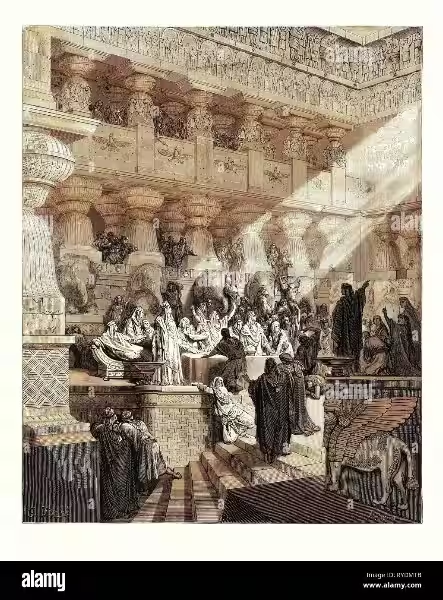
The story unfolds during a lavish feast thrown by King Belshazzar, the last king of the Neo-Babylonian Empire. The king, boasting in his arrogance, uses sacred vessels looted from the Jerusalem Temple for his decadent celebration. Suddenly, a disembodied hand appears, writing mysterious words on the palace wall.
This inexplicable event throws the king and his court into a state of utter terror. Belshazzar, unable to decipher the ominous inscription, summons his wise men and magicians, but none can interpret the writing. It's at this point that Queen Nitocris recalls Daniel's legendary ability to understand divine messages.
Daniel, known for his wisdom and piety, is summoned. He doesn't rely on magic or divination, but rather interprets the inscription as a direct judgment from God. His interpretation forms the climax of the narrative and points to the imminent downfall of the Babylonian Empire.
The Significance of the Handwriting
The sudden appearance of the disembodied hand is not merely a theatrical device. It represents a divine intervention, a direct judgment from the God of Israel. The hand’s action underscores the powerlessness of human kings before God's sovereign authority. The unexpected nature of the event highlights the sudden and inescapable nature of God's judgment.
The choice of a hand, a symbol of human agency, writing the sentence of doom, serves to emphasize that the judgment is directly from God, bypassing human intermediaries or attempts at manipulation. The king's hubris is met with a stark and immediate divine response.
Daniel’s Interpretation: Mene, Tekel, Parsin
Daniel, uniquely gifted with the ability to understand divine revelations, interprets the three Aramaic words:
MENE: This word means "numbered." Daniel explains that God has “numbered” or “counted” Belshazzar’s kingdom and brought it to an end. This signifies the imminent end of his reign and the termination of the Babylonian Empire itself.
TEKEL: Meaning "weighed," this word signifies that Belshazzar has been weighed on the scales of justice and found wanting. His actions, particularly the sacrilegious use of the Temple vessels, are deemed insufficient in God's eyes. This speaks to the moral judgment on Belshazzar's reign.
PARSIN: Translated as "divided," this word foretells the division of the Babylonian kingdom and its subsequent apportionment to the Medes and Persians. This accurately predicted the historical events that followed shortly after, leading to the fall of Babylon.
The Word "Mene" and its Implications
The word "Mene," as the first word in the inscription, is particularly significant. It sets the stage for the entire message, declaring the definitive end of Belshazzar's reign and the Babylonian empire.
The use of the word "numbered" carries both a literal and symbolic meaning. Literally, it indicates the end of Belshazzar's reign. Symbolically, it points to the ultimate judgment that awaits all who reject God's authority and defy His commands. This aspect resonates with broader theological themes of accountability and divine judgment.
The story of Daniel's interpretation of "Mene, Tekel, Parsin" serves as a powerful warning against pride, arrogance, and the misuse of power. Belshazzar's disregard for God and his sacrilegious actions directly led to his downfall.
The event also serves as a powerful testimony to the sovereignty of God. The seemingly random appearance of the inscription and Daniel's ability to interpret it dramatically illustrate God's control over the affairs of nations and the ultimate triumph of His justice.
Lasting Impact on Theology and Interpretation
The episode continues to resonate throughout theological traditions. It highlights the theme of divine judgment, the importance of humility before God, and the consequences of ignoring divine warnings. The story's enduring power stems from its direct confrontation with the hubris of earthly power and the unwavering sovereignty of God. The interpretation of "Mene" remains a central element in understanding this powerful biblical narrative and its lasting impact on our understanding of God's judgment and justice. The story continues to serve as a cautionary tale across centuries, reminding us of the transient nature of earthly power and the ultimate supremacy of divine judgment.
Here are some frequently asked questions regarding the word interpreted by Daniel on the biblical wall, focusing on the word "MENE":
What word did Daniel interpret on the wall during Belshazzar's feast?
Daniel interpreted the words "MENE, TEKEL, PARSIN" written on the wall during King Belshazzar's feast. While the clue in the crossword puzzle might only ask for one word, the complete inscription is crucial to understanding the prophecy.
What does "MENE" mean in the context of Daniel's interpretation?
"MENE" is the first word in the inscription. Daniel interpreted it to mean "numbered." This signified that Belshazzar's kingdom had been counted and found wanting, its days were numbered, and it would soon be brought to an end.
What was the significance of the entire inscription (MENE, TEKEL, PARSIN)?
The entire inscription – "MENE, TEKEL, PARSIN, UPHARSIN" – delivered a judgment against Belshazzar and the Babylonian empire. Each word represented a specific aspect of the impending doom:
MENE: Numbered (your kingdom is numbered)
TEKEL: Weighed (you have been weighed on the scales and found wanting)
PARSIN: Divided (your kingdom is divided and given to the Medes and Persians)
UPHARSIN: And they are numbered (and its parts are numbered)
The inscription served as a divine judgment, foreshadowing the imminent fall of Babylon to the Medes and Persians.
How did Daniel's interpretation impact the events that followed?
Daniel's interpretation accurately foretold the fall of Babylon that very night. The Medes and Persians, under Cyrus the Great, conquered Babylon, fulfilling the prophecy inscribed on the wall and ending the Babylonian empire. This event is a significant historical and theological marker, illustrating God's sovereignty over kingdoms and the fulfillment of prophecy.
Where in the Bible can I find this story?
This account is found in the Book of Daniel, specifically chapter 5. Reading this chapter provides the full context of the feast, the mysterious writing, Daniel's interpretation, and the subsequent conquest of Babylon.
Why is this story important theologically?
The story of the writing on the wall serves as a powerful reminder of God's sovereignty and judgment. It highlights that even the most powerful empires are ultimately subject to God's will and that human pride and arrogance are ultimately futile in the face of divine justice. It also demonstrates the importance of recognizing and responding to God's messages, as Daniel did.