Ephesus in the Bible Map: Unraveling the City's Ancient and Biblical Significance
Ephesus in the Bible Map: Unraveling the City's Ancient and Biblical Significance
Where exactly was Ephesus, and why is it so important in biblical history? This question leads us on a fascinating journey through time, exploring a city whose influence resonated across centuries and continues to fascinate scholars and history enthusiasts alike. From its pre-biblical roots to its prominent role in the spread of early Christianity, Ephesus offers a captivating blend of ancient history and biblical narrative.
Ephesus: A City of Shifting Sands and Enduring Legacy
Ephesus boasted a long and complex history, stretching back to at least 1440 BC. Early accounts suggest it may have even served as the capital of the Arzawa kingdom, a Bronze Age civilization in Anatolia. However, its most well-known period began under Greek rule, where it blossomed into a major player in the region. This era cemented its reputation, most notably through the construction of the Temple of Artemis, one of the Seven Wonders of the Ancient World.
The construction and subsequent destruction and rebuilding of this magnificent temple reflect Ephesus’s fluctuating fortunes. The sheer scale of the temple, a testament to the city's wealth and power, underscores its significance in the ancient world. The temple wasn't merely a place of worship; it served as a major economic and social hub, influencing every aspect of life in Ephesus. This economic influence, and the city's prosperity, was however, heavily dependent on its harbor.
The Impact of Geography on Ephesus’s Rise and Fall
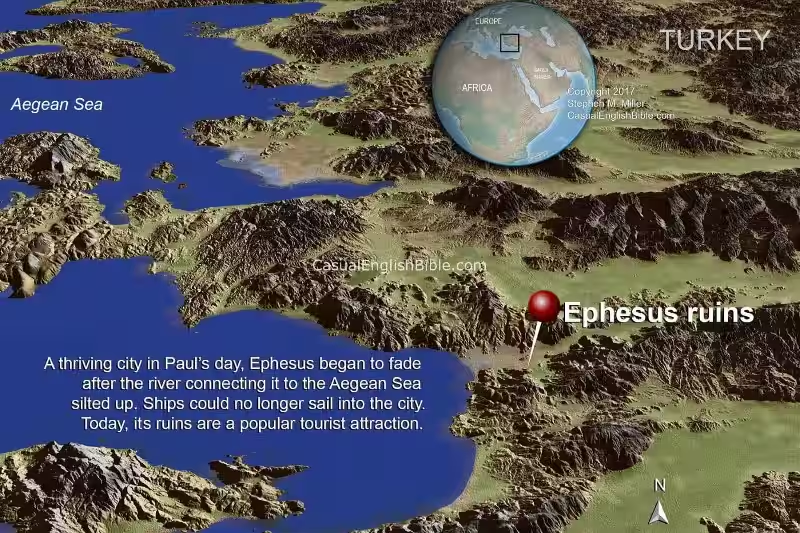
Ephesus's geographical location played a critical role in its development, but also contributed to its eventual decline. Situated near the Cayster River, its harbor initially provided access to vital trade routes. However, the river's tendency to silt up forced the city to relocate westward multiple times throughout its history. This constant shifting underscores the challenges faced by the inhabitants and the dynamic nature of the ancient world.
By the time Paul arrived during his third missionary journey, Ephesus had become a bustling Roman city, though its harbor remained a constant source of concern. The need for continuous dredging to maintain navigability contributed significantly to the economic anxieties of many Ephesians, especially the silversmiths who thrived on creating and selling shrines of Artemis. This economic dependence on the harbor created a volatile environment, setting the stage for the conflicts that would later define Ephesus's biblical significance.
Paul’s Ministry and the Riot at Ephesus: A Pivotal Moment
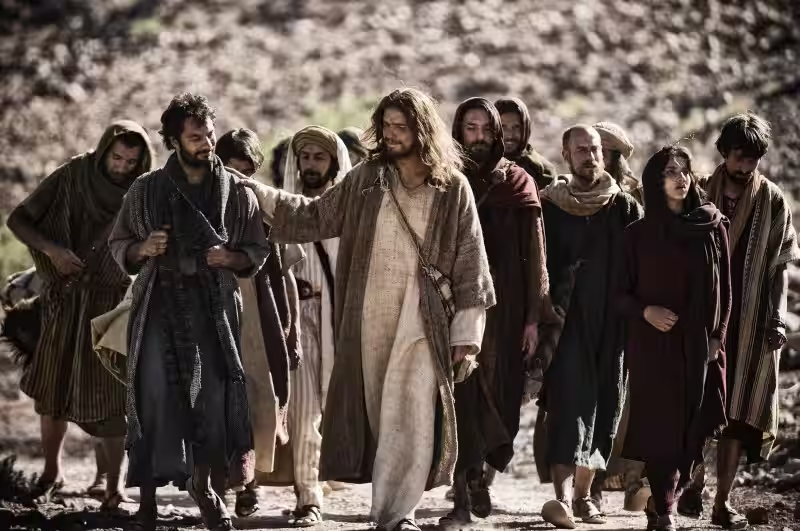
The arrival of Paul the Apostle in Ephesus marks a pivotal moment in the city's history, and a significant event in the development of Christianity. Paul's ministry, which lasted approximately two years, was met with both acceptance and fierce opposition. His preaching, challenging the established worship of Artemis, directly threatened the livelihoods of the silversmiths.
This conflict culminated in a dramatic riot, vividly described in Acts 19. The uproar, lasting a full two hours in the city's theater, demonstrates the deep-seated tensions between the emerging Christian faith and the deeply ingrained traditions of Ephesus. The scale of the riot speaks volumes about the impact of Paul's message and the strength of the opposition he faced. Following this event, Paul left Ephesus for Macedonia, but the seeds of Christianity had been firmly sown.
Ephesus in the Book of Revelation and Beyond: A Lasting Legacy
Ephesus's biblical significance extends beyond Paul's ministry. The apostle John, traditionally believed to have been accompanied by Mary, the mother of Jesus, established his ministry in Ephesus. It is widely believed he wrote his three epistles from the city, further solidifying its importance in early Christianity.
The city's enduring prominence is cemented by its inclusion as one of the seven churches addressed in the Book of Revelation. This mention elevates Ephesus to a symbolic position in Christian theology, highlighting its role in the early spread of the faith. The letter to the Ephesians in the New Testament also emphasizes the city's crucial role in the development of the Christian church. The continuing legacy of Ephesus is not only found in its biblical mentions, but also in its lasting impact on the development of Christian doctrine and theology.
The eventual decline of Ephesus was, once again, inextricably linked to its harbor. The cessation of Roman dredging efforts rendered the port unusable, triggering yet another westward relocation. The significant distance between the Roman-era city and the modern shoreline – over three miles – underscores the extent of this geographical shift and the scale of Ephesus’s decline. Today, the remaining ruins near the village of Ayasaluk offer a glimpse into the grandeur of this once-mighty city.
Using an Ephesus in the Bible Map: Navigating the Biblical Landscape
Visualizing Ephesus's location within the broader context of the biblical world is crucial to understanding its significance. A good Ephesus in the Bible map should provide several key pieces of information:
Precise Location: Showing Ephesus's position in relation to other significant cities like Smyrna, Pergamum, and Rome.
Geographical Features: Highlighting the Cayster River, the Aegean Sea, and the surrounding terrain.
Historical Context: Integrating information about the Roman Empire, the various kingdoms that preceded it in the region, and the spread of Christianity.
Biblical Events: Clearly marking the locations associated with Paul's ministry, potential sites of John's ministry, and any other relevant biblical accounts.
By utilizing such a map, readers can gain a deeper understanding of the complex interplay between geography, history, and religion that shaped Ephesus’s extraordinary story. The city's enduring legacy serves as a powerful reminder of the lasting impact of faith and the ever-changing nature of human settlements.
Frequently Asked Questions: Ephesus in the Bible and on a Map
Where is Ephesus located on a map?
Ephesus was located in ancient Asia Minor (modern-day Turkey). Its exact location shifted over time due to the silting of the Cayster River, requiring several westward relocations. The ruins of the Roman-era city are located near the modern village of Selçuk, a substantial distance (over three miles) from the current coastline. A good biblical map will show its approximate location relative to other significant cities of the Roman province of Asia.
What is the historical significance of Ephesus before its mention in the Bible?
Ephesus boasts a long and complex history predating its biblical significance. Evidence suggests it existed as early as 1440 BC, possibly as the capital of the Arzawa kingdom. It thrived under Greek rule, becoming famous for its Temple of Artemis, one of the Seven Wonders of the Ancient World. Its history involved periods under the control of various groups including Carians, Leleges, Ionians, Lydians, Persians, and finally, the Romans. The temple's construction and repeated rebuilding reflect the city's evolving power and wealth.
Ephesus holds immense importance in the New Testament. The Apostle Paul spent approximately two years there during his third missionary journey, preaching in various locations including synagogues and the school of Tyrannus. His ministry, which challenged the worship of Artemis, led to a significant riot detailed in Acts 19. Furthermore, the Epistle to the Ephesians is believed to have been written by Paul, and Ephesus is one of the seven churches mentioned in the Book of Revelation, highlighting its central role in early Christianity. The Apostle John is also believed to have ministered in Ephesus, possibly writing his three epistles there with Mary, the mother of Jesus.
What geographical factors influenced Ephesus's development and decline?
Ephesus's prosperity and decline were profoundly affected by geographical factors, primarily the Cayster River. The river's silting caused significant harbor issues, forcing multiple westward relocations of the city. The Roman Empire's eventual cessation of dredging efforts rendered the harbor unusable, contributing to the city's ultimate decline and necessitating yet another westward migration. This continuous struggle with the changing geography showcases the city's resilience and its ultimate vulnerability to environmental factors.
How can I find Ephesus on a biblical map?
A detailed biblical map will show Ephesus in the region of Asia Minor (modern-day western Turkey). Look for it in relation to other important cities mentioned in the New Testament, such as Smyrna, Pergamum, and Thyatira (all mentioned in Revelation). Many biblical atlases and websites specifically highlight the locations of the Seven Churches of Revelation, which would include Ephesus. Pay attention to the location relative to the Aegean Sea and the placement of the Cayster River to get a better understanding of its historical context.
Why is it important to understand the geographical context of Ephesus in the Bible?
Understanding Ephesus's geographical context is crucial for comprehending the biblical narrative. The city's location, its economic reliance on its harbor, and its proximity to other significant settlements all played vital roles in shaping the events described in the Acts of the Apostles and the Book of Revelation. Knowing the challenges of the city’s harbor, for instance, gives context to the economic anxieties of the silversmiths and the resulting riot provoked by Paul's preaching. The geographical context thus enriches the understanding of the religious and social dynamics of the time.