Unveiling the Mysteries: A Map of Seven Churches of Revelation
Unveiling the Mysteries: A Map of Seven Churches of Revelation
Many Christians are intrigued by the Book of Revelation and its enigmatic messages to seven churches in Asia Minor. Understanding the geographical context of these messages significantly enhances our comprehension of the text's meaning. This article will explore the significance of the map of seven churches of Revelation, examining their location, the messages they received, and the lasting relevance of these pronouncements to Christians today.
The seven churches—Ephesus, Smyrna, Pergamum, Thyatira, Sardis, Philadelphia, and Laodicea—were not randomly chosen. Their strategic placement along major Roman trade routes in modern-day Turkey speaks to their importance within the early Christian world. A map of seven churches of Revelation visually demonstrates this, showcasing their proximity to each other and the extensive network of communication and travel that existed at the time.
The selection of these specific churches wasn't arbitrary. Each city had a unique character and faced distinct challenges. Their individual circumstances highlighted common struggles within the early church, struggles which resonate deeply with believers across centuries. These challenges, and the responses offered by John, provide timeless lessons for modern-day churches.
Utilizing Interactive Maps
Several online resources offer interactive maps of seven churches of Revelation. These digital maps often provide more than just the location; they frequently include brief descriptions of each church, the message it received, and perhaps links to further resources on the subject. These interactive features can greatly enhance the learning experience, allowing users to visually explore the geographical context and delve deeper into the historical and theological significance of each location. Being able to zoom in on each city and see its neighboring cities allows for a better understanding of the overall context of the messages.
The Messages to the Seven Churches: A Timeless Relevance
The messages to the seven churches in Revelation chapters 1:9-3:22 are not simply historical accounts; they function as timeless allegories applicable to churches of all ages. Each message follows a similar pattern: identification of the church, commendation of its strengths, rebuke of its weaknesses, and a concluding promise or warning.
While the specific challenges faced by each church were unique to their historical context, the underlying issues are universal. The messages address issues such as:
Maintaining spiritual fervor: Ephesus's rebuke for losing its first love reminds us of the constant need to cultivate a passionate relationship with God.
Enduring persecution: Smyrna's message of steadfastness in the face of hardship remains relevant in times of religious conflict or social pressure.
Avoiding compromise with worldly values: The warnings to Pergamum and Thyatira against compromising faith for worldly gain or immoral practices remain cautionary tales for all believers.
Combating internal corruption: Sardis' call for spiritual wakefulness highlights the danger of complacency and the need for constant self-examination.
Overcoming spiritual complacency: Laodicea's warning against lukewarmness underscores the need for genuine faith and active engagement in the Christian life.
Each church's experience serves as a microcosm of the ongoing spiritual battles faced by believers. A map of seven churches of Revelation helps us to visualize this, placing these struggles within a geographical and historical context.
Individual Church Messages and Their Significance
Let's briefly examine some of the individual messages and their enduring relevance:
Ephesus: Praised for its work and endurance, but rebuked for losing its first love, this warns against spiritual burnout and the importance of maintaining a vibrant faith.
Smyrna: Facing severe persecution, this church received a promise of victory over death, a message of hope for those who suffer for their faith.
Pergamum: Tolerating false teachings, this church's message highlights the danger of compromise and the importance of upholding biblical truth.
Thyatira: Allowing immorality within its ranks, this serves as a warning against tolerating sin and the need for church discipline.
Sardis: Outwardly alive but inwardly dead, this call for spiritual revival emphasizes the need for genuine faith and action.
Philadelphia: A faithful church, rewarded for its perseverance, this demonstrates the blessings that come from unwavering loyalty to God.
Laodicea: Self-satisfied and lukewarm, this church exemplifies the danger of spiritual complacency and the need for authentic repentance.
These messages continue to resonate with believers today, providing guidance in navigating similar challenges.
The Book of Revelation in Context: John’s Exile and Divine Revelation
The map of seven churches of Revelation is only one piece of the puzzle. Understanding the context of the book itself is crucial. Written by John while exiled on the island of Patmos, the messages are not merely geographical instructions; they are part of a larger prophetic vision revealing God's plan for history and the ultimate triumph of good over evil.
John’s exile, a result of his unwavering faith, underscores the potential cost of following Christ. The very act of writing these messages, as commanded by God, emphasizes their importance and enduring relevance for the church. The visions received on Patmos were not just for the seven churches; they were intended to be a message of hope and warning for all believers, throughout time. The map of seven churches of Revelation therefore serves as a visual aid in understanding this broader context.
Beyond the Seven Churches: Broader Implications
The map of seven churches of Revelation and the messages they received are not isolated events. They form part of a larger narrative within the Book of Revelation, providing insight into the ongoing struggle between good and evil, and the ultimate victory of Christ. While the geographical location adds valuable context, the deeper message transcends the specific historical circumstances of the seven churches, offering timeless guidance and encouragement to believers across centuries. The map of seven churches of Revelation is therefore a crucial tool, but only one piece of the intricate tapestry of the Book of Revelation’s overarching message.
Frequently Asked Questions: The Seven Churches of Revelation
Where are the Seven Churches of Revelation located?
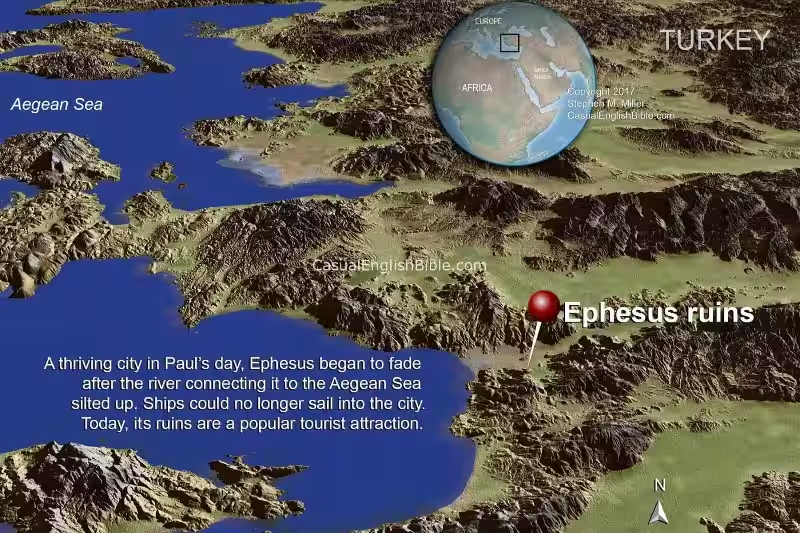
The seven churches of Revelation – Ephesus, Smyrna, Pergamum, Thyatira, Sardis, Philadelphia, and Laodicea – were all located in Asia Minor, which is modern-day Turkey. An interactive map, such as the one available on About-Jesus.org, can pinpoint their approximate locations.
What is the significance of the seven churches?
The messages to the seven churches in Revelation (chapters 1:9-3:22) are not just historical accounts of specific first-century congregations. They serve as allegorical pronouncements, applicable to churches throughout history. Each church's message addresses common challenges faced by Christian communities, offering both commendation for strengths and rebuke for weaknesses. Their experiences provide timeless lessons for believers today.
What kind of challenges did the seven churches face?
Each church faced unique challenges reflecting common struggles within the church across all eras. These included maintaining initial spiritual fervor, enduring persecution, resisting compromise with worldly values, combating internal corruption, and overcoming spiritual complacency and self-sufficiency.
About-Jesus.org offers an interactive map visualizing the approximate locations of these seven churches. This allows users to understand the geographical context of the Book of Revelation and explore the region where these early Christian communities thrived. The interactive nature enhances understanding by placing the biblical narrative within a tangible, visual framework. While the specifics of the information provided for each church location on the map are not detailed here, it's designed to offer additional information upon clicking each marker.
Are there other maps on About-Jesus.org?
Yes, About-Jesus.org provides a wider collection of interactive Bible maps. These include maps charting Jesus' ministry locations, Paul's missionary journeys (including his journey to Rome), and a more comprehensive overview map of Bible places. These maps aim to enhance understanding of the New Testament by contextualizing key events and journeys within their geographical settings.
What is the overall message of the letters to the seven churches?
The overarching message is a persistent call for authentic faith, unwavering commitment, and genuine repentance. The letters encourage constant self-examination and urge Christians to strive for holiness by actively combating sin and aligning themselves with God's will. The messages serve as a timeless and relevant guide for believers in every generation facing similar spiritual challenges.
Who wrote the Book of Revelation, and why?
The Book of Revelation was written by the Apostle John around 95 AD while exiled on the island of Patmos by the Roman Emperor Domitian. His exile was a consequence of his unwavering faith in Jesus Christ and his preaching of the Gospel. God commanded John to both witness and record the prophetic messages contained within the book, underscoring their crucial importance for the seven churches and for believers throughout history.