Forbidden Act as Sloth or Gluttony: Understanding Deadly Sins and Their Modern Manifestations
Forbidden Act as Sloth or Gluttony: Understanding Deadly Sins and Their Modern Manifestations
Understanding the concept of a "forbidden act" as encompassing sins like sloth and gluttony requires exploring the historical context of these vices and their relevance in contemporary life. While the seven deadly sins originate in Christian theology, their underlying principles resonate even beyond religious frameworks, highlighting patterns of behavior that can hinder personal well-being and societal progress.
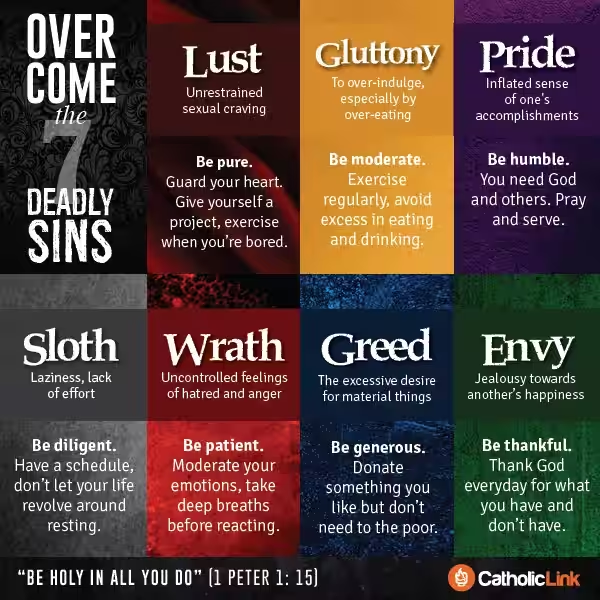
The seven deadly sins – pride, envy, wrath, sloth, greed, gluttony, and lust – are considered to be particularly harmful transgressions, capable of leading to further sins and ultimately, damnation. They represent fundamental flaws in character that can manifest in various ways. While each sin possesses unique characteristics, they often intertwine and influence one another.
The categorization of these sins helps us understand the moral failings that can lead to destructive behaviors. For centuries, they’ve served as a framework for self-reflection and moral guidance.
This framework, however, isn't about condemnation; rather, it's a tool for self-awareness and growth. Recognizing these tendencies within ourselves allows us to work towards healthier behaviors and a more fulfilling life.
Sloth: The Sin of Inaction
Sloth, often misunderstood as mere laziness, is more accurately defined as a lack of diligence and spiritual apathy. It's not simply about avoiding work; it's a refusal to engage with life fully, to pursue one's potential, and to fulfill one's responsibilities. This inaction can manifest in different ways.
For instance, neglecting one's health through a lack of exercise or proper nutrition is a form of sloth. Similarly, procrastinating on important tasks, avoiding personal growth opportunities, or failing to contribute to society are all expressions of this forbidden act. It's a spiritual lethargy, a resistance to positive action.
This apathy can lead to a sense of stagnation and dissatisfaction. Overcoming sloth requires cultivating motivation, setting realistic goals, and developing self-discipline to pursue them actively.
Gluttony: The Sin of Excess
Gluttony, often associated with overeating, extends beyond the purely physical realm. It represents an excessive indulgence in any pleasure, not just food. This can encompass overspending, excessive consumption of entertainment, or excessive attachment to material possessions.
This forbidden act is about more than just quantity; it's also about the lack of moderation and the inability to find satisfaction in reasonable amounts. A person struggling with gluttony may find themselves constantly seeking more, never truly content, and possibly experiencing negative consequences like health problems, financial instability, or damaged relationships.
The path to overcoming gluttony involves cultivating self-awareness, practicing moderation, finding healthy ways to manage cravings, and developing gratitude for what one already has. It's about finding fulfillment not in excessive consumption, but in balanced living.
Modern Manifestations of Sloth and Gluttony
In the modern world, these sins often manifest in subtle yet impactful ways. The constant stream of digital distractions can nurture sloth, as individuals spend hours passively consuming content, neglecting more meaningful pursuits. Social media, for instance, can foster a culture of comparison and envy, hindering personal growth.
Similarly, the abundance of readily available food and consumer goods fuels gluttony. The ease of access to fast food, excessive shopping, and instant gratification contribute to an environment where overconsumption thrives. These behaviors, fueled by modern conveniences, often lead to a sense of emptiness and dissatisfaction.
Overcoming Sloth and Gluttony
Addressing these forbidden acts requires conscious effort and self-reflection. Here are some practical steps:
Identify your triggers: Understand what situations, emotions, or thoughts contribute to your sloth or gluttony.
Set realistic goals: Break down large tasks into smaller, manageable steps.
Practice mindfulness: Pay attention to your thoughts, feelings, and actions.
Seek support: Talk to friends, family, or a therapist if needed.
Cultivate gratitude: Appreciate what you have instead of focusing on what you lack.
Practice self-compassion: Be kind to yourself, recognizing that overcoming these patterns takes time and effort.
By understanding the nature of sloth and gluttony and their modern manifestations, we can actively work towards a more balanced and fulfilling life. It's a journey of self-awareness and continuous growth, recognizing that these tendencies are common human experiences, but not insurmountable obstacles. The key lies in recognizing the patterns, understanding their roots, and actively choosing healthier alternatives. The fight against these forbidden acts is not a battle for perfection, but a lifelong commitment to self-improvement.
Frequently Asked Questions: Sloth and Gluttony as Forbidden Acts
Here are some frequently asked questions about sloth and gluttony, considered forbidden acts in many moral and religious frameworks:
What is sloth, and why is it considered a forbidden act?
Sloth, one of the seven deadly sins, isn't simply laziness. It's a spiritual or moral failing characterized by a lack of diligence, a failure to act, and a neglect of one's duties and responsibilities, both toward oneself and others. It's not merely inactivity, but a deliberate avoidance of action, often stemming from apathy or despair. This neglect can harm oneself and those around them, making it a forbidden act.
What is gluttony, and why is it considered a forbidden act?
Gluttony, another of the seven deadly sins, is more than just overeating. It's an excessive indulgence in food and drink, often to the point of excess and waste. It goes beyond satisfying hunger and thirst, encompassing greed, lack of self-control, and disregard for the needs of others. This uncontrolled consumption can lead to physical and spiritual harm, both for the individual and potentially for others, making it a forbidden act.
How are sloth and gluttony related?
While seemingly opposite—one is a failure to act, the other an excess of action—both sloth and gluttony are considered vices because they represent an imbalance in a person's life. Sloth is a deficiency in action, while gluttony is an excess. Both demonstrate a lack of self-control and a disregard for proper order and moderation, representing a spiritual imbalance.
What are some other terms that describe the nature of sloth and gluttony as forbidden acts?
Several terms encompass the nature of sloth and gluttony as forbidden acts. These include: vice, sin, transgression, and iniquity. Each term reflects the moral or religious condemnation associated with these actions. The specific term used depends on context and the nuance intended.
Are sloth and gluttony always considered serious sins?
The gravity of sloth and gluttony, like other sins, varies by context and religious tradition. Some perspectives treat them as less severe than other deadly sins, while others emphasize their potential for damaging consequences. The importance lies in recognizing the harmful potential of these behaviors for oneself and for others and in striving for moderation and self-control.
Can sloth and gluttony be overcome?
Yes, both sloth and gluttony are behaviors that can be addressed and overcome. This often involves self-reflection, identifying the root causes of these tendencies, setting realistic goals, developing healthy coping mechanisms, and seeking support when necessary. Spiritual practices and community support can play a significant role in overcoming these challenges.