My God Is…: Building a Positive and Accurate Understanding of God
My God Is…: Building a Positive and Accurate Understanding of God
This article explores the creation of a "God is list," a powerful tool for spiritual growth and a deeper understanding of the divine. Inspired by Philippians 4:8 ("Finally, brothers and sisters, whatever is true, whatever is noble, whatever is right, whatever is pure, whatever is lovely, whatever is admirable—if anything is excellent or praiseworthy—think about such things."), and drawing from Psalm 25 and other biblical sources, we'll delve into how constructing such a list can shape your faith and strengthen your relationship with God. This is not about creating a simplistic or limited view, but rather a rich and multifaceted understanding of who God is.
A God Is List from Psalm 25: Unveiling God’s Character
Psalm 25 offers a rich tapestry of God's attributes, providing us with an excellent starting point for our "God is list." This psalm isn't a mere recitation of qualities; it depicts a God actively involved in the lives of his people, offering comfort, guidance, and redemption.
The imagery and descriptions found within Psalm 25 reveal a God of profound depth and compassion. Instead of focusing on a single, potentially reductive definition, we see a multifaceted portrait emerge—a God who is both just and merciful, powerful and gentle, sovereign and intimately involved in our lives. This complexity is crucial to avoid a potentially simplistic or incomplete view of the divine.
Let's examine some key attributes revealed in Psalm 25:
Trustworthy: Psalm 25:1 emphasizes God's reliability and faithfulness. He can be depended upon in every situation.
Rewarder of those who wait patiently: Verse 3 highlights God's fairness and the ultimate reward for those who persevere in faith.
Forgiving and compassionate: Verses 7 and 11 demonstrate God's boundless mercy and willingness to pardon. He remembers our struggles but not our sins.
Good and upright: God's character is presented as inherently righteous and just in verse 8.
Guide and Instructor: God actively leads and teaches those who seek him (verses 4-5, 10, 12).
Refuge and Protector: In times of trouble, God offers protection and deliverance (verse 20).
Redeemer: Ultimately, God is presented as the one who saves and restores (verse 22).
This is just a glimpse into the rich tapestry of God's character as portrayed in Psalm 25. The psalm encourages a deep personal reflection, inviting us to engage with God's promises and experience his presence.
Expanding Your God Is List: Beyond Psalm 25
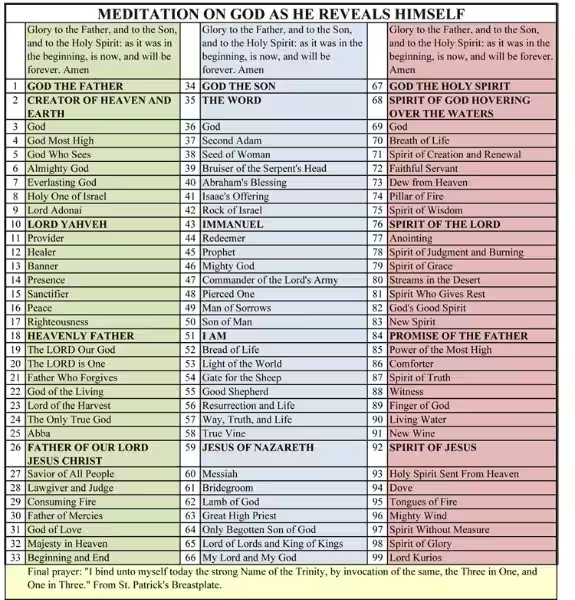
While Psalm 25 provides a strong foundation, our "God is list" shouldn't be limited to a single passage. The Bible as a whole reveals the diverse and multifaceted nature of God. Consider incorporating attributes from other passages such as:
God is Love: 1 John 4:8 This foundational attribute underlines God's benevolent and compassionate nature.
God is Sovereign: Isaiah 45:7 This acknowledges God's ultimate authority and control over all things.
God is Holy: Isaiah 6:3 This highlights God's transcendent purity and separateness.
God is Just: Romans 2:2 This underscores God's unwavering commitment to righteousness and fairness.
God is merciful and gracious: Exodus 34:6 This emphasizes God's compassion and forgiveness.
Creating a comprehensive "God is list" requires careful study of scripture, prayerful reflection, and a willingness to wrestle with the complexities of the divine. It is a journey of ongoing discovery. The goal isn't to exhaust every possible attribute but to cultivate a deeper, more nuanced understanding of who God is.
Practical Application of Your "God Is List"
The beauty of a personal "God is list" lies in its practical application. It's not just an intellectual exercise, but a powerful tool for shaping our thoughts, feelings, and actions. Here are some ways to use your list:
Meditation: Regularly reflect on the attributes of God on your list. Allow these truths to sink into your heart and transform your perspective.
Prayer: Use your list as a framework for prayer. Thank God for his specific attributes and ask for his help to embody them in your own life.
Overcoming Challenges: When facing difficulties, turn to your list for encouragement and strength. Remember God's faithfulness, mercy, and power.
Remember, a "God is list" is a personal and ongoing project. It's a journey of faith, discovery, and a deepening relationship with God. Don't be afraid to expand and refine your list as your understanding of God grows.
Addressing Potential Pitfalls: Nuance and Avoiding Anthropomorphism
It's vital to approach the creation of a "God is list" with caution and nuance. We must avoid the pitfalls of:
Anthropomorphism: Attributing human characteristics to God in a way that misrepresents his nature. While we use human language to describe God, we must remember he transcends human comprehension.
Oversimplification: Reducing God's complex nature to a few simplistic descriptors. The Bible reveals a God of immense complexity and depth.
Ignoring Difficult Attributes: Focusing only on the positive aspects of God's character and ignoring his justice, holiness, or wrath. A balanced understanding embraces all aspects revealed in scripture.
By acknowledging these potential pitfalls, and by diligently studying scripture and engaging in prayerful reflection, we can construct a "God is list" that not only accurately reflects God's character but also strengthens our faith and transforms our lives. The goal is not to fully comprehend God, a task beyond our capacity, but to grow in our knowledge and relationship with him. The journey of understanding who God is—truly understanding, not just intellectually but experientially—is a lifelong pursuit, and the “God is list” can be a powerful tool on that journey.
Frequently Asked Questions: Creating a "My God Is..." List
What is a "My God Is..." list?
A "My God Is..." list is a personal spiritual exercise where you reflect on and list the attributes of God as revealed in Scripture. It's a way to focus your mind and heart on the positive and multifaceted nature of God's character, cultivating a positive and faith-filled mindset. This practice is inspired by Philippians 4:8 which encourages focusing on things that are true, noble, right, pure, lovely, admirable, excellent, and praiseworthy.
How do I create a "My God Is..." list?
Begin by studying Scripture, particularly passages that reveal God's character. Psalm 25 is an excellent starting point, highlighting attributes such as trustworthiness, faithfulness, compassion, forgiveness, and provision. You can also explore other Psalms, like Psalm 27, or other books of the Bible. Note the words and phrases used to describe God and use them to build your list. The goal is to create a personally meaningful list that reflects your understanding of God's character based on your study of the Bible.
This exercise helps you develop a deeper and more nuanced understanding of God beyond simple or limiting descriptions. By focusing on God's positive attributes, you cultivate a more positive and hopeful outlook. It strengthens your faith and enhances your relationship with God by actively engaging with His revealed character. It's a form of meditation on God's goodness and faithfulness.
Are there any specific passages of scripture to help me build my list?
Psalm 25 is a rich source of attributes to consider. It depicts God as trustworthy, a rewarder of those who wait, a faithful guide, compassionate, forgiving, good, upright, a provider of justice, a companion to the lonely, a caretaker of the afflicted, a protector, a refuge, and a redeemer. Psalm 27 also offers further insights into God's character. Remember to explore various passages throughout Scripture to gain a well-rounded perspective.
Should my list only include positive attributes of God?
While the focus is often on positive attributes to cultivate a positive mindset, it's crucial to acknowledge the full picture of God's character as revealed in Scripture. This includes aspects like His holiness, justice, and wrath. The goal isn't to create a simplistic or sentimentalized view of God, but a complete and accurate understanding based on the whole of Scripture. A balanced perspective integrates both the seemingly positive and negative attributes.
How can I use my "My God Is…" list in my daily life?
Use your list as a tool for meditation and prayer. Reflect on the attributes you've listed, allowing them to shape your thoughts, actions, and interactions with others. When facing challenges, recall God's attributes and trust in His character. This can provide comfort, strength, and guidance in all aspects of your life. Consider reviewing and adding to your list periodically as your understanding of God deepens.