Unraveling the Mysteries: Golgotha and Mount Moriah – Two Sites, One Story?
Unraveling the Mysteries: Golgotha and Mount Moriah – Two Sites, One Story?
The locations of Golgotha and Mount Moriah have captivated theologians, historians, and archaeologists for centuries. These sites, deeply embedded in Judeo-Christian tradition, hold immense symbolic and historical weight. But are they connected? This article explores the potential relationship between these two pivotal locations, examining their individual significance and investigating the possibility of a shared identity.
Mount Moriah: A Place of Sacrifice and Divine Covenant
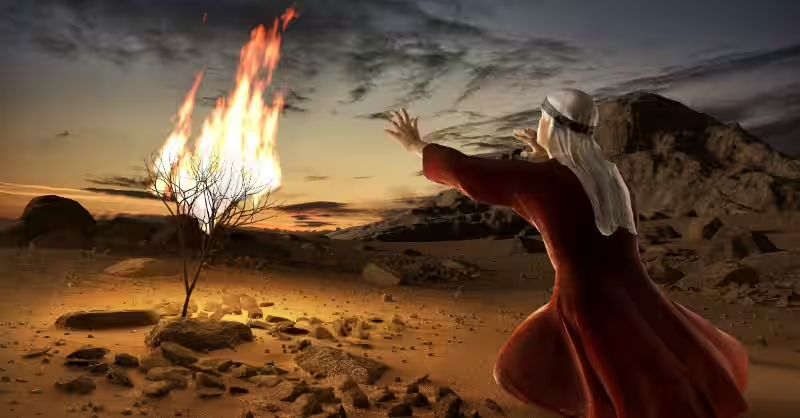
Mount Moriah, as described in the Book of Genesis, is the place where God commanded Abraham to sacrifice his son, Isaac. This near-sacrifice, a profound act of faith and obedience, foreshadows the ultimate sacrifice of Jesus Christ on Golgotha. The narrative in Genesis 22 is not merely a historical account but a powerful theological parable.
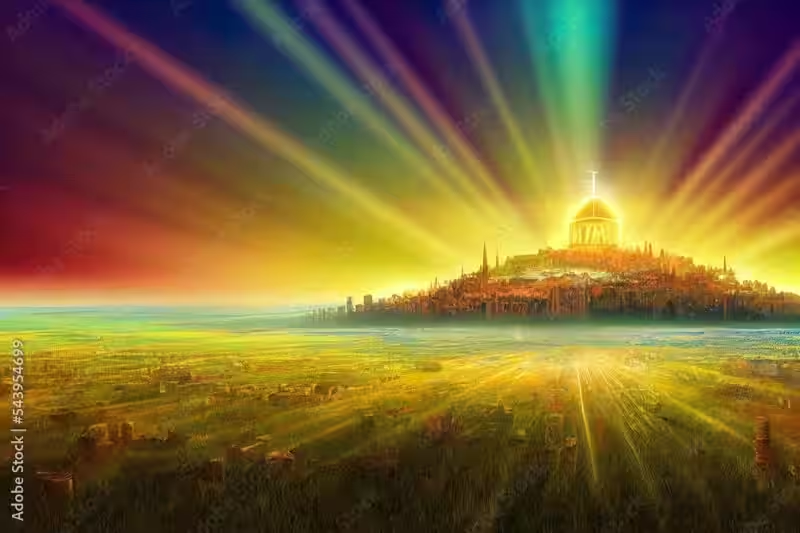
The precise location of Mount Moriah has been debated for centuries. However, the prevailing tradition identifies it with the Temple Mount in Jerusalem. This identification is largely based on the biblical text and historical accounts that place the First and Second Temples on this very mount. This location, therefore, becomes a site not only of divine testing but also of God's covenant with his people, encompassing centuries of worship and religious observance. The permanence of God’s presence in the Temple served as a constant reminder of this sacred covenant.
The Temple Mount and its Significance
The Temple Mount's significance extends far beyond its association with Mount Moriah and the biblical narratives. It remains a site of profound religious importance today, holding equal significance for Jews, Christians, and Muslims. The construction of Solomon's Temple, commissioned by King David after his purchase of the threshing floor of Araunah, further solidified the mount's sacred status. The Dome of the Rock and the Al-Aqsa Mosque, both prominent Islamic structures, stand prominently on the Temple Mount, testifying to the enduring importance of this location across different faiths.
The historical and religious context surrounding Mount Moriah is richly layered and complex, inviting ongoing study and interpretation. The debates that continue today concerning its precise location and historical accuracy underscore the complexities embedded in the interpretation of ancient texts and the challenges of reconstructing the past.
Golgotha: The Place of the Skull and the Crucifixion
Golgotha, meaning "place of the skull" in Aramaic, is the site traditionally identified with the crucifixion of Jesus Christ. This location, crucial to Christian theology, marks the culmination of Jesus's ministry, his atoning sacrifice, and the promise of salvation. The Church of the Holy Sepulchre in Jerusalem currently stands on the traditionally accepted location of Golgotha, a site venerated by Christians worldwide for centuries.
However, the precise identification of Golgotha, like Mount Moriah, remains subject to debate. While the Church of the Holy Sepulchre holds significant symbolic value and is widely accepted by Christians, the lack of definitive historical and archaeological evidence continues to spark discussion. The shifting landscape of ancient Jerusalem and the passage of time have made it challenging for experts to pinpoint the exact location with absolute certainty.
The Theological Significance of Golgotha
Despite the geographical uncertainties, the theological significance of Golgotha remains undeniable. It represents the pivotal moment in Christian history – the sacrifice of Jesus, the Son of God, to atone for the sins of humanity. For Christians, Golgotha is not merely a geographical location but a potent symbol of love, redemption, and the triumph of good over evil. The symbolism of the "skull" itself has also inspired varied theological interpretations, often associated with the concept of death and its ultimate defeat through Christ's resurrection.
The ongoing scholarly and theological discussions surrounding Golgotha’s precise location underline the enduring complexity of historical interpretation and the richness of symbolic meaning embedded within the narrative. The debates continue to fuel both academic research and spiritual reflection.
The Potential Connection: Mount Moriah and Golgotha as One?
The proximity of Mount Moriah (identified with the Temple Mount) and the traditional location of Golgotha within Jerusalem has led some to propose that they are, in fact, the same site. This theory posits a deliberate divine choice of location, emphasizing the continuity of God's plan from the near-sacrifice of Isaac to the ultimate sacrifice of Jesus. This interpretation highlights the prophetic nature of the Old Testament, with Mount Moriah serving as a prefiguration of Golgotha.
This theory, however, lacks definitive proof. While compelling from a theological perspective, it rests on interpretive readings of scriptural texts and lacks conclusive archaeological evidence. The ambiguity surrounding the precise boundaries of ancient Jerusalem and the challenges of excavating in such a densely populated and historically significant area further complicate the matter.
Evaluating the Evidence and the Debates
The question of whether Mount Moriah and Golgotha are one and the same remains a subject of ongoing debate. While the connections are compelling from a theological standpoint, the lack of definitive historical and archaeological evidence prevents a conclusive answer. The existing evidence, largely based on textual interpretation, archeological speculation, and traditional accounts, leaves room for different perspectives and interpretations. Further research, perhaps involving new archaeological methodologies or reinterpretations of existing evidence, may eventually shed more light on this fascinating question.
In conclusion, the exploration of Mount Moriah and Golgotha reveals the complexity of historical and religious interpretation. While we may not have definitive answers to all the questions surrounding these sites, their enduring significance in Judeo-Christian tradition remains undeniable. The ongoing debates and scholarly investigations enrich our understanding of both locations and their profound influence on religious belief and cultural heritage. The mystery, in its own way, only serves to increase the intrigue and invite further exploration of these sacred places.
What is Mount Moriah?
Mount Moriah is a location in Jerusalem mentioned in the Hebrew Bible. Traditionally, it's identified with the Temple Mount, the site where Abraham was commanded by God to sacrifice Isaac (Genesis 22), and where Solomon later built the First Temple. Its precise geographical boundaries are debated, but its religious significance is undeniable, holding importance for Judaism, Christianity, and Islam.
Golgotha, often translated as "Place of the Skull," is the traditional location of Jesus Christ's crucifixion according to the New Testament. The Church of the Holy Sepulchre in Jerusalem is built on the site traditionally believed to be Golgotha, though its precise location remains a subject of scholarly discussion and lacks definitive archaeological proof.
Are Mount Moriah and Golgotha the same place?
Some interpretations, particularly those emphasizing the typological relationship between the sacrifice of Isaac and the sacrifice of Jesus, argue that Mount Moriah and Golgotha are the same location. This view suggests a divinely chosen site of profound significance for both Old and New Testament events. However, there is no definitive historical or archaeological consensus supporting this claim. The lack of conclusive evidence leaves room for various interpretations and ongoing scholarly debate.
What is the evidence for the connection between Mount Moriah and Golgotha?
The primary evidence for a connection rests on theological interpretation. The sacrifice of Isaac on Mount Moriah is seen by some as a prefiguration of Jesus' sacrifice on Golgotha. Proponents of their identity highlight the continuity of God's plan, emphasizing the foreshadowing in the Old Testament and its fulfillment in the New. However, this interpretation is not universally accepted, and lacks definitive physical or historical corroboration. Archaeological evidence relating to the exact locations of both sites is limited and open to multiple interpretations.
What is the significance of the debate surrounding the locations of Mount Moriah and Golgotha?
The debate highlights the challenges in interpreting ancient texts and reconstructing the historical geography of ancient Jerusalem. The lack of definitive proof fosters diverse interpretations and fuels discussions within historical and religious contexts. The ambiguity underscores the complexities of relying on limited historical sources and the ongoing nature of historical and archaeological research. While the religious significance of both Mount Moriah and Golgotha remains undisputed, the exact nature of their relationship remains a topic of ongoing scholarly and theological discussion.