The 12 Gates of Jerusalem and Their Meaning: A Journey Through History and Faith
The 12 Gates of Jerusalem and Their Meaning: A Journey Through History and Faith
Have you ever wondered what the gates of Jerusalem really mean, beyond their practical function as entrances to the Old City? These ancient portals offer a captivating window into the city's rich history, spiritual significance, and enduring role in biblical prophecy. This article explores the historical and symbolic meaning of several key gates, examining their connection to both earthly events and heavenly promises.
Jaffa Gate, built by the Ottomans, stands as a crucial entry point into Jerusalem's Old City. But it was far more than a simple passageway — it functioned as a vibrant hub of daily life, reflecting the role city gates played in biblical times. Picture bustling markets, legal proceedings, and even royal proclamations taking place near its imposing structure.
General Allenby's respectful entry through Jaffa Gate in 1917 underscores its historical importance. Yet its significance extends far beyond this one event, with deep roots in biblical precedent. Biblical accounts reveal that city gates were vital centers for social interaction, commerce, and governance. Elders gathered there to administer justice, merchants offered their wares, and important decisions affecting the whole community were announced.
Zion Gate: Witness to Conflict and Symbol of Reunification
Located near Mount Zion — a site intrinsically tied to King David and the Last Supper — Zion Gate carries a palpable weight of history. The visible bullet holes from the 1947 war stand as stark reminders of the city's turbulent past.
For many believers, the gate's survival, and its role in Jerusalem's reunification under Jewish control in 1967, are seen as the fulfillment of a prophecy in Luke 21 concerning Gentile dominion over Jerusalem — an event deeply significant for Christians. Zion Gate thus stands as a moving symbol of both conflict and ultimate unification, testifying to how a city's physical restoration can reflect a people's spiritual restoration.
Dung Gate: From Waste Disposal to Spiritual Rebuilding
The name "Dung Gate" might sound unpleasant, but its historical use as a waste-disposal area connects it to a deeper, more transcendent meaning. Its proximity to the City of David archaeological park directly links it to the era of King David and Hezekiah's Tunnel, a vital water source in ancient times.
The gate's mention in the account of Nehemiah highlights the emotional impact of the destruction of Jerusalem's walls, paralleling the personal impact of brokenness and the need for spiritual rebuilding. This connection turns Dung Gate into a powerful symbol of restoration and renewal — a reminder that spiritual growth can emerge even from seemingly insignificant places. The story of its reconstruction teaches that no aspect of life is too broken down to be restored by divine grace.
Damascus Gate: Connecting History with Faith
Damascus Gate occupies a unique position, located near both the Church of the Holy Sepulchre and the Garden Tomb — possible burial sites of Jesus. This proximity adds a significant layer of religious meaning, weaving historical events together with important sites of the Christian faith.
Its connection to the Via Dolorosa, the path believed to have been walked by Jesus toward His crucifixion, further deepens its religious significance. Damascus Gate thus functions as a powerful physical link between history, faith, and the life of Jesus, allowing pilgrims to literally walk where they believe Christ walked in His final earthly moments.
The Golden Gate (Eastern Gate): A Sealed Portal, Awaiting Fulfillment
Currently sealed, the Golden Gate, also known as the Eastern Gate, holds immense symbolic importance. Its biblical connections — tied to the "Beautiful Gate" in Acts and Ezekiel's prophecy about the Lord entering through it — link it to Jesus's triumphal entry on Palm Sunday and the prophesied messianic return.
The fact that this gate remains sealed signifies a wait for future fulfillment — a powerful image of hope and anticipation for many believers. For them, the seal isn't a final closure but a promise of future opening. The Golden Gate serves as a potent symbol of hope and faith in the promise of future redemption.
Jerusalem as a Microcosm of the Believer’s Spiritual Journey
Jerusalem's historical narrative — periods of destruction followed by remarkable rebuilding — mirrors the individual believer's spiritual journey. The city has faced sieges, occupation, exile, and return; likewise, believers face temptation, failure, and opportunities for renewal. The city's resilience demonstrates God's unwavering commitment and echoes the call for believers to be "watchmen on the walls," actively engaging in prayer and working for God's kingdom.
Just as Jerusalem has risen from destruction, so too can a believer overcome adversity and emerge stronger in their faith. This analogy emphasizes the enduring nature of hope and the importance of perseverance in the face of adversity. Rebuilt walls represent renewed spiritual boundaries, and restored gates symbolize renewed access to divine favor and protection.
The Meaning of Walls and Gates: Security and Spiritual Strength
The ancient understanding of walls as essential for security and self-control, as highlighted in Proverbs 25, is key to understanding Jerusalem's story. The destruction of Jerusalem's walls represented not just physical vulnerability but spiritual and moral weakness as well.
Rebuilding the walls, therefore, symbolizes spiritual restoration and renewed commitment. This underscores the importance of maintaining strong spiritual boundaries and actively working to restore one's faith after periods of weakness or hardship. In biblical tradition, a strong wall protected not just against outside invaders but also kept residents from straying from their own paths.
The Twelve Gates of the New Jerusalem (Revelation 21:12) and Their Meaning
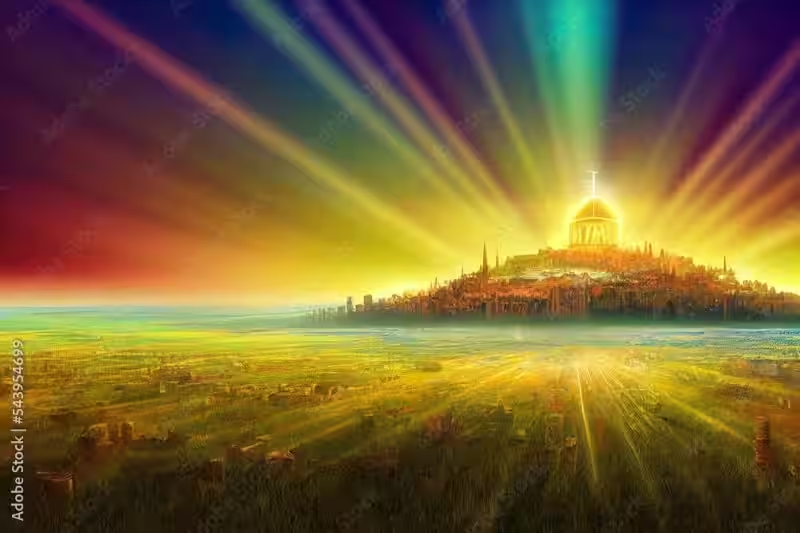
Revelation 21:12 describes the New Jerusalem, a city descending from heaven, with twelve gates — each a single pearl — inscribed with the names of the twelve tribes of Israel. This vision offers a hopeful perspective on ultimate restoration and entrance into heaven.
This imagery symbolizes the inclusiveness of God's grace, extending beyond earthly boundaries to embrace all who have faith in Christ. The twelve gates represent the completeness and enduring nature of God's covenant with His people. The number twelve isn't random — it references both the twelve tribes of Israel and the twelve apostles, uniting the Old and New Testaments into a single, coherent narrative of salvation.
The description of the gates as pearls is particularly significant. A pearl forms when an oyster covers an irritation or injury with layers of nacre. In the same way, Christ's redemption transforms suffering and brokenness into something beautiful and precious. This suggests that even our deepest wounds can be transformed by divine grace into something beautiful and valuable.
Frequently Asked Questions About the Gates of Jerusalem
What's the significance of the gates of Jerusalem's Old City?
The gates of Jerusalem's Old City are far more than simple entrances — they're vital hubs of public life and powerful symbols reflecting the city's rich spiritual and political history. They served as places for everyday transactions, legal proceedings, and even royal proclamations, highlighting their importance as social and administrative centers. Their historical and biblical significance continues to resonate today, connecting past and present and offering profound theological insight into how God works through physical structures and geographic locations.
What are some key gates of Jerusalem, and what's their historical significance?
Several gates carry particular historical and religious significance:
Jaffa Gate — An important entry point built by the Ottomans, it witnessed pivotal moments like General Allenby's entry in 1917. Its biblical precedents underscore the role of gates as hubs of social and administrative life.
Zion Gate — Located near Mount Zion, associated with King David and the Last Supper, this gate bears visible bullet holes from the 1947 war, symbolizing the city's history of conflict and its eventual reunification under Jewish control.
Dung Gate — Its name reflects its past use as a waste-disposal area. Its proximity to the City of David archaeological park connects it to the era of King David and Hezekiah's Tunnel. Its mention in Nehemiah underscores the importance of Jerusalem's walls and the emotional impact of their destruction.
Damascus Gate — Situated near the Church of the Holy Sepulchre and the Garden Tomb, this gate's proximity to these potential burial sites of Jesus adds significant religious weight and connects it to the Via Dolorosa.
Golden Gate (Eastern Gate) — Currently sealed, this gate holds immense symbolic importance due to its biblical connections to the "Beautiful Gate" in Acts and Ezekiel's prophecy about the Lord entering through it. Its sealed state represents a wait for future fulfillment.
How do the gates of Jerusalem relate to a believer's spiritual journey?
Jerusalem's history of destruction and rebuilding mirrors the individual believer's spiritual journey. The city's resilience and restoration, symbolized by the rebuilding of its walls and gates, reflect God's unwavering commitment and the believer's calling to be "watchmen on the walls," actively engaging in God's kingdom. Just as the city has gone through cycles of falling and rising, believers also go through periods of weakness followed by spiritual renewal, trusting that God remains faithful.
What's the symbolic meaning of Jerusalem's walls and gates?
Ancient cultures viewed walls as essential to security and self-control (Proverbs 25). The destruction of Jerusalem's walls represented physical vulnerability and spiritual weakness. Rebuilding the walls symbolized spiritual restoration and renewed commitment to God and the principles that sustained the community. This symbolism transcends politics — it reflects universal truths about how personal integrity and spiritual strength require constant vigilance and maintenance.
What's the significance of the twelve gates of the New Jerusalem (Revelation 21:12)?
Revelation 21:12 describes twelve gates, each a single pearl, inscribed with the names of the twelve tribes of Israel. This signifies God's enduring covenant with His chosen people and the ultimate restoration of believers into the heavenly kingdom. The twelve gates represent the completeness and sufficiency of Christ's atonement, offering unrestricted access to God's grace and eternal peace. The gates' continual openness symbolizes the universal invitation to share in God's grace. The twelve gates, together with the twelve foundations bearing the names of the apostles, unite the Old and New Covenants, highlighting the continuity of God's plan and the Church's foundation in the apostles' teaching.
Do the twelve gates of the New Jerusalem hold specific meaning for Christians?
For Christians, the twelve gates of the New Jerusalem represent the inclusive nature of God's salvation. Though rooted in the twelve tribes of Israel, the gates symbolize God's offer of salvation to all who have faith in Christ, embracing both Jewish and Gentile believers — the "true Israel." The pearl gates, formed by an oyster's response to irritation, reflect Christ's suffering — His sacrifice being the means by which entrance is granted. Their continual openness signifies the ongoing invitation to salvation for all nations. This transformative vision suggests that in the heavenly kingdom, there are no barriers separating believers based on ethnic or cultural background — faith in Christ is the universal gate to redemption and eternal life with God.