What can a seemingly simple story of healing teach us about our own lives and our relationship with the divine? The Gospel of John's account of Jesus healing the man at the pool of Bethesda offers a wealth of spiritual insight that resonates deeply even today. By examining this narrative, we can glean practical lessons about faith, perseverance, and the nature of true healing.
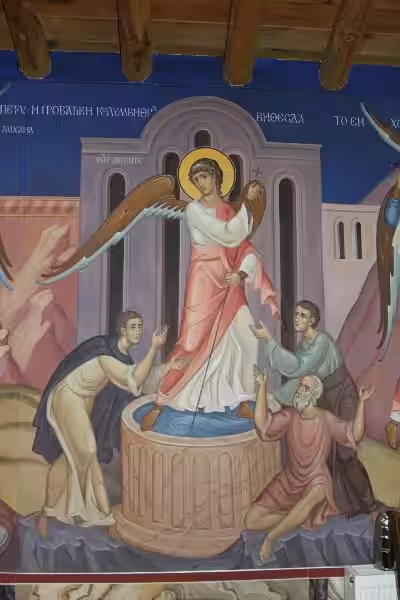
The story begins with a man, impotent for thirty-eight years, lying by the pool of Bethesda. This pool, believed to possess miraculous healing properties, was a place of hope and despair. Many flocked to it, yet only a select few were miraculously healed when the water was stirred. The man’s plight was a reflection of his physical limitation, but more importantly, it highlighted a deeper spiritual condition.
Jesus, however, saw beyond the man's physical limitations. He didn't focus solely on the man's disease; instead, he perceived the man's inherent spiritual potential, his capacity for wholeness. This act underscores a crucial lesson: true healing isn't merely the absence of disease but a restoration of our inherent connection to our spiritual source. This perspective shift is paramount—moving away from a solely material understanding towards a spiritual understanding of our identity. This naturally leads to a more profound and lasting healing.
The Importance of Perseverance and Patience
The man at the pool had waited for a long time, thirty-eight years, for healing. His persistence, despite the lack of tangible results, speaks volumes about his deep-seated desire for wholeness and his unwavering hope. This prolonged wait serves as a powerful example of faith in action, even in the face of seemingly insurmountable obstacles. However, his reliance on the external event – the stirring of the waters – reveals a crucial flaw: his faith was misplaced, focused on the external rather than the internal, on the means rather than the source.
His story reminds us that while perseverance and patience are vital, they must be coupled with a correct understanding of our spiritual connection to the divine. We must cultivate a faith that is not dependent on specific outcomes or external events, but rooted in our inherent connection to God's love and power. This is the key to navigating life's challenges with resilience and hope.
Transcending Limiting Beliefs: The Power of Material vs. Spiritual
The man's reliance on the "troubling of the water" exemplifies a common human tendency—seeking healing in external factors instead of recognizing the inherent healing power within. This represents a materialist perspective, a belief that healing resides solely in physical means. Jesus's intervention directly challenges this viewpoint.
His command, "Rise, take up your bed, and walk," transcends the physical limitations and demonstrates that true healing emanates from a spiritual understanding of our identity as children of God. The man's perceived helplessness didn't stem from a lack of external aid, but from a lack of understanding his own spiritual power and connection to the divine. This highlights the importance of challenging limiting beliefs and embracing a spiritual perspective that recognizes our inherent wholeness and connection to the source of all healing.
The False Belief of Separation
This story directly confronts the false belief of separation from God. The man's "impotence" is not merely a physical ailment but a symbolic representation of a spiritual disconnection. Jesus's healing is not just a physical cure but a restoration of this connection, a re-establishment of the man's inherent wholeness. This is a powerful reminder that our true identity is spiritual, and our connection to God is the foundation of our well-being.
The story of the man at the pool of Bethesda offers timeless lessons that remain profoundly relevant in our lives today:
Recognize your inherent spiritual wholeness: We all possess an inherent capacity for healing and wholeness, connected to our divine nature.
Cultivate perseverance and patience: Challenges will arise, but faith and persistence are essential in overcoming obstacles.
Challenge limiting beliefs: Don't rely solely on external factors for healing; cultivate a deeper understanding of your spiritual connection.
Embrace your spiritual identity: Understand that your true identity is rooted in your relationship with God, not in your circumstances.
The healing at Bethesda wasn't just a single event; it was a transformative moment, demonstrating the power of faith, perseverance, and a shift in perspective. It reminds us that true healing is a journey of recognizing our spiritual potential, embracing our connection to the divine, and challenging the limiting beliefs that hold us back. The man at the pool, after 38 years of waiting, finally experienced the transformative power of a belief rooted in the spiritual, a belief that unlocked his inherent capacity for healing and wholeness. This story continues to inspire and challenge us, reminding us of the profound power of faith and the ever-present possibility of healing, both physical and spiritual.
FAQ: Lessons from the Man at the Pool of Bethesda
Here are some frequently asked questions and answers regarding the spiritual lessons found in the Gospel of John's account of Jesus healing the impotent man at the Pool of Bethesda:
What is the primary lesson about healing found in the story of the man at the Pool of Bethesda?
The story emphasizes that true healing originates from a spiritual shift in perspective. Jesus didn't focus solely on the man's physical ailment but recognized his inherent spiritual wholeness, transcending the physical limitations. This reveals that healing begins with acknowledging our inherent connection to the divine and understanding our spiritual identity, not just addressing the physical symptoms. The focus shifts from external factors to an internal, divinely-sourced capacity for healing.
How does the man's perseverance relate to the overall message?
The man's persistent waiting at the pool demonstrates unwavering faith and a deep desire for healing, even in the face of prolonged suffering. This highlights the importance of perseverance and patience in our own spiritual journeys. However, his reliance on the "stirring of the waters" as the sole means of healing also illustrates a potential pitfall: misplaced faith in external factors rather than recognizing our intrinsic connection to our spiritual source. His story teaches us to persevere, but to direct that perseverance towards a deeper understanding of our spiritual connection.
What is the significance of the man's belief in the "troubling of the water"?
The man's belief highlights the limiting power of material beliefs. His reliance on an external event for healing represents a common tendency to seek remedies in material things rather than recognizing our inherent capacity for healing rooted in our spiritual nature. Jesus' direct intervention challenges this materialistic perspective, demonstrating that healing comes from a spiritual understanding of our identity as created in God's image, inherently whole and connected to the divine.
How does Jesus' action of directly healing the man challenge traditional beliefs?
Jesus' healing directly challenges the prevailing belief system around the pool, where healing was contingent upon external circumstances (the moving of the water). He directly addresses the man's condition, bypassing the supposed necessity of the external event. This demonstrates that divine intervention can transcend material limitations and that healing can come through direct connection with the divine, regardless of external factors.
What is the ultimate message of the story regarding our own lives?
The story of the man at Bethesda encourages a transformative shift in perspective. It calls us to recognize our inherent spiritual wholeness, to persevere in faith despite challenges, and to overcome limiting beliefs that prioritize external factors over our inner, divinely-given capacity for healing. Ultimately, it reminds us that true healing and wholeness stem from our connection to the divine, acknowledging our identity as children of God.