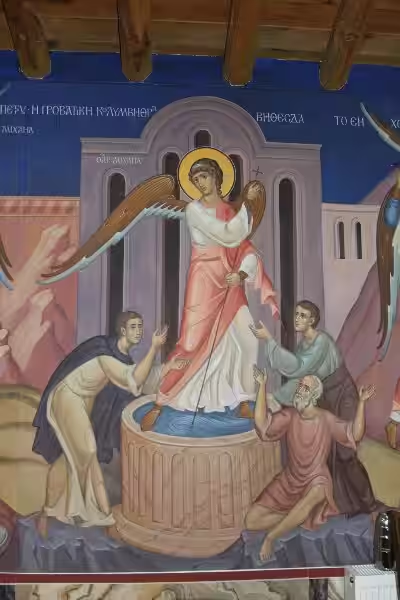
The Gospel of John recounts a powerful miracle at the Pool of Bethesda, leaving many with questions about the details. One of the most intriguing aspects is the mention of an angel, stirring the waters and imparting healing properties. But who was this angel at the pool of Bethesda, and what does his presence—or absence—reveal about the narrative? This article delves into the historical, theological, and textual complexities surrounding this enigmatic figure.
The Pool of Bethesda, situated near Jerusalem's Sheep Gate, held significant cultural and religious importance. Its Aramaic name, meaning "House of Mercy," reflected the popular belief that an angel would periodically stir its waters, miraculously healing the first person to enter.
This belief wasn't unique to the Gospel account. Archaeological discoveries in the 19th century unearthed a pool matching the description provided in John 5, confirming its historical existence. Further excavations revealed a fascinating connection to a Roman temple dedicated to Asclepius, the Greco-Roman god of healing. This discovery provided valuable context, suggesting the pool served as a pagan healing shrine frequented by a diverse population, likely including many Jews seeking cures. The Babylonian Talmud corroborates this, mentioning cures at similar pagan shrines.
The coexistence of Jewish faith and pagan practices at Bethesda highlights the complex religious landscape of first-century Judea. The inclusion of this setting in John's Gospel is therefore not accidental but rather a deliberate choice that adds layers of meaning to Jesus' actions.
The Angel’s Role: Textual Variations and Interpretations
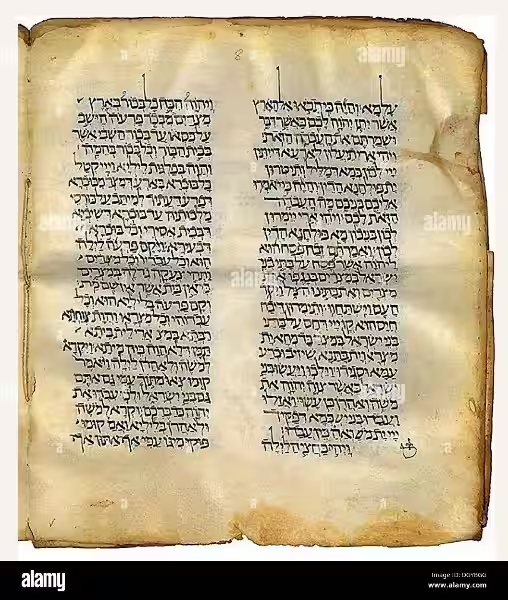
The verses describing the angel stirring the water (John 5:3-4) are a critical point of contention. Many older, authoritative manuscripts omit these verses, leading scholars to believe they might be a later addition, a marginal commentary, or a gloss—a brief explanatory note added to the text.
This omission creates a significant narrative gap. Without the angel's intervention, the paralytic's need for help entering the pool at the opportune moment—a detail crucial to the narrative—becomes less clear. Furthermore, the very idea of an angel connected to a pagan shrine clashes with early Christian views that often characterized any power associated with pagan religions as demonic. This leads to some interpretations positing that the angel, in this context, might represent a fallen angel, highlighting the contrast between authentic divine healing and deceptive pagan practices.
The absence of these verses in some texts, however, doesn't negate the core message of the passage. The story still effectively contrasts the chance healing at Asclepius' pool with Jesus' direct, personal, and loving encounter with the paralytic.
The Conflict Between Pagan Healing and Divine Intervention
The narrative of the healing at Bethesda cleverly juxtaposes two distinct approaches to healing: the uncertain, potentially even demonic, practices associated with the pagan shrine, and the intentional, divine healing offered by Jesus. This contrast underscores the central theme of the passage: the superiority of Jesus' healing power over any ritual or superstitious belief.
The reliance on the angel's intervention at the pool represents a form of superstition. The paralytic, having waited for 38 years, places his faith in a potentially unreliable, and possibly even demonic, source of healing. Jesus' direct intervention, on the other hand, highlights the transformative power of faith in Him, offering a more certain and personal healing.
The text subtly suggests the potential for deceptive forces at work within the pagan healing tradition. The chance nature of the healing—only the first person to enter after the angel's stirring was healed—and the association with a pagan shrine dedicated to Asclepius raise questions about the true nature of the supposed divine intervention.
Jesus' healing of the paralytic transcends the mere physical restoration. The miracle occurs on the Sabbath, provoking a conflict with Jewish authorities who focus on the letter of the law rather than the spirit of compassion and divine intervention.
This conflict serves as a powerful illustration of spiritual blindness. The religious leaders miss the profound significance of the healing, prioritizing adherence to rules over the tangible evidence of God's power at work.
Jesus' subsequent encounter with the healed man at the temple further underscores the holistic nature of his healing. He warns the man against further sin, implying that physical healing is only one aspect of true restoration; spiritual well-being is equally, if not more, important.
This emphasizes that true healing encompasses both physical and spiritual dimensions. It's a complete restoration, not just a cure for a physical ailment. The subsequent persecution of Jesus by the Jewish leaders after the man testifies to the miraculous healing further showcases their resistance to accepting his authority.
The Pool of Bethesda: A Symbol of Spiritual Renewal
Ultimately, the narrative of the Pool of Bethesda serves as a powerful allegory. The pool, with its uncertain and potentially demonic healing properties, can be viewed as a symbol of the old ways, the reliance on rituals and chance encounters. Jesus' healing, on the other hand, signifies the new covenant, the direct and personal relationship with God, offered through faith. The story mirrors the significance of baptism and spiritual renewal, emphasizing the transition from a reliance on superficial practices to a genuine and personal connection to Christ.
The presence or absence of the angel at the pool of Bethesda becomes less important than the core message: the contrast between the superficiality of pagan healing and the transformative power of a personal relationship with Jesus, the true healer. The story serves as a powerful reminder that true healing extends beyond the physical realm and into the spiritual depths of the human soul.
Frequently Asked Questions: The Angel at the Pool of Bethesda
Was there really an angel at the Pool of Bethesda?
The existence of an angel stirring the waters of Bethesda, as described in John 5:3-4, is a central point of debate among biblical scholars. Many older, authoritative manuscripts omit these verses, suggesting they may be a later addition to the text. Even if the verses were originally part of the Gospel, their interpretation is complex. The concept of an angel associated with a healing pool, possibly a pagan shrine dedicated to Asclepius, clashes with some early Christian views concerning the power of pagan deities. Some scholars suggest the verses might describe a fallen angel or a misunderstanding of the healing practices at the pool.
What is the significance of the Pool of Bethesda?
The Pool of Bethesda, whose Aramaic name means "House of Mercy," was located near Jerusalem's Sheep Gate. Archaeological evidence supports its existence and suggests it was associated with a Roman temple dedicated to Asclepius, the Greco-Roman god of healing. This indicates the pool was likely a pagan healing site frequented by many sick people, including Jews, as evidenced by both the Gospel account and the Babylonian Talmud. The pool's significance within the Gospel of John lies in its contrasting depiction of pagan healing practices versus the personal and intentional healing offered by Jesus. It highlights the difference between potentially superstitious or even demonic healing and the transformative power of faith in Jesus.
Why is there a discrepancy in different Bible versions regarding the angel at Bethesda?
Different Bible versions reflect ongoing scholarly debates concerning the authenticity and interpretation of biblical texts. The verses describing the angel stirring the waters (John 5:3-4) are often omitted in some modern translations or presented as a footnote, indicating that their inclusion is debated. This reflects the varying manuscript traditions and scholarly interpretations of the text. The absence of these verses in some versions significantly alters the narrative, highlighting the importance of understanding textual variations and engaging with the textual apparatus of different Bible translations.
What is the overall message of the story of the healing at Bethesda?
The story highlights the contrast between the potentially superstitious or even demonic healing practices at a pagan shrine and the personal, loving encounter with Jesus as the true healer. It emphasizes the transformative power of faith and the availability of Christ's healing to all who seek union with him, reflecting the significance of baptism and spiritual renewal. The narrative serves as a powerful testament to Jesus' ability to heal both physically and spiritually, and it demonstrates the potential for blindness to divine truth even in the face of undeniable miracles. The healing of the paralytic at Bethesda is presented as a comparison between pagan healing practices and the personal and intentional healing offered by Jesus, emphasizing the spiritual aspect of true healing over mere physical restoration.