Understanding the Angel of the Presence: A Multifaceted Theological Enigma
Understanding the Angel of the Presence: A Multifaceted Theological Enigma
The phrase "Angel of the Presence" (Hebrew: Mal'akh HaPanim or Mal'akh Panav) presents a fascinating theological puzzle. This enigmatic figure, appearing sporadically across various religious texts, lacks a singular, universally accepted definition. Its interpretation varies significantly depending on the context and the theological lens through which it's viewed. This article will explore the diverse interpretations of the Angel of the Presence, examining its portrayal across different religious texts and periods.
The most well-known reference to the Angel of the Presence appears in Isaiah 63:9: "In all their affliction he was afflicted, and the angel of his presence saved them." This verse sparks immediate questions: Is this a separate angelic being, a manifestation of God, or something else entirely?
The Septuagint translation offers a contrasting perspective, rendering the phrase as "not an ambassador, nor an angel, but the Lord Himself" (αὐτὸς κύριος). This significant difference highlights the inherent ambiguity in the original Hebrew text and the diverse interpretations it allows. The differing translations point to the difficulties in definitively understanding the nature of this figure. The very terminology itself, "angel of his presence," suggests a close relationship with God, but the exact nature of this relationship remains open to debate.
The Angel of the Presence in Intertestamental Literature
The intertestamental period further complicates our understanding. The Book of Jubilees, though not considered canonical by all, depicts the Angel of the Presence as a divine agent involved in explaining Israel's history to Moses. This depiction aligns more with a messenger or intermediary, rather than a separate deity.
The Testament of Judah also mentions a blessing from this angel, reinforcing the idea of its powerful influence and divine connection. The Second Book of Enoch, however, introduces another layer of complexity. Here, Uriel (also known as Phanuel or Sariel) is potentially identified as either the Angel of the Presence or as one among several angels of similar stature. The varying interpretations across these texts underscore the fluidity of the concept and the diverse understandings of angelic hierarchy prevalent during this era.
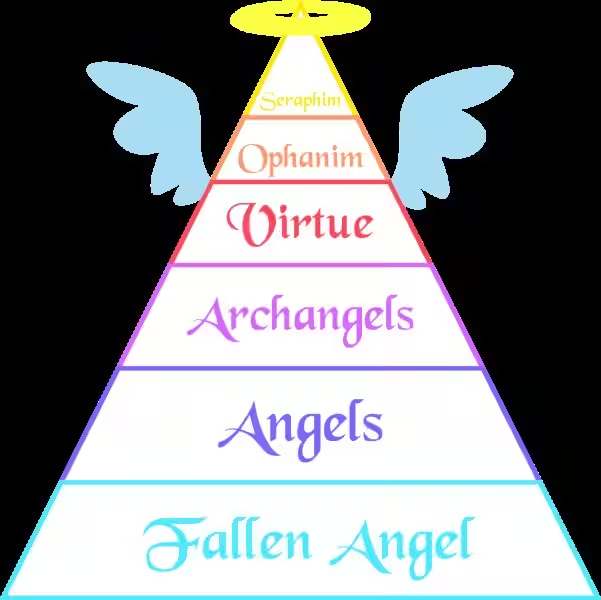
The Book of Jubilees offers a particularly interesting perspective on angelic hierarchy. It establishes two primary angelic orders: "angels of the presence" and "angels of sanctification," created on the first day to participate in the Sabbath observance with God. This passage suggests a tiered system of angels, with the "angels of the presence" occupying the highest echelons of this heavenly hierarchy.
The Book of Tobit further supports this idea of varying degrees of proximity to the divine. Raphael, one of seven angels who stand before God's glory, represents an angel of high rank. This concept is echoed in Luke 1, where Gabriel, while not explicitly titled an archangel, "stands in the presence of God," suggesting an exceptional position of authority and proximity. This concept of different levels of angelic authority and closeness to God appears frequently through the Old and New Testaments and beyond.
Different Interpretations and Theological Implications
The varying descriptions of the Angel of the Presence throughout scripture, intertestamental literature, and even within different translations of the same passages, lead to diverse theological interpretations. Some scholars argue for a distinct angelic being with immense power and proximity to God. Others, particularly based on the Septuagint rendering of Isaiah 63:9, propose an identification with God himself, or perhaps a specific manifestation of God's presence.
The concept of theophanies, or visible manifestations of God, is crucial here. Many Old Testament passages where an "angel of the Lord" appears are interpreted by some as direct appearances of God himself, using angelic forms as a means of interaction with humanity. This challenges the simple categorization of the Angel of the Presence as merely a high-ranking angel. The multifaceted nature of the Angel of the Presence reflects the complex relationship between God and humanity, and the diverse ways God has chosen to reveal himself throughout history.
The Angel of the Presence as a Manifestation of God's Presence
One prominent interpretation views the Angel of the Presence not as a distinct entity, but as a symbolic representation of God's active presence and involvement in the world. This aligns with the rich Semitic imagery of God's "face" representing His presence and active participation in the lives of His people. The "angel of his presence" becomes a tangible symbol of God's ever-present protection and guidance.
This interpretation resolves the apparent contradiction between the figure being both an "angel" and God himself. Instead of a literal duality, it suggests a symbolic representation of God's presence acting through his divine power. It emphasizes God's unwavering involvement in the lives of his people, offering comfort, strength, and salvation. This understanding highlights the personal, active, and deeply caring nature of God's interaction with humanity.
Some Christian interpretations further identify the Angel of the Presence with the Holy Spirit. They argue that the Holy Spirit, as the active presence of God within the world and within believers, fulfills the role suggested by the phrase "angel of his presence." This interpretation aligns the figure with the constant guidance and protection of God offered through the Holy Spirit.
This interpretation provides a compelling framework for understanding the seemingly paradoxical nature of the Angel of the Presence. It resolves the ambiguity by connecting the phrase to the ever-present power and guidance of the Holy Spirit, a concept central to Christian theology. It offers a unifying perspective that integrates the various interpretations mentioned before under a single, coherent framework.
Conclusion: The Enduring Enigma
In conclusion, the Angel of the Presence remains an enigmatic figure, a testament to the richness and complexity of religious texts. Its multifaceted portrayals across various scriptures, translations, and theological interpretations reflect the enduring mystery of God's nature and His relationship with humanity. While a single, universally accepted definition may elude us, the diverse interpretations offer valuable insights into the evolving understanding of angelic beings, divine manifestations, and the enduring mystery of God's presence in the world. The continued study of this enigmatic figure provides a rich ground for theological reflection and further understanding of the divine.
Frequently Asked Questions: The Angel of the Presence
What is the Angel of the Presence?
The Angel of the Presence (Mal'akh HaPanim or Mal'akh Panav) is a complex figure whose nature is debated within Christian theology. Its definition is ambiguous due to varying interpretations across different texts and time periods. Some interpretations depict it as a powerful angelic being, a special agent of God, or even one of the highest-ranked angels. Other interpretations suggest it’s equivalent to God himself, a manifestation of God's presence.
Where is the Angel of the Presence mentioned in scripture?
The most prominent reference is Isaiah 63:9, which speaks of the "angel of his presence" saving Israel. However, the Septuagint translation renders this as "the Lord Himself," sparking much of the ambiguity surrounding the figure. Other texts, such as the Book of Jubilees and the Testament of Judah, mention an Angel of the Presence, but without explicit naming or a consistent definition. The Second Book of Enoch potentially identifies Uriel as this angel or one among several similar beings.
How is the Angel of the Presence interpreted in different texts?
Interpretations vary widely. In some texts, like the Book of Jubilees, the Angel of the Presence acts as a powerful divine agent. The Book of Tobit mentions Raphael as one of seven angels standing before God’s glory, highlighting the concept of varying degrees of proximity to the divine. Some scholars connect the "angel of the presence" to descriptions of high-ranking courtiers in Persian texts, implying a hierarchy among angels. However, other sources, notably the Septuagint's translation of Isaiah 63:9, directly equate the Angel of the Presence with God himself.
Is the Angel of the Presence a separate entity from God?
The answer to this question depends on the interpretation. Some believe it is a powerful, high-ranking angel acting on God's behalf. Others believe it's a manifestation of God's presence, a theophany, or even a direct reference to the Holy Spirit. This lack of a singular, consistent definition across various texts contributes to the ongoing theological debate.
What is the significance of Isaiah 63:9 regarding the Angel of the Presence?
Isaiah 63:9 ("In all their affliction he was afflicted, and the angel of his presence saved them") is a key verse. Some interpretations focus on God's empathetic suffering alongside his people. Others view the "angel of his presence" as a manifestation of God's active and saving presence among his people, highlighting God's personal involvement in human affairs.
How does the concept of the Angel of the Presence relate to the Holy Spirit?
Some theological interpretations directly equate the "angel of his presence" with the Holy Spirit. This interpretation points to the Holy Spirit's role as the conduit of God's presence and power, acting as a messenger of the divine. This perspective aligns with verses in Isaiah describing the Israelites' rebellion against the Spirit, viewed as a manifestation of God's presence.
What is the overall conclusion regarding the Angel of the Presence?
The Angel of the Presence lacks a single, universally accepted definition. Its depiction varies significantly throughout different religious texts and interpretations. The ambiguity surrounding this figure reflects the diverse theological understandings within Christian traditions concerning angelic beings and their relationship with the divine. The ongoing discussion highlights the richness and complexity of biblical interpretation.