Names of Fallen Angels Female: Exploring the Mythological Landscape
Names of Fallen Angels Female: Exploring the Mythological Landscape
The question of whether female fallen angels exist is a fascinating one, steeped in religious lore, folklore, and imaginative speculation. While Abrahamic traditions predominantly focus on male figures in the rebellion against Heaven, the possibility of female counterparts has sparked considerable debate and creative interpretation. This article delves into the complexities of this topic, exploring the scarcity of explicitly named female fallen angels within traditional texts and examining alternative perspectives and interpretations.
The Absence of Explicitly Named Female Fallen Angels in Traditional Texts
Traditional accounts of the rebellion in Heaven, as depicted in the Book of Revelation and related apocryphal works, overwhelmingly feature male fallen angels. Lucifer, often equated with Satan, leads the rebellion, and the majority of the fallen angels described are male. This dominance of male figures in these narratives likely reflects the patriarchal societal structures prevalent during the time these texts were written and disseminated.
The lack of prominent female figures doesn't necessarily imply their complete absence. It’s more likely a reflection of the cultural biases embedded within the historical contexts of these religious traditions. The powerful, demonic entities portrayed were often seen through a masculine lens, reflecting societal anxieties about male power and dominance. The narratives might have prioritized the portrayal of male figures as the major players in the celestial conflict, overshadowing or omitting any female participation.
Lilith: A Contested Figure in the Fallen Angel Narrative
One frequently cited potential candidate for a female fallen angel is Lilith. A figure from Jewish folklore, Lilith is often associated with demonic entities, nighttime creatures, and even seduction. However, her status as a fallen angel is far from universally accepted.
Some interpretations view Lilith as a pre-Adamic woman, cast out of Eden for her rebellious nature. Others consider her a demon or succubus, a creature of the night preying on men's desires. Still others suggest that she might have been a misunderstood goddess figure, whose story became demonized over time. Her ambiguous status highlights the fluidity and evolution of mythological figures and the challenges in definitively classifying her within a rigid theological framework. The lack of a clear-cut designation for Lilith underscores the complexity of defining "fallen angel" and the inherent limitations of applying modern frameworks to ancient mythologies.
Exploring the Potential for Unnamed Female Fallen Angels
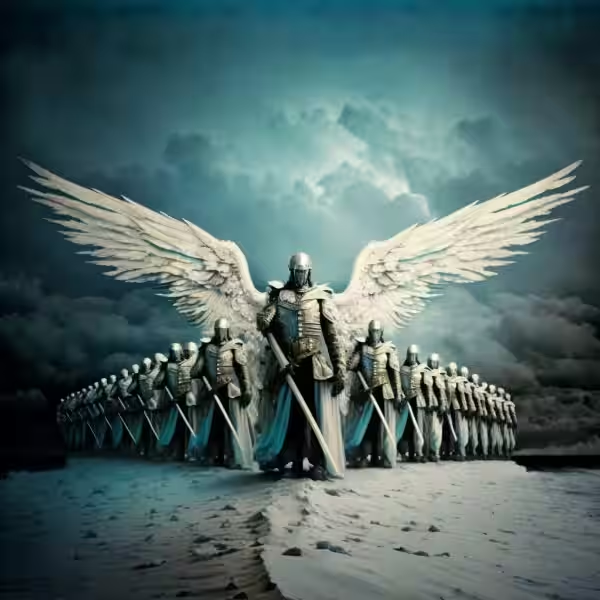
Even without explicitly named female fallen angels in canonical texts, the possibility of their existence remains a compelling topic for speculation and imaginative exploration. The sheer number of angels involved in the rebellion, often symbolically represented as one-third of the total angelic host, suggests a vast multitude of beings, many of whose identities and roles remain unknown.
The size of the rebel army itself allows room for the possibility of countless unnamed female angels. Their absence from the narrative could simply be a matter of omission, or their roles might have been subsumed within the broader descriptions of the rebellion. It's plausible that the traditional accounts focused on the key male figures, while the roles and actions of female participants were either downplayed or not recorded.
Names of Fallen Angels Female: A Modern Approach and Fictional Interpretations
The lack of named female fallen angels in traditional sources hasn't stopped modern authors, artists, and game developers from creating their own interpretations. Many works of fiction introduce female fallen angels, each with unique attributes, powers, and narratives. These fictional creations often explore the themes of female empowerment, rebellion, and the complexities of good versus evil in imaginative and nuanced ways.
These fictional portrayals explore the potential for female fallen angels to challenge traditional gender roles within the context of religious mythology. They offer alternative perspectives on the rebellion, exploring motivations beyond pride and envy, incorporating elements of female experience, and challenging the assumed patriarchal structure of celestial hierarchies.
The Power Dynamics and Hierarchical Structures of Fallen Angels
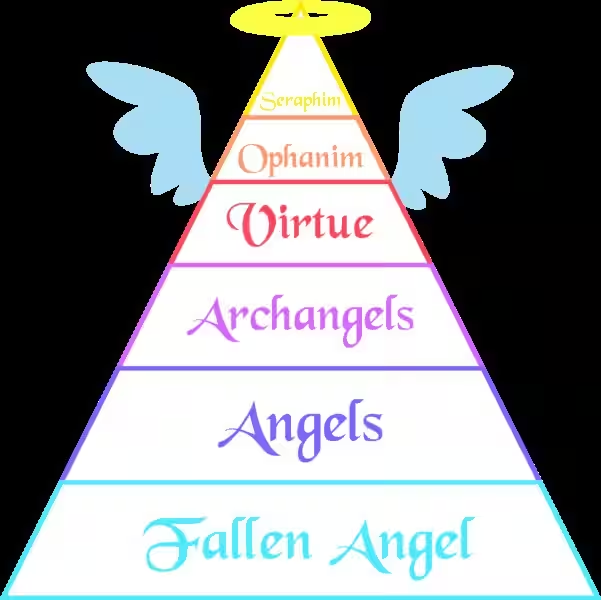
Demonic texts often describe a hierarchical structure among fallen angels, mirroring earthly power dynamics. Titles like Dukes, Marquis, Kings, and even Presidents are attributed to various fallen angels, suggesting a system of authority and control within Hell. This hierarchical organization often extends to the number of legions commanded by certain fallen angels, further emphasizing their power and influence.
While this hierarchical structure is generally presented through male figures, the potential for female fallen angels to occupy positions of power and authority within this hierarchy is a ripe area for creative exploration. The organizational model of Hell itself offers a fascinating framework for imagining female fallen angels holding high-ranking positions, commanding legions, and wielding significant influence over demonic forces.
The Ambiguous Nature of Fallen Angels: Physical Appearances and Powers
Descriptions of fallen angels in demonological texts frequently highlight their ambiguous nature. Some appear in monstrous or animalistic forms, reinforcing their primal and untamed power, while others manifest in more humanoid forms, albeit with unsettling details. This duality—humanoid yet monstrous—further emphasizes their complex and often contradictory nature.
The powers and skills attributed to fallen angels are equally diverse, often pertaining to the occult. Some teach esoteric arts, others impart knowledge of philosophy, logic, and ethics—a paradoxical juxtaposition given their demonic status. This multifaceted portrayal of fallen angels offers a rich canvas for imagining the potential powers and abilities of female fallen angels, blurring the lines between monstrous and human, and exploring the complex relationship between knowledge, power, and evil.
Conclusion: The Ongoing Search for Names of Fallen Angels Female
The question of "names of fallen angels female" remains a matter of ongoing debate and interpretation. While traditional texts predominantly feature male fallen angels, the possibility of female counterparts, either unnamed or relegated to the background, remains a compelling area for discussion and creative exploration. Lilith serves as a potential, albeit contested, example. Modern interpretations and fictional creations are filling the gaps left by historical accounts, providing rich, nuanced depictions of female fallen angels and expanding our understanding of this multifaceted mythological landscape. The exploration of female fallen angels allows us to question traditional narratives, challenge patriarchal structures, and explore the complex interplay of power, gender, and the human imagination within the context of religious mythology.
Frequently Asked Questions: Female Fallen Angels
Are there female fallen angels in traditional religious texts?
Traditional Abrahamic texts (like the Bible) primarily focus on male fallen angels, with Lucifer (Satan) leading the rebellion. While these texts don't explicitly mention female fallen angels participating in the rebellion, their absence may reflect the patriarchal societal structures prevalent during the time of their writing rather than a definitive statement on their non-existence. The overwhelming majority of depictions emphasize male figures in positions of demonic power.
What about Lilith? Is she a female fallen angel?
Lilith, a figure from Jewish folklore, is often associated with demonic entities and rebellion. However, her classification remains a subject of ongoing debate. Some consider her a demon, a succubus, or even a misunderstood goddess figure. While some interpretations might categorize her as a female fallen angel, this is not a universally accepted view within established religious traditions.
Do any modern interpretations or esoteric traditions include female fallen angels?
Yes, some modern interpretations and esoteric traditions acknowledge the possibility of female fallen angels, often drawing on non-canonical texts or re-interpretations of existing scriptures. These interpretations often fill the gaps left by the traditional accounts, suggesting that the rebellion in Heaven may have involved female angelic beings as well. However, these interpretations remain outside of mainstream theological consensus.
What are the powers and roles of female fallen angels (if they exist)?
Since the existence of female fallen angels isn't definitively established in traditional texts, their powers and roles are largely speculative. If they exist, their powers might mirror those of their male counterparts – influencing human affairs, tempting individuals towards sin, and working against divine order. However, the specific natures of their powers and roles would be subject to individual interpretations and fictional portrayals.
Where are female fallen angels located (if they exist)?
Similar to their male counterparts, the location of female fallen angels (if they exist) is largely a matter of speculation. Traditional accounts place fallen angels in the underworld or other realms of darkness, influencing the mortal world. However, the precise location and nature of their existence remain undefined and left to interpretation within various religious and fictional contexts.
Is there a definitive number of female fallen angels?
No, there's no definitive number of female fallen angels in any established religious text or widely accepted theological interpretation. The number of fallen angels in general is often symbolically represented (e.g., one-third of the angelic host), but this doesn't specify a gender breakdown. Any number proposed would be purely speculative.