Nephilim Catholic: Understanding the Genesis Account
Nephilim Catholic: Understanding the Genesis Account
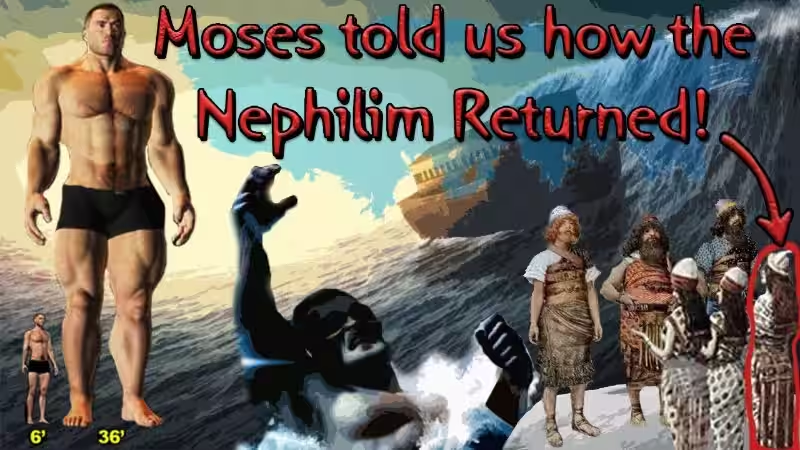
The Book of Genesis, chapter 6, verses 1-4, presents a passage that has captivated and confounded theologians and biblical scholars for centuries: the account of the Nephilim. This passage, with its mention of "sons of God" taking "daughters of men" as wives and producing offspring described as Nephilim (often translated as giants), has sparked numerous interpretations, some of which have trickled into popular culture and even conspiracy theories. But how does the Catholic Church view this enigmatic passage? There's no single, definitive Catholic doctrine on the Nephilim, but understanding the various interpretations helps illuminate the theological complexities involved.
The central challenge in interpreting Genesis 6:1-4 lies in identifying the "sons of God." Several interpretations exist, each with its proponents and detractors.
The Angelic Interpretation
One prevalent interpretation, though not the most widely accepted within mainstream Catholic theology, identifies the "sons of God" as fallen angels who cohabited with human women. This view often points to other passages where "sons of God" refers to angels. However, this interpretation faces significant hurdles. The nature of angels as purely spiritual beings raises questions about their capacity for physical procreation. Furthermore, the narrative’s focus on the wickedness of humanity and the subsequent flood as a judgment on humanity, rather than on the angels themselves, weakens this interpretation's coherence. While present in some early extra-canonical Jewish texts and embraced by certain early Church Fathers, it remains a less favored interpretation within modern Catholic scholarship.
The Sethite-Cainite Interpretation
A more widely accepted interpretation within Catholic circles identifies the "sons of God" as the descendants of Seth (Adam and Eve's righteous son) and the "daughters of men" as the descendants of Cain (Adam and Eve's unrighteous son). This view suggests that the Nephilim resulted from a mixing of these two lineages, representing a blending of righteousness and wickedness. The "fallen ones" in this context do not necessarily represent literal fallen angels, but rather the societal and spiritual corruption that arose from this intermingling. This interpretation emphasizes the consequences of disregarding God's will, highlighting the societal impact of moral decay symbolized by the rise of powerful and violent men – the Nephilim. This perspective emphasizes the dangers of disregarding God's covenant and the resulting societal breakdown.
This perspective aligns with the broader narrative of Genesis, emphasizing the consequences of sin and the importance of maintaining God's covenant. The Nephilim, in this context, are not necessarily superhuman in size but rather represent the powerful and morally corrupt individuals who emerged from this unholy union, their actions contributing to the widespread wickedness that ultimately led to the Great Flood.
The Significance of the Nephilim in Catholic Theology
Regardless of the specific interpretation, the story of the Nephilim carries significant weight in Catholic theological reflection.
The Theme of Moral Decay and Divine Judgment
The story serves as a powerful illustration of the consequences of sin and moral decay. The birth of the Nephilim symbolizes the societal and spiritual corruption that resulted from the disregard for God's will. The flood, therefore, is not merely a random cataclysm but a divine judgment on the pervasive wickedness that had overtaken humanity. This echoes the broader Catholic understanding of God's justice and the need for repentance.
The Importance of Covenant Faithfulness
The narrative underscores the importance of covenant faithfulness. The actions of the "sons of God," however interpreted, represent a transgression against God's plan. This emphasizes the need for adherence to God's commandments and the potential consequences of disobedience. It serves as a warning against moral compromises and the erosion of religious principles.
The Concept of the "City of God" vs. "City of Man"
The story of the Nephilim can be viewed through the lens of Augustine's concept of the "City of God" and the "City of Man." The intermingling of the righteous and unrighteous lineages can be seen as a conflict between these two cities, with the resulting corruption representing the encroachment of the "City of Man" upon the "City of God." The flood, then, becomes a symbolic cleansing, allowing for the rebuilding of society based on a renewed commitment to God's will.
Nephilim Catholic Perspectives: A Summary
The Catholic Church doesn't offer a definitive answer to the question of the Nephilim's identity. However, scholarly interpretations tend to favor explanations that focus on the consequences of moral decay and the disruption of God's covenant, rather than literal interpretations involving angelic procreation. The story of the Nephilim serves as a powerful reminder of the importance of moral uprightness, covenant faithfulness, and the potential consequences of rejecting God's will. It reinforces the themes of divine justice and the need for constant vigilance against the forces of sin and corruption. The various interpretations, while differing in their specifics, all contribute to a richer understanding of the complexities of human nature and the profound implications of our choices. The absence of a concrete, official doctrine allows for continued theological discussion and exploration of this intriguing passage, enriching our understanding of scripture and our faith.
Nephilim in Catholic Understanding: Frequently Asked Questions
What are the Nephilim?
The Nephilim are mentioned in Genesis 6:1-4 as the offspring of "sons of God" and "daughters of men." The text describes them as "mighty men" or "giants," though the precise meaning of "Nephilim" and the identity of their parents remain subjects of ongoing theological discussion within the Catholic Church. There is no single, officially defined interpretation.
Who were the "sons of God" and "daughters of men"?
Several interpretations exist regarding the identities of the "sons of God" and "daughters of men." One prominent interpretation identifies the "sons of God" as descendants of Seth (a righteous lineage) and the "daughters of men" as descendants of Cain (an unrighteous lineage). Another, less widely accepted interpretation suggests the "sons of God" were fallen angels. Both interpretations are debated within Catholic theology.
Does the Catholic Church have an official doctrine on the Nephilim?
No. The Catholic Church does not have an official doctrine defining the nature of the Nephilim or the identity of their parents. The Genesis passage remains open to interpretation among theologians and biblical scholars.
What is the most common interpretation among Catholic theologians?
The most prevalent interpretation among Catholic theologians leans towards the understanding of the "sons of God" as descendants of Seth and the "daughters of men" as descendants of Cain. This interpretation focuses on the intermingling of righteous and unrighteous lineages, resulting in moral corruption and violence, symbolized by the Nephilim. It emphasizes the consequences of disregarding God's will and the societal impact of sin.
Does the interpretation involving fallen angels and human women hold weight in Catholic theology?
While this interpretation exists and has historical precedence, it faces challenges. Theological considerations regarding the nature of angels and their capabilities, coupled with the lack of explicit support in scripture, make this a less widely accepted view among contemporary Catholic theologians. The focus tends to be on the societal consequences of the actions described in Genesis 6, rather than on a literal interpretation involving angelic procreation.
What is the significance of the Nephilim narrative in Catholic theology?
Regardless of the specific interpretation, the story of the Nephilim serves as a cautionary tale about the consequences of sin and the importance of remaining faithful to God's covenant. It highlights the potential for societal decay when righteous and unrighteous elements intermingle, and it underscores the ultimate judgment of God on wickedness. The themes of covenant, societal corruption, and divine judgment are central to understanding the narrative's theological significance.
How does Scott Hahn's interpretation differ?
Scott Hahn, in his work A Father Who Keeps His Promises, supports the Sethite-Cainite union interpretation. He emphasizes the transgression of the Sethite men who, seduced by Cainite women, engaged in mixed marriages and potentially polygamy. He links this transgression to the birth of violent Nephilim ("tyrants"), thereby emphasizing the consequences of sexual immorality and its connection to violence.
Are the Nephilim literally giants in the Catholic understanding?
The description of the Nephilim as "mighty men" or "giants" is open to interpretation. While some interpretations might take this literally, the more common understanding within Catholic theology focuses on their moral and societal impact rather than their physical stature. The "might" could refer to their power and influence, perhaps through military strength or political oppression.