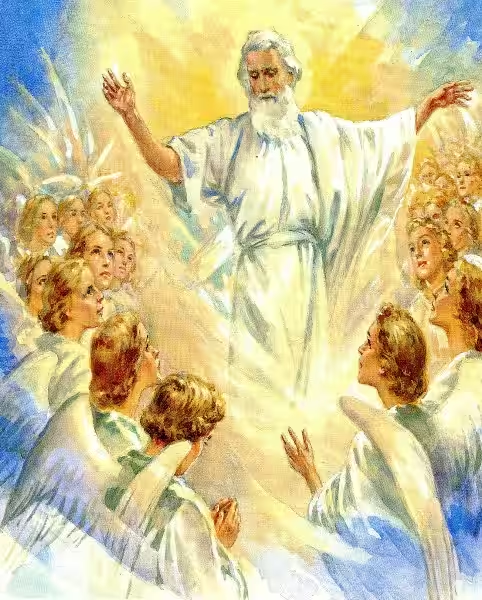
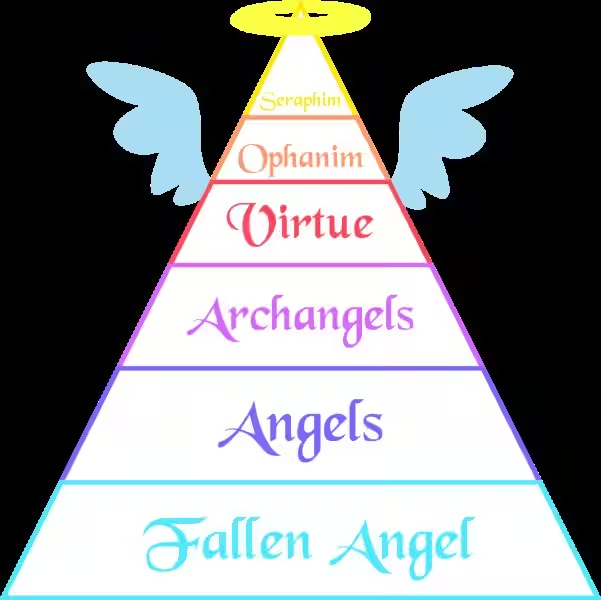
The question of whether angels are made in God's image is a fascinating and complex one that has occupied theologians for centuries. While the Bible explicitly states that humanity is created in God's image (Genesis 1:27), it remains silent on the matter of angels. This absence of explicit declaration leaves the question open to interpretation and fuels ongoing theological debate. This article explores the arguments for and against this proposition, aiming to provide a comprehensive understanding of the different perspectives.
The most common argument against angels being created in God's image centers around the unique position of humanity within creation. Genesis 1:26-27 clearly states that God created humans in his image, granting them dominion over the Earth and establishing a special relationship with the divine.
This unique relationship is further emphasized throughout the biblical narrative. Humanity's capacity for moral choice, self-awareness, and relational capacity sets it apart from other created beings. This unique endowment, often referred to as the Imago Dei, is seen by many as exclusively bestowed upon humanity. The creation narrative suggests a special, unparalleled covenant between God and humanity, not shared by angels.
Additionally, arguments against the idea often highlight the ontological differences between humans and angels. Humans are composed of both body and spirit, while angels, as typically understood, are purely spiritual beings. This fundamental difference in nature might imply a distinct relationship with God, one not necessarily characterized by the Imago Dei as understood for humanity.
Arguments Supporting the Idea of Angels and the Imago Dei
Conversely, several arguments suggest the possibility that angels, in some sense, participate in the Imago Dei. These arguments usually focus on a broader interpretation of "image," moving beyond a literal physical resemblance to God.
One perspective emphasizes that angels possess attributes that reflect certain aspects of God's own nature. The Bible describes angels as possessing intelligence, will, and even emotion. These characteristics, while experienced differently than by humans, might be understood as a form of participation in the divine image. This argument focuses on representation of God's character rather than a physical likeness.
Another argument centers on angels' role as messengers and representatives of God. They act as agents of God's will, reflecting His power and presence in the world. This representational function could be interpreted as a kind of participation in the divine image, reflecting God's authority and influence. The angels' actions, therefore, could be seen as a reflection of God's own being, which is naturally expressed throughout creation.
Redefining the Imago Dei
Finally, some theologians propose a more expansive understanding of the Imago Dei, one that moves beyond a strictly anthropocentric view. This broader perspective might encompass qualities like relational capacity, intelligence, and moral agency—attributes that angels undoubtedly possess. This nuanced approach allows for the possibility that the Imago Dei manifests differently in different created beings, not limited to physical resemblance or a specific set of human capabilities.
The Role of Scripture and Theological Interpretation
The lack of explicit scriptural support for angels being made in God's image is central to the debate. The Bible emphasizes humanity's unique creation in God's image, and the absence of a similar declaration concerning angels fuels the argument against their participation in the Imago Dei.
However, the absence of a direct statement doesn't necessarily negate the possibility. The Bible is replete with symbolic language and nuanced meanings, and a literal interpretation might overlook deeper theological truths. The question requires a careful consideration of scriptural context, theological tradition, and philosophical reflection.
Furthermore, different theological traditions and interpretations of scripture will lead to varying conclusions. Some theologians might prioritize the uniqueness of humanity's relationship with God, emphasizing the exclusive nature of the Imago Dei. Others might adopt a more inclusive approach, acknowledging the possibility of diverse manifestations of the divine image throughout creation.
Conclusion: An Ongoing Theological Discussion
Ultimately, the question of whether angels were created in God's image remains a matter of ongoing theological discussion and debate. There is no single, universally accepted answer within Christian theology. The answer depends heavily on one's interpretation of scripture, the definition of the Imago Dei, and the understanding of the ontological differences between humans and angels. The arguments presented here highlight the complexity of the issue and underscore the rich tapestry of theological perspectives surrounding this intriguing question. The possibility remains open, allowing for continued exploration and thoughtful consideration of this aspect of divine creation.
Frequently Asked Questions: Are Angels Made in God’s Image?
What is the traditional understanding of "Imago Dei"?
The traditional understanding of "Imago Dei" (image of God) centers on humanity's unique position. It emphasizes humanity's rationality, moral responsibility, relational capacity with God, and dominion over creation as reflections of God's own being. This is primarily based on the creation narrative in Genesis 1:26-27.
Does the Bible explicitly state whether angels are made in God's image?
No, the Bible does not explicitly state whether angels are created in God's image. The emphasis on humanity's creation in God's image in Genesis is often seen as unique and unparalleled.
Why do some theologians argue against angels being in God's image?
Arguments against angels being in God's image often focus on humanity's unique role and relationship with God. These arguments highlight:
Humanity's Uniqueness: Genesis 1:26-27 specifically mentions humanity's creation in God's image, suggesting a unique relationship not shared by other beings.
Ontological Differences: Angels are purely spiritual beings, unlike humans who possess both a physical body and a spirit. This fundamental difference might suggest a distinct relationship with God.
Lack of Biblical Support: There's no explicit biblical text affirming angels' creation in God's image.
What arguments support the idea that angels might be in God's image?
Arguments suggesting that angels might possess aspects of the Imago Dei include:
Reflection of God's Attributes: Angels display intelligence, will, and emotion, mirroring certain divine attributes. Though not identical to human experiences, these could be considered a form of participation in the divine image, focusing on a representation of God's character.
Spiritual Representation: Angels serve as messengers and agents of God, representing His will and power. This representational role might be viewed as a form of participation in the divine image.
Reinterpreting "Image": Some propose a broader definition of Imago Dei, moving beyond a solely anthropocentric view. This broader interpretation might encompass relational capacity, intelligence, and moral agency – qualities potentially possessed by angels.
What is the overall theological consensus on this question?
There is no universally accepted theological consensus on whether angels are created in God's image. The answer depends heavily on one's interpretation of scripture, the definition of Imago Dei, and the understanding of the ontological differences between humans and angels. The question remains a topic of ongoing theological discussion and debate.