Many wonder about the concept of "flying" as depicted in the Bible. Did ancient Israelites possess some form of early aviation technology? The answer, surprisingly, is far richer and more profound than a simple yes or no. While the Bible doesn't describe humans physically flying in the way airplanes do, the imagery of flight serves as a powerful and recurring metaphor across numerous passages, conveying a wealth of spiritual and theological significance.
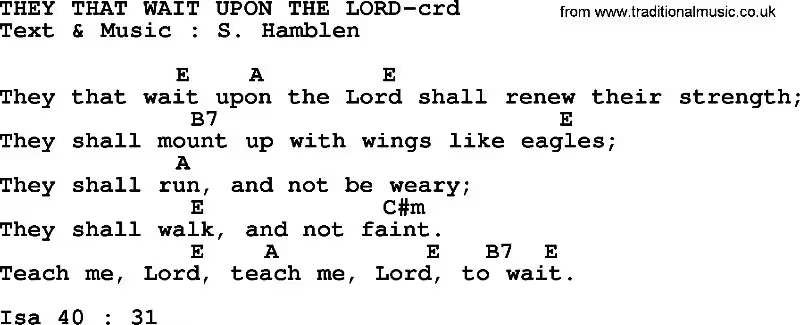
The imagery of birds soaring through the sky frequently symbolizes spiritual ascent, renewed strength, and freedom from oppression. Perhaps the most well-known example is found in Isaiah 40:31: "But those who hope in the Lord will renew their strength. They will soar on wings like eagles; they will run and not grow weary, they will walk and not be faint."
This verse isn't about literal avian capabilities; it's a powerful metaphor. The eagle, known for its majestic flight and ability to overcome strong headwinds, represents the spiritual empowerment that comes from trusting in God. The imagery evokes a sense of liberation, the overcoming of adversity, and the renewal of strength that believers experience through their faith. The soaring flight signifies a spiritual journey upwards, towards God.
Another example of this spiritual soaring is found in Psalm 124:7-8, “Our soul has escaped like a bird from the snare of the fowlers; the snare is broken, and we have escaped. Our help is in the name of the Lord, who made heaven and earth.” Here, the bird escaping the snare represents deliverance from danger and oppression, highlighting the protective hand of God.
God’s Majesty and Omnipresence: Riding the Winds
The imagery of flight is also used extensively to depict the power, majesty, and omnipresence of God. Psalm 104:3-4 beautifully illustrates this: "He lays the beams of his chambers in the waters; he makes the clouds his chariot; he rides on the wings of the wind."
This passage paints a vivid picture of God's transcendence and dominion over the natural world. The clouds and the wind, powerful forces of nature, become symbols of God's authority and control. God isn't merely present; He actively reigns, using the very elements as His vehicles. His swiftness and power are emphasized by the comparison to the speed and force of wind and clouds.
Isaiah 60:8 further enhances this image, describing people "flying like a cloud, and like doves to their windows," a powerful image of a large-scale return or gathering of God's people. This image signifies the fulfillment of divine promises and the restoration of God's chosen. The swiftness and multitude implied by the image enhance the feeling of God's power and the certainty of his promises.
God's Protective Wings
The concept of God's protective care is frequently represented through the imagery of wings. Psalm 91:4 states: "He will cover you with his feathers, and under his wings you will find refuge; his faithfulness will be your shield and rampart."
This verse provides a beautiful and comforting image of God's protective presence. His "feathers" and "wings" offer shelter and security, signifying the unwavering protection that God offers to those who trust in Him. This image evokes a sense of safety and security, emphasizing God's constant watchfulness. The imagery is further reinforced by other passages like Psalm 36:7 and Psalm 57:1, which also allude to God's sheltering wings.
Flight as Rapid Movement and Far-Reaching Influence
Beyond spiritual elevation and divine protection, flight is also used to depict rapid movement and far-reaching influence. The speed and range of the movement emphasizes the scale of God's power and activity.
Isaiah 60:8, mentioned earlier, exemplifies this: The "flying like a cloud" creates an image of a huge, rapid influx of people. This speaks to the far-reaching impact of God's actions and the speed with which His promises are fulfilled. The image conveys a dramatic sense of scale and urgency.
Psalm 139:9-10 takes the concept of God's reach to another level: "If I take the wings of the morning and dwell in the uttermost parts of the sea, even there your hand shall lead me, and your right hand shall hold me."
This passage highlights God's omnipresence. No matter how far one might travel, even to the "uttermost parts of the sea," God's presence and guidance remain constant. The imagery of flight emphasizes the vastness of God's reach and the impossibility of escaping His care. It is a powerful affirmation of God's constant presence and guidance.
The Dark Side of Flight: Impending Doom
Interestingly, the imagery of flight isn't always positive. It can also symbolize impending doom and the futility of escape from divine judgment. Jeremiah 48:9 provides a sobering example: "Give wings to Moab, that she may flee and get her away: for her cities shall be desolate, without inhabitant."
In contrast to the previous examples, this verse uses the image of flight ironically. Moab is granted "wings," but this "flight" leads only to desolation. It highlights the futility of attempting to escape God's judgment. The image of flight, once associated with freedom, is twisted to signify impending destruction.
Conclusion: A Tapestry of Meaning
In conclusion, "flying" in the Bible is far more than simply literal aviation. It's a rich and multifaceted metaphor reflecting spiritual growth, divine protection, God's omnipotence, swift action, and even impending judgment. The recurring motif consistently emphasizes the power, care, and ultimate sovereignty of God over all creation. Understanding this nuanced use of imagery enriches our understanding of the Bible’s symbolic language and deepens our appreciation for God's character and actions.
Frequently Asked Questions: Flight in the Bible
Does the Bible describe humans literally flying like airplanes?
No. The Bible does not depict humans physically flying in the manner of modern aircraft. The imagery of flight is consistently used as a powerful metaphor across various biblical texts.
What are some of the common metaphors associated with flight in the Bible?
Flight imagery in the Bible serves to convey several key themes:
Spiritual Elevation and Empowerment: Soaring like eagles (Isaiah 40:31) symbolizes spiritual renewal, overcoming adversity, and experiencing the empowering presence of God.
Divine Protection and Care: God's protective presence is often depicted as a sheltering wing (Psalm 91:4, Deuteronomy 32:11), signifying safety and unwavering divine care.
Escape from Danger and Oppression: Being delivered "like a bird from the snare" (Psalm 124:7) illustrates freedom from danger and oppression.
God's Omnipotence and Sovereignty: God's power and control over creation are emphasized by imagery of riding on the wings of the wind (Psalm 104:3-4), showcasing his transcendence and authority.
Rapid Movement and Far-Reaching Influence: The swift movement of birds and clouds represents rapid gatherings of people (Isaiah 60:8) or the swift arrival of divine intervention.
Impending Doom: In some instances, flight imagery ironically depicts impending destruction and the futility of escaping divine judgment (Jeremiah 48:9).
What are some specific Bible verses that use flight as a metaphor?
Many verses utilize flight imagery. Key examples include:
Isaiah 40:31: "But those who hope in the Lord will renew their strength. They will soar on wings like eagles; they will run and not grow weary, they will walk and not be faint." (Spiritual empowerment)
Psalm 91:4: "He will cover you with his feathers, and under his wings you will find refuge; his faithfulness will be your shield and rampart." (Divine protection)
Psalm 124:7: "Our soul has escaped like a bird from the snare of the fowlers; the snare is broken, and we have escaped!" (Escape from danger)
Psalm 104:3-4: "He lays the beams of his upper chambers on the waters; he makes the clouds his chariot; he rides on the wings of the wind." (God's omnipotence)
Jeremiah 48:9: "Give wings to Moab, that it may flee and escape! For her cities will become desolate, with no one to live in them." (Impending doom)
Is the flight of angels literal in the Bible?
The depiction of angels' flight is often symbolic, representing their swiftness and divine agency as messengers and agents of God's will. Their rapid movement highlights God's immediate intervention and presence. While not literal flight in the human sense, it underscores their supernatural abilities and connection to the divine.
Does the ascension of Jesus depict literal flight?
The ascension of Jesus is often interpreted symbolically, representing his victory over death and his return to God's presence. While described as "ascending into heaven," it's a theological event representing spiritual transcendence, not physical flight.
In summary, what is the overall significance of flight imagery in the Bible?
The recurring motif of flight in the Bible is not about literal aviation but a rich tapestry of metaphors illustrating God's power, protection, care, spiritual empowerment, and ultimate sovereignty over all creation. It highlights humanity's relationship with God and the spiritual journey of faith.