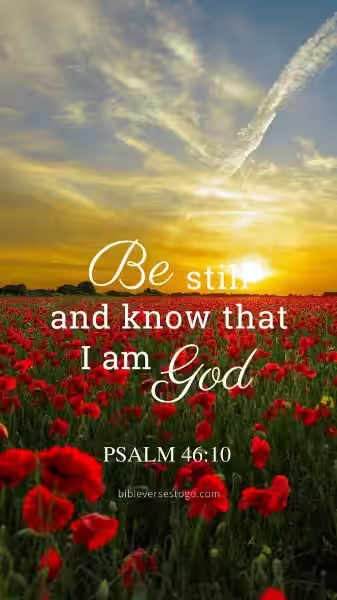
Sunset Quotes Bible: Finding God in the Golden Hour
Sunset Quotes Bible: Finding God in the Golden Hour
Do you ever pause to consider the profound symbolism woven into the seemingly ordinary? The breathtaking beauty of a sunset, for instance, holds a wealth of meaning, especially when viewed through the lens of scripture. This article delves into the surprisingly rich tapestry of sunset symbolism found within the Bible, exploring how these moments of transition have been interpreted throughout history and continue to resonate with us today. We will examine how sunset quotes Bible verses, though not explicitly stated as such, reveal deeper spiritual truths.
The Bible frequently uses sunsets as significant temporal markers, often framing religious observances and actions. Many passages highlight the sunset as the boundary between one period of activity and another, emphasizing its importance in the rhythm of sacred life.
Consider 2 Samuel 3:35, where David's vow to abstain from food until sunset demonstrates the sunset's role as a definitive point in time for religious devotion. The day’s activities, and their associated obligations, culminate at the setting of the sun.
Similarly, Leviticus 22:7 and Deuteronomy 24:13 underscore the sunset's role in defining the boundaries of sacred actions and obligations. These passages associate the sunset with the conclusion of a period of ritual purity or a specific responsibility, showing how the natural world's rhythms were intricately bound to the religious practices of the time. This meticulous attention to timing reflects a deep reverence for God's created order.
The sunset's role wasn't solely confined to grand rituals. It likely served as a practical and deeply meaningful marker in daily life for ancient peoples. The transition from light to darkness dictated the end of the working day, the time for family gatherings, and a period of reflection before the night's rest. The daily cycle of the sun became a natural rhythm for both individual and communal spirituality.
The regularity of the sunset, its predictable arrival each evening, likely instilled a sense of order and stability within a world that could be unpredictable in other ways. This created a natural framework for reflecting on the day's events and preparing for what lay ahead, both practically and spiritually.
Light and Darkness: A Biblical Metaphor Illustrated by the Sunset
The creation narrative in Genesis 1:5 lays the foundation for understanding the symbolic interplay of light and darkness throughout the Bible. The sunset, as the transition between these two forces, becomes a potent metaphor for numerous spiritual concepts.
Many verses connect the sunset's encroaching darkness with divine revelations or profound experiences. Leviticus 22:7, Genesis 15:17, and Genesis 15:12, for instance, depict the sunset as a time of increased darkness often preceding significant events. The darkness, in these contexts, isn't necessarily negative; it often forms a backdrop for a divine encounter or a moment of profound understanding.
The Sunset as a Symbol of Divine Power and Mystery
The contrast between light and darkness is further emphasized in passages that highlight God's control over celestial bodies. Job 9:7 and Ezekiel 32:7 depict God's power over the sun, reinforcing His dominion over the natural world and the cyclical nature of light and darkness. This doesn't diminish the beauty of the sunset but rather underscores its place within a larger divine order.
The darkness associated with sunset also serves as a setting for human actions, both good and bad. Job 24:15, for example, uses the cover of nightfall to describe the secretive actions of the adulterer, highlighting the darkness as a veil for hidden wrongdoing. In contrast, 2 Corinthians 4:6 uses the imagery of light emerging from darkness to represent the divine illumination of faith, contrasting the physical sunset with the spiritual enlightenment found in Christ.
The sunset's imagery is also used prophetically, often foreshadowing significant events or changes. The darkening of the sun in Acts 2:20, for example, serves as a powerful symbol anticipating momentous occurrences. This use of celestial imagery underscores the sunset's capacity to transcend its literal meaning and become a powerful symbol of both earthly and spiritual transformations.
The sunset, in this light, becomes a multifaceted symbol, representing not only the close of a day but also the transition between different realities, the interplay between divine power and human action, and even the anticipation of future events. It becomes a canvas on which spiritual narratives are painted, enriching our understanding of faith and God's relationship with humanity.
Sunset Quotes Bible and Psalms of Reflection
While specific verses directly quoted as "sunset quotes Bible" aren't explicitly provided here, the Psalms, brimming with poetic language and spiritual reflection, undoubtedly contain numerous passages that subtly evoke the feelings and imagery associated with sunsets. These Psalms likely offer further insights into the spiritual significance attributed to this daily celestial event. The majestic beauty of a sunset, after all, lends itself naturally to contemplative prayer and reflection on God’s creation. Seeking out these Psalms could provide a fascinating exploration of the intersection between nature and faith.
In conclusion, the sunset’s symbolism in the Bible extends far beyond its literal meaning. It is a powerful reminder of God's control, a metaphor for spiritual transitions, and a symbol that invites us to reflect on the cyclical nature of time and the interplay of light and darkness in our own lives. By appreciating the beauty and significance of this daily event, we can deepen our understanding of the divine narrative and find a richer connection with the world around us. Taking a moment each evening to watch the sun descend, mindful of the spiritual depth embedded within its beauty, can become a profoundly enriching spiritual practice.
Frequently Asked Questions: Sunset Quotes in the Bible
What is the symbolic significance of sunsets in the Bible?
The Bible uses sunsets symbolically in several ways. They often mark the boundary between sacred times and rituals, signifying the conclusion of religious observances or periods of fasting (e.g., 2 Samuel 3:35, Leviticus 22:7, Deuteronomy 24:13). Sunsets also represent the transition between light and darkness, frequently linked to divine revelation, profound experiences, or secretive actions (Genesis 1:5, Leviticus 22:7, Genesis 15:17, Genesis 15:12, Job 24:15). The contrast of the setting sun's diminishing light with the spiritual enlightenment found in Christ is also explored (2 Corinthians 4:6). Further, biblical texts depict God's power over celestial bodies, including the sun, emphasizing God's dominion over the natural world (Job 9:7, Ezekiel 32:7). Finally, the darkening of the sun is sometimes used prophetically to foreshadow significant events (Acts 2:20).
Are there specific Bible verses that directly describe or mention sunsets?
While the provided text doesn't list specific verses directly describing sunsets, it references several passages where sunsets serve as significant temporal markers or symbolic elements within a narrative context. These include but are not limited to: 2 Samuel 3:35, Leviticus 22:7, Deuteronomy 24:13, Genesis 1:5, Genesis 15:17, Genesis 15:12, Job 24:15, 2 Corinthians 4:6, Job 9:7, Ezekiel 32:7, and Acts 2:20. Additional psalms are mentioned, although their specific references are not provided in the source material.
How are sunsets connected to the themes of light and darkness in the Bible?
The daily cycle of sunrise and sunset provides a powerful visual metaphor for the biblical contrast between light and darkness. Sunsets represent the transition into darkness, often associated with times of divine revelation, mysterious events, or hidden actions. However, this darkness isn't always negative; it can also symbolize the potential for spiritual enlightenment, as seen in the contrast between the fading physical light and the enduring spiritual light of faith (2 Corinthians 4:6). The imagery underscores God's control over the natural world and the cyclical nature of light and dark, reflecting the broader biblical themes of God's power and the ongoing interplay between good and evil.
Do sunsets have a connection to religious practices or rituals in the Bible?
Yes. Several passages highlight the sunset as a crucial temporal marker in various religious practices. It often defines the boundaries or conclusion of specific rituals, such as fasting or periods of ritual purity. The sunset's position as a clear delineator of time emphasizes the importance of adhering to God's commands and underscores the structure and significance of religious observances within the biblical context.
What is the overall message regarding sunsets conveyed in the biblical texts?
The biblical use of sunsets reveals a multifaceted symbolism. They serve as markers of time in religious observances, illustrate the dynamic interplay between light and darkness, function as metaphors for divine power and control, and represent the contrast between physical and spiritual illumination. The overall message encourages a deeper appreciation for the natural world and the spiritual significance embedded within seemingly ordinary events. By observing the sunset, one can connect with the larger narrative of creation, divine power, and the ongoing spiritual journey.