Names With Lord: A Global Exploration of Titles of Authority
Names With Lord: A Global Exploration of Titles of Authority
Choosing a name is a significant decision, carrying weight across generations and cultures. For many, the name itself reflects aspirations, heritage, or even a desired attribute. This article explores the fascinating world of names incorporating the concept of "lord," revealing their diverse origins and the rich tapestry of meanings woven into these powerful appellations.
The concept of "lord," signifying authority, power, and often a divine connection, transcends cultural boundaries. Names containing this concept or its equivalents appear across numerous languages and belief systems, demonstrating a universal recognition of leadership and its importance. From ancient Hebrew to modern-day creations, the title resonates deeply within many societies.
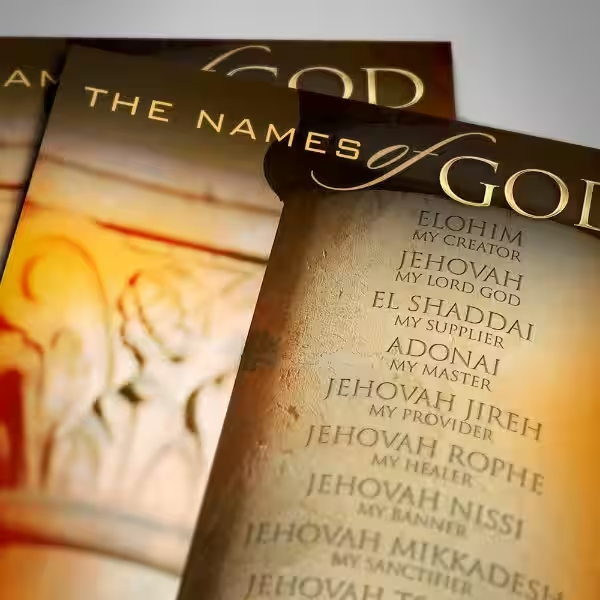
The sheer abundance of such names underlines this point. Consider the linguistic diversity: Hebrew names like Adonai (my Lord), a title for God, stand alongside Greek names such as Kyrios (Lord), the root of the name Cyrus. Latin contributes Dominus (Lord), the source of the English Dominic, while Arabic offers Malik (King) and Amir (Commander), each carrying connotations of lordship. This illustrates an inherent human fascination with, and respect for, those in positions of power—a fascination reflected in naming traditions across the globe.
Exploring Linguistic Roots
The significance of "lord" extends beyond direct translations. Many names evoke the essence of lordship through metaphor and symbolism. For instance, some names explicitly connect to a divine authority (e.g., Adonai), while others suggest terrestrial power (e.g., Rex, Latin for King). Still others blend both, signifying a ruler divinely appointed or imbued with exceptional abilities. This nuanced representation of leadership across languages and cultures reflects the multifaceted nature of power itself. The subtle variations in meaning across these names create a rich and complex landscape of linguistic expression. Understanding these differences allows for a deeper appreciation of the cultural and historical contexts associated with each.
While some names explicitly translate to "Lord," many others subtly convey the same sense of authority or power. Consider names like Abergavenny, a Shakespearean name evoking feudal lordships and the power structures of the era. Or take the name Balder, from Norse mythology, a name associated with heroic power and eventually identified with a figure of considerable importance and influence. These examples highlight the broad range of associations connected to the idea of lordship.
The richness of meaning isn't limited to European traditions. Sanskrit offers a plethora of names that reflect the Hindu concept of īśa (Lord, ruler). Names like Jagadisha (ruler of the world) or Mahesha (great lord) carry weight and significance, reflecting the deep-seated reverence for powerful figures within the religious and societal structures of Hinduism. The diversity of names even within a single culture showcases the multifaceted interpretations of authority and power. Such a wide variety across numerous belief systems underscores the global importance of this concept and how the concept of “lord” manifests in many different ways.
Cultural and Historical Significance
The use of names associated with lordship often holds historical and cultural significance. Many names on lists of names with lord have deep historical roots, connected to religious or political figures. Their continued use, even in contemporary society, speaks to the enduring power of historical associations. Names such as Dominic, derived from Dominicus ("of the Lord"), reflect the influence of Christianity and its concepts of divine authority. Similarly, names from Norse mythology, like Freyr ("lord"), carry echoes of a distinct cultural past.
The persistence of these names across centuries speaks volumes about the lasting influence of past leaders and beliefs. They serve as historical echoes, preserving cultural memory and values within the seemingly simple act of naming. This connection to the past makes the selection of such a name not just a personal choice, but a statement about heritage, values, and aspirations. The enduring power of naming conventions in shaping societal understanding of power and authority is truly remarkable.
The Practicality and Limitations of Name Lists
Lists compiling names with lord, such as the one containing 159 names, serve a practical purpose. They offer a readily accessible resource for individuals seeking a name with a specific connotation. The alphabetical ordering makes navigation straightforward, allowing users to quickly browse and identify potential options. However, such lists often lack detailed etymological information or cultural context.
The absence of in-depth analysis limits the scholarly value of these compilations. While providing a broad overview, they don’t delve into the rich tapestry of historical and cultural nuances associated with each individual name. To gain a comprehensive understanding, further research into the etymology, historical usage, and cultural significance of each name is necessary. The value of such lists lies in their accessibility as a starting point for further exploration.
Further Exploration and Research
While readily available lists provide a foundation for understanding the breadth of names associated with lordship, they are only the first step. To truly appreciate the significance of a particular name, deeper research is recommended. Exploring the etymological origins, cultural contexts, and historical usage of each name will unveil a wealth of information, enriching our understanding of the name's meaning and significance. This additional research will enhance the appreciation of the name's historical and cultural weight. Therefore, these lists should be seen as inspirational starting points rather than definitive guides. Further investigation is crucial to fully understand the complexities and richness of these names.
Frequently Asked Questions: Names Containing or Meaning “Lord”
What is the origin of names that mean "Lord"?
Names signifying "lord," "ruler," or similar concepts of authority and power have origins spanning numerous cultures and languages. Examples include Hebrew (Adonai, Baal), Greek (Kyrios, Despotēs), Latin (Dominus, Rex), Arabic (Malik, Amir), Sanskrit (Ishvara, Maharaj), and many more. This diversity reflects the universality of the concept of lordship across different societies and throughout history. The variations in meaning highlight how different cultures have conceptualized and honored those in positions of power.
Are all names meaning "lord" directly translated as such?
No. While some names directly translate to "lord" (e.g., Dominus), many convey the idea of rulership, sovereignty, or mastery through metaphors or symbolic associations. Some might suggest divine authority (e.g., Adonai), others terrestrial power (e.g., Rex), and some a combination of both. The multifaceted nature of leadership is reflected in these diverse expressions.
What is the historical significance of names meaning "lord"?
Many names with this connotation have deep historical roots, often linked to figures of religious or political importance. Their continued use, even today, demonstrates the lasting legacy and enduring power of these symbolic associations. These names serve as a historical record, echoing past civilizations and their understanding of leadership.
How many names are there that mean "lord"?
A comprehensive list compiles at least 159 names from various origins that translate to or are associated with the concept of "lord." This large number emphasizes the richness and complexity of human naming traditions and the widespread importance placed on conveying status and authority through names.
What makes this list of names valuable?
The alphabetical list provides easy access to names with a specific connotation, making it a useful resource. While lacking detailed etymological information for each name, the list highlights the cross-cultural significance of the concept of lordship and the enduring power of naming conventions in shaping societal understanding of power and authority. Further research would be needed to fully explore the nuances of each individual name.
Where can I find a more comprehensive list of these names?
A comprehensive list of 159 names is available, though the specific source is not directly provided here. Such lists are often found through online name databases and etymological resources, but remember that the level of detail on cultural and historical context may vary. Independent verification of information from multiple sources is always recommended.