Understanding the "Valley of Dry Bones Sermon" During a Pandemic
Understanding the "Valley of Dry Bones Sermon" During a Pandemic
The COVID-19 pandemic presented unprecedented challenges, leaving many feeling lost and uncertain. For many faith communities, the experience felt deeply spiritual, prompting sermons that grappled with the profound implications of widespread suffering and death. One such sermon, often titled something similar to "Valley of Dry Bones," drew heavily from Ezekiel 37:1-14, using the imagery of resurrected bones as a powerful metaphor for hope and renewal in the face of overwhelming adversity. This article delves into the likely themes and interpretations explored in such a sermon, offering insights into its message and relevance.
The Context of Ezekiel 37: The Valley of Dry Bones
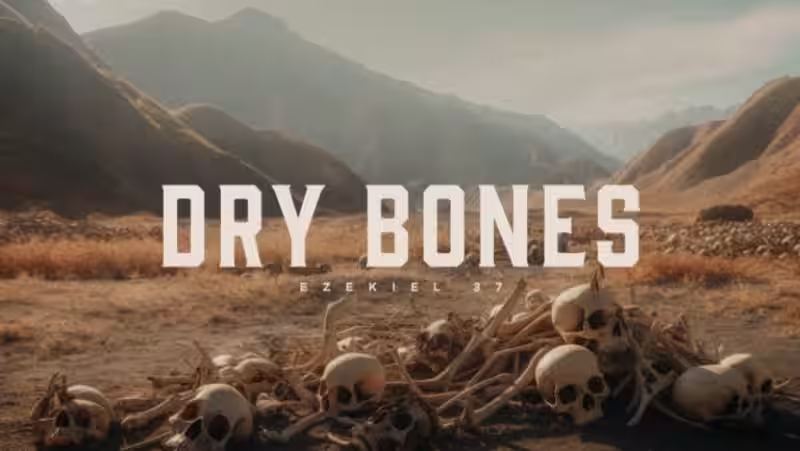
The book of Ezekiel, written during the Babylonian exile, provides a powerful backdrop for understanding this sermon's thematic core. The vision of the valley filled with dry bones vividly portrays the Israelites' despair and hopelessness in their captivity. Their nation, once vibrant and alive, felt utterly defeated and lifeless.
The prophet Ezekiel, initially overwhelmed by the sight, is then commanded by God to prophesy to the bones. This prophecy, seemingly absurd, is a testament to God's power to restore even the most hopeless situations. The detailed description—bones coming together, sinews connecting, flesh covering, and breath animating—underscores the miraculous nature of God's intervention. The sheer impossibility of the task mirrors the seeming impossibility of overcoming the challenges of a pandemic.
Connecting Psalm 23 to the Valley of Dry Bones
Many sermons using this passage often connect it to a prior sermon focused on Psalm 23, the comforting shepherd psalm ("The Lord is my shepherd; I shall not want"). This juxtaposition highlights a stark contrast: the peaceful assurance of Psalm 23 shifts to the confronting reality of the Valley of Dry Bones, reflecting the jarring transition from a sense of security to the uncertainty and suffering brought on by the pandemic. The sermon likely uses this contrast to acknowledge the legitimacy of fear and despair while simultaneously offering a path to hope.
A key element in many "Valley of Dry Bones" sermons is the emphasis on two sets of numbers derived from Ezekiel 37: ten and three. The number ten represents the ten instances where God promises life and wholeness within the passage. God repeatedly assures the prophet (and by extension us) that He will breathe life into the bones, restore flesh, and return the people to their land.
The number three highlights the unwavering nature of God's promise. God declares, "And you shall live," three times, emphasizing the certainty and power of His word. These numerical points serve as a counter-narrative to the negative statistics of the pandemic, providing a beacon of unwavering hope in the midst of despair. The sermon would use these repeated promises as a reminder that God's power is not diminished by human suffering.
The Rattling of Bones: Active Participation in Revival
The imagery of the bones "rattling" together is not presented as a passive event in these sermons. Instead it symbolizes the active resurgence of faith, hope, and love. This "rattling" represents the collective effort of individuals and communities to participate in God's work of restoration.
The sermon likely outlines specific practical ways to embody this "rattling." Examples might include:
Supporting healthcare workers and essential personnel.
Showing compassion and empathy to those struggling financially or emotionally.
Maintaining connections with others through technology, combating isolation.
Engaging in acts of service within the community.
These actions are presented as tangible ways to actively participate in God's promise of life and restoration, transforming the passive experience of the vision into an active participation in revival. It's not just about receiving God’s grace but also about actively extending that grace to others.
A Call to Action: Rattling the Valley Naturally
The sermon, naturally, concludes with a powerful call to action. The congregation is urged to actively participate in this revitalization, to "rattle this valley" with faith, hope, and love. This isn't simply a passive acceptance of God's plan; it's a commitment to actively participate in bringing about the promised restoration. The pandemic, with its overwhelming challenges, becomes an opportunity for spiritual growth, renewed faith, and a deeper connection with God and community. The "rattling" becomes a metaphor for the collective action needed to overcome adversity and build a future filled with abundant life. It is a call to actively engage in the restoration, mirroring God's active intervention in Ezekiel's vision. The sermon likely leaves the congregation with a sense of empowered hope, challenged to actively participate in the renewal process.
Frequently Asked Questions: Valley of Dry Bones Sermon
What is the main theme of the "Valley of Dry Bones" sermon?
The sermon uses Ezekiel 37:1-14, the vision of the valley of dry bones, as a powerful metaphor for the challenges and uncertainties experienced during the COVID-19 pandemic. It explores the shift from the comforting assurances of Psalm 23 ("all shall be well") to the harsh realities of widespread suffering and uncertainty. The core message centers on God's unwavering promises of life and restoration amidst overwhelming adversity.
How does the sermon connect the pandemic to Ezekiel's vision?
The sermon draws parallels between the prophet Ezekiel's initial feeling of helplessness when confronted with the valley of dry bones and the preacher's own sense of uncertainty and powerlessness in the face of pandemic statistics. This shared experience of uncertainty fosters a connection with the congregation, highlighting that even in times of crisis, faith can persist.
What are the key numbers mentioned in the sermon, and what do they represent?
The sermon emphasizes two sets of significant numbers: ten and three. Ten represents the ten instances in Ezekiel 37 where God promises life and wholeness—repeated promises to breathe life into the bones, restore flesh, and return the people to their land. Three represents the three times God declares, "And you shall live," underscoring the unwavering nature of His promise. These positive numbers act as a counterpoint to the negative statistics of the pandemic, offering a source of unwavering hope.
What is the significance of the "rattling" of the bones?
The "rattling" of the bones coming together symbolizes the active resurgence of faith, hope, and love in response to the crisis. It’s not a passive process but an active one, encompassing various acts of faith, compassion, and community support. The sermon suggests practical ways to embody this "rattling," which include supporting essential workers, showing empathy to those struggling, and maintaining connections through technology.
What is the call to action in the sermon?
The sermon concludes with a powerful call to action, urging the congregation to actively participate in this revitalization. It encourages listeners to "rattle this valley" with faith, hope, and love, actively contributing to a future filled with abundant life by engaging in practical acts of faith and compassion.
How does the sermon address feelings of hopelessness and uncertainty?
By directly acknowledging and addressing the preacher's own feelings of uncertainty and powerlessness in the face of the pandemic, the sermon helps to normalize these feelings for the congregation. The focus then shifts to God's unwavering promises, represented by the repeated assurances of life and restoration found in Ezekiel 37, as a source of strength and hope. The practical steps outlined in the sermon provide a pathway to active participation in overcoming despair.