Understanding the Wheel of Prophecy: A Journey Through Biblical Interpretation
Understanding the Wheel of Prophecy: A Journey Through Biblical Interpretation
Many people find the concept of prophecy fascinating, especially when considering its potential implications for the future. But what if prophecy isn't just about predicting events? What if it’s a complex, interconnected system, a sort of "wheel" that reveals deeper truths about God and humanity? This article explores the metaphorical "wheel of prophecy," examining how different prophetic texts relate to each other and unveil a cohesive narrative.
The idea of a "wheel of prophecy" can be understood metaphorically. Just as a wheel constantly turns, revealing different aspects of its structure, biblical prophecy unfolds in cycles, revealing layers of meaning over time. One prophecy might foreshadow another, building a cumulative understanding of God's plan. Early prophecies often set the stage for later ones, with later prophecies often illuminating the nuances of earlier ones. This interconnectedness creates a dynamic and evolving understanding, preventing a static, literal interpretation.
Consider, for instance, the prophecies concerning the Messiah in the Old Testament. These prophecies are scattered across various books, and each one adds a piece to the puzzle. Some mention the Messiah's lineage, others his suffering, and still others his future glory. By considering these prophecies together, we begin to see a more complete picture, rather than isolated predictions. The "wheel" is constantly turning, revealing more of the story with each new prophetic text.
Interpreting the Spokes: Different Approaches to Prophecy
Understanding the "wheel of prophecy" requires considering various interpretative approaches. Some common approaches include:
Literal Interpretation: This approach focuses on the surface meaning of the text, attempting to understand prophecies as literal predictions of future events.
Figurative Interpretation: This acknowledges the use of symbolism and metaphor within prophetic texts, looking for deeper meanings and spiritual applications.
Historical-Critical Approach: This method examines the historical and cultural context of the prophecy, considering the author's intentions and the audience they were addressing.
Fulfillment Approach: This approach focuses on identifying events or circumstances in history that seem to fulfill the prophecies, often drawing connections between Old Testament prophecies and New Testament events.
It's crucial to note that no single approach is universally accepted. A balanced understanding often involves integrating multiple perspectives, recognizing the complexity of prophetic texts. The "wheel" of prophecy, therefore, isn’t a simple diagram; it’s a multifaceted interpretation requiring careful consideration of various perspectives and approaches.
The Dangers of Misinterpretation
It is important to approach the study of prophecy with humility and caution. Misinterpretations can lead to false expectations, disappointment, and even harmful actions. For example, inaccurate predictions can lead to disillusionment and a loss of faith. Furthermore, forcing a prophecy onto a specific event without considering the broader context can lead to biased interpretations that disregard the nuances of the text.
A responsible approach to interpreting prophecy involves rigorous study, careful consideration of context, and a willingness to acknowledge the limitations of human understanding. The "wheel" of prophecy should be approached with respect for its complexity and potential for both insight and misunderstanding.
The “Wheel” in Different Religious Contexts
The concept of a "wheel of prophecy" isn't limited to a single religious tradition. Many faiths utilize prophetic texts and interpretations that reveal connections and patterns over time. While the specific prophecies and interpretations differ, the underlying principle of interconnectedness and cyclical revelation often remains consistent.
Comparing different approaches to prophecy across various religions can enrich our understanding of the topic as a whole. Such comparisons can highlight both similarities and differences in how different traditions interpret and utilize prophetic texts. This comparative study can lead to a deeper appreciation of the complexities and nuances involved in understanding prophecy across various religious and cultural contexts. The "wheel," therefore, can be seen as a universal metaphor for the way prophecy reveals itself in various religious traditions, offering a framework for both individual and comparative study.
Studying prophecy, whether through a literal or figurative lens, can offer valuable insights into personal growth. The cyclical nature of prophecy can provide a framework for understanding life's challenges and triumphs within a broader narrative.
By seeing our personal experiences as part of a larger, unfolding story, we can gain perspective and resilience. The "wheel" of prophecy, therefore, can offer a sense of hope and purpose, reminding us that our lives are connected to a larger divine plan. This perspective can help us navigate difficult times and maintain faith in the midst of uncertainty. The study of prophecy isn't just academic; it's a journey of self-discovery within a larger spiritual context.
Conclusion: Embracing the Complexity
The "wheel of prophecy" is a powerful metaphor for understanding the intricate nature of biblical prophecy. Its cyclical nature, the variety of interpretative approaches, and its potential for both insight and misinterpretation all contribute to its complexity. However, by approaching the study of prophecy with humility, awareness, and a willingness to consider various perspectives, we can gain a deeper understanding of its significance within the broader context of faith and spiritual growth. The journey through the "wheel of prophecy" is a continuous process of learning and discovery.
Wheel of Prophecy FAQ
Here are some frequently asked questions about the "Wheel of Prophecy: Who is God?" religious tracts:
What is the main message of the "Wheel of Prophecy" tracts?
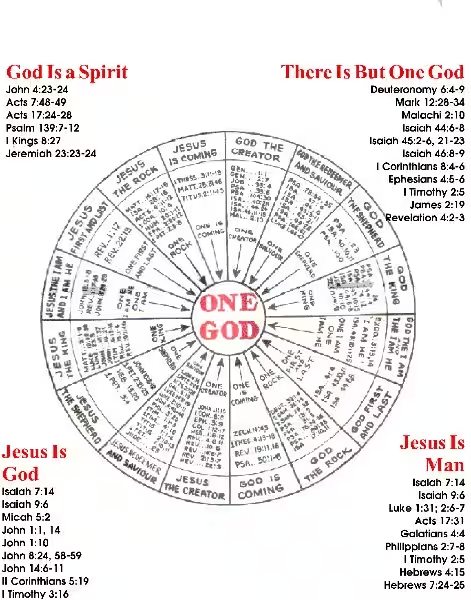
The core message centers on the scriptural explanation of God's oneness – the unique and undivided nature of the divine being. The tracts aim to present this concept in a way that's accessible to both believers and non-believers, using biblical prophecies to support their argument.
How does the "Wheel of Prophecy" approach the topic of God's oneness?
The tracts utilize prophetic passages from religious texts (likely the Bible) to demonstrate the unity of God. The "wheel" metaphor might represent the cyclical or recurring nature of prophecy, showing a continuous revelation of God's singular identity throughout history. The focus is on a direct and accessible presentation of biblical passages and their interpretations, rather than complex philosophical arguments.
The tracts are designed to reach both believers ("saints") and non-believers. For believers, it serves as a reinforcement of faith and a deeper exploration of a central theological concept. For non-believers, it attempts to present the concept of God's oneness in an understandable and engaging way, potentially challenging preconceived notions.
What kind of language and style is used in the tracts?
The tracts are written using clear, concise language, avoiding overly technical theological jargon. To enhance comprehension and engagement, they likely incorporate storytelling or illustrative examples.
Why are the tracts sold in packages of 100?
The 100-count packaging reflects an intention for widespread distribution and evangelistic purpose. They are designed for personal sharing, outreach events, or inclusion in broader missionary activities. The bulk packaging suggests a significant anticipated demand.
What is the significance of the title "Wheel of Prophecy"?
The title suggests that the tracts use prophetic passages to support the concept of God's oneness. The "wheel" imagery likely symbolizes the cyclical or recurring nature of prophecy, highlighting the continuous revelation of God's singular nature throughout time.
What kind of evidence or arguments are used in the tracts?
The tracts primarily rely on scriptural evidence – carefully selected and interpreted biblical verses – to support the argument for God's oneness. They likely address common misunderstandings or alternative theological perspectives on this subject.
Where can I purchase the "Wheel of Prophecy" tracts?
This information is not provided in the source material. Further details on purchasing would need to be obtained from the product distributor or seller.