The Shortest Chapter in the Bible: A Powerful Message in Few Words
The Shortest Chapter in the Bible: A Powerful Message in Few Words
Finding the shortest chapter in the Bible is a question many Bible enthusiasts ask. It's a fascinating quest that unveils surprising insights into the power of concise biblical communication. This article delves into the shortest chapter, exploring its context, message, and significance within the larger biblical narrative.
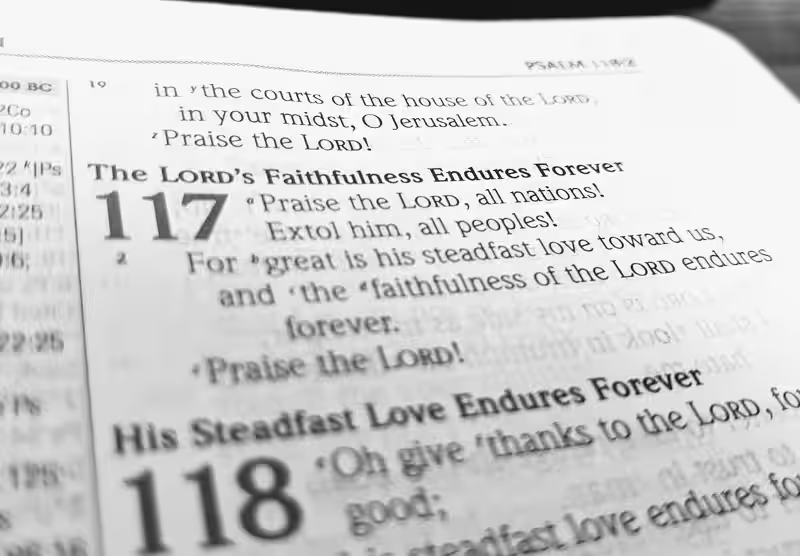
The undisputed winner of the "shortest chapter" title is Psalm 117. This tiny psalm, consisting of a mere two verses, packs a powerful punch. Its brevity is remarkable, containing only seventeen words in the original Hebrew. This is a testament to the fact that profound theological truths can be expressed with astonishing economy.
The impact of Psalm 117 extends beyond its length. Its central positioning within the Bible—as the 595th chapter—is noteworthy. This perfectly balanced placement, with an equal number of chapters before and after, hints at its significance as a pivotal point within the overall biblical narrative. It's as if the Bible itself emphasizes its importance through this strategic placement.
The Message of Universal Praise
The core message of Psalm 117 is strikingly simple: praise God! The psalm's two verses directly and unequivocally call for universal praise: "Praise the Lord, all you nations; extol him, all you peoples." And it concludes with a powerful reiteration: "For great is his love toward us, and the faithfulness of the Lord endures forever." This simple repetition underscores the central theme, leaving a lasting impression on the reader.
This call to praise transcends national and cultural boundaries. It is a universal invitation, embracing all peoples to acknowledge and celebrate God's love and faithfulness. The message is inclusive, emphasizing the universality of God's grace and its reach to every corner of the world. The simplicity of the language makes this message accessible to all, regardless of their theological background or understanding.
While Psalm 117 reigns supreme as the shortest, other Bible chapters exhibit remarkable brevity. The book of Psalms, in particular, boasts a collection of short chapters, highlighting the diversity of styles and lengths used to convey spiritual messages.
Short Psalms and Concise Narratives
Psalms 134, 131, and 133 are also exceptionally short. While slightly longer than Psalm 117, they still exemplify the impactful nature of concise expressions of faith and devotion. These short psalms often function as hymns or expressions of personal devotion, demonstrating the versatility of poetic forms in conveying powerful spiritual messages.
Beyond the Psalter, the book of Job also contains relatively short chapters, such as Job 25. This demonstrates that brevity isn't confined to a single genre or style within the Bible. Similarly, the New Testament also features concise chapters, such as Revelation 15, proving that succinct theological pronouncements are not exclusive to the Old Testament. The variety of books and genres showcasing short chapters emphasizes that brevity does not equate to a lack of theological depth or impact.
A Ranking of the Shortest Chapters
To understand the scope of brevity in the Bible, a ranking of the shortest chapters based on verse and word count (using a standard translation like the NIV) would be helpful. Such a list might reveal ten or more chapters with six verses or fewer. This would highlight the intentional use of concise language to convey profound spiritual truths. Note that slight variations may occur depending on the translation used, as certain phrases might be rendered differently across versions.
For example, a ranking might include:
Psalm 117: Two verses, minimal words.
Psalm 131: Three verses, relatively few words.
Psalm 133: Three verses, a few more words than Psalm 131.
Psalm 134: Three verses, similar word count to Psalm 133.
Job 25: Six verses, a slightly higher word count than the Psalms in this list.
This list reveals the diversity of books and genres represented among the shortest chapters, dispelling any notion that brevity is limited to a particular section of the Bible. These short chapters provide excellent passages for memorization and reflection, offering concise statements of significant biblical themes.
The Significance of Brevity in Scripture
The shortest chapter in the Bible, Psalm 117, serves as a powerful example of the significance of brevity in conveying profound theological messages. The concise phrasing emphasizes the core message, allowing the reader to easily grasp the central theme. This simple yet profound message of universal praise and God's unwavering love resonates deeply with readers across generations and cultures.
The chapter's brevity doesn't diminish its power; rather, it enhances it. The few words chosen are carefully selected to maximize impact. The repetition of "Praise the Lord" reinforces the central theme, making it unforgettable. The succinct nature of the message makes it ideal for memorization and reflection.
The shortest chapter in the Bible, and others like it, demonstrate that theological depth isn't necessarily tied to length. These short passages are powerful reminders that profound spiritual truths can be conveyed with remarkable economy of words. They offer accessible pathways to engage with scripture and appreciate the beauty and power of concise biblical language.
Frequently Asked Questions: The Shortest Chapter in the Bible
What is the shortest chapter in the Bible?
The shortest chapter in the Bible is Psalm 117. It's remarkably concise, containing only two verses. While the exact word count varies slightly depending on the translation, it's exceptionally short in its original Hebrew.
How many words are in Psalm 117?
The original Hebrew text of Psalm 117 contains only seventeen words. Modern translations naturally have a slightly higher word count, with variations among different versions.
What is the significance of Psalm 117's brevity?
Psalm 117's brevity highlights the power of concise communication. Its short length doesn't diminish its theological impact; rather, it emphasizes the core message of universal praise and worship to God. The succinctness makes it easily memorable and accessible.
The central message of Psalm 117 is a call to all nations to praise the Lord, emphasizing God's unwavering love and faithfulness. It's a universal message of praise and gratitude, transcending cultural and temporal boundaries.
Where is Psalm 117 located within the Bible?
Psalm 117 holds a unique position within the Bible. It's the 595th chapter, perfectly centered within the entire biblical canon, further emphasizing its importance.
Are there other very short chapters in the Bible?
Yes, several other chapters in the Bible are exceptionally short. The book of Psalms, in particular, contains a cluster of short chapters, including Psalms 131, 133, and 134. The book of Job also includes relatively short chapters. The New Testament also contains short chapters (e.g., Revelation 15). These short chapters demonstrate that brevity doesn't imply a lack of theological depth.
Why are there short chapters in the Bible?
The inclusion of short chapters in the Bible showcases the stylistic diversity of biblical writing. Different lengths were used to convey various messages and themes effectively. Short chapters can be particularly powerful for emphasizing a core idea or serving as a focal point for meditation or memorization.
What is the practical value of studying short Bible chapters like Psalm 117?
Short chapters like Psalm 117 are valuable for several reasons: they are easy to memorize, readily accessible for reflection, and offer concise yet profound theological insights. Their brevity makes them ideal for daily devotional use.