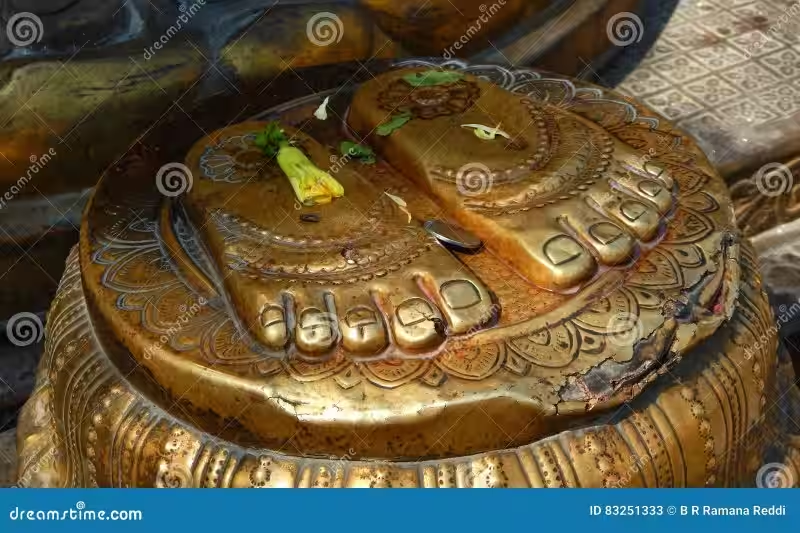
The imagery of "God's feet" might seem a surprisingly specific and perhaps even unusual focal point for theological reflection. Yet, a closer examination reveals a wealth of symbolic meaning within this seemingly simple phrase. This article delves into the biblical and theological significance of "god feet," exploring how this anthropomorphic representation illuminates crucial aspects of God's nature and His relationship with humanity. We will explore how this seemingly simple image speaks volumes about God's power, presence, provision, and promise.
God’s Preeminence and Superiority: The Dust of His Feet
The Bible frequently uses the imagery of "feet" and "footstool" to convey God's unparalleled power and authority. Passages like Nahum 1:3-4 and Habakkuk 3:3-6 depict clouds as "the dust of His feet," showcasing God's transcendence and mastery over creation. This isn't a literal description, of course; it's a powerful metaphor emphasizing the vastness of God's power and His complete control over all things.
The imagery extends further. Ephesians 1:21-22 declares, "He has put all things under His feet." This isn't about God literally having feet that can tread upon the universe. Instead, it underscores His absolute sovereignty and supremacy over all creation. God stands above all, the ultimate authority and source of all power. This understanding informs our priorities: Just as a potter has complete authority over the clay or a shepherd over his flock, God holds ultimate authority, demanding our complete reverence and obedience. The example of the women worshipping Jesus at His feet after the resurrection (e.g., Luke 24:39; John 20:25) exemplifies appropriate reverence and acknowledgment of His superiority.
The Significance of Reverence
The concept of "god feet" isn't merely about acknowledging God's power; it's about understanding the correct response to that power. Reverence, humility, and worship are appropriate responses to the supreme being. This doesn't imply a fearful subservience, but rather a heartfelt recognition of God's ultimate authority and goodness. It is a posture of humility, recognizing our dependence on Him.
God’s Place and Dwelling: The Temple and the Church
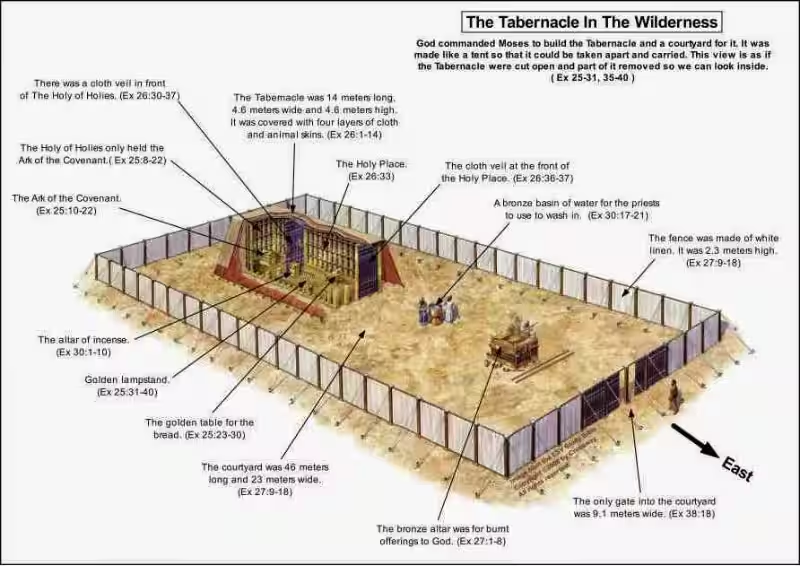
The construction of Solomon's Temple, initiated by David's desire to provide a fitting "footstool" for God (1 Chronicles 28:2), symbolizes God's presence dwelling among His people. The Temple served as a physical manifestation of God's presence, a sacred space where He resided and interacted with His chosen people. However, this earthly temple was temporary.
The enduring "Church," built by Christ (Matthew 16:18), represents a far more profound and lasting dwelling place for God. The Christian church, both locally and globally, is not a mere building but a community of believers where God's presence continues to dwell. Through the Holy Spirit, believers experience the tangible presence of God in worship, prayer, and fellowship. This is a far more significant "footstool" than any physical structure.
The Church as a Living Temple
The concept of the church as God's dwelling place underscores the importance of community and fellowship in Christian faith. Our worship and devotion aren't confined to specific buildings or rituals, but are expressions of our relationship with God within the context of the living church. This is where we encounter God's presence, receive spiritual nourishment, and serve others.
God’s Provision and Sacrifice: The Wounded Feet of Jesus
The imagery of Jesus' feet takes on a particularly poignant meaning when considering His sacrifice on the cross. The wounds on His hands and feet (Luke 24:39; John 20:25) are not merely historical events; they are enduring symbols of His sacrifice for humanity's redemption. Even in His resurrected form, the scars remain (Revelation 5:6), a perpetual reminder of the cost of salvation.
Fanny Crosby, a renowned hymn writer, expressed her longing to see these scars in heaven, highlighting the enduring significance of Jesus' wounds. The scars on His feet, the very "god feet" that walked the earth, bear witness to His suffering and love for humanity. They are a powerful testament to God's willingness to sacrifice Himself for our redemption.
The Significance of the Scars
The enduring scars on Jesus' feet are more than just physical marks; they represent the depths of His love and the ultimate act of sacrifice. They serve as a constant reminder of the price paid for our salvation and should inspire gratitude, humility, and commitment to following Him.
God’s Promise and Second Coming: Standing on the Mount of Olives
The prophecy in Zechariah 14:1-4 foretells Jesus' second coming, with His feet standing on the Mount of Olives. This marks a triumphant return and the commencement of final judgment (Matthew 25:31-46). This isn't just a future event; it's a promise, a certainty. It calls us to accountability, urging us to consider our relationship with God.
The imagery of "god feet" on the Mount of Olives signifies the culmination of God's plan for humanity, His final intervention in human history. It calls for us to prepare for this momentous event, to live lives worthy of His return. The "god feet" that once walked the earth in humility will return in glory, and we will all stand before Him.
Accepting Christ as Savior
The hope of the second coming and the certainty of final judgment underscore the importance of accepting Jesus Christ as our savior. This acceptance isn't a mere intellectual assent; it's a transformative act of faith that leads to repentance, reconciliation with God, and the promise of eternal life. The imagery of "god feet" calls us to consider our lives in light of this ultimate truth and prepare ourselves to meet our Creator.
In conclusion, the seemingly simple imagery of "god feet" holds profound theological weight. It serves as a powerful symbol of God's supreme authority, His intimate relationship with His people, the sacrifice made for humanity's redemption, and the promise of His ultimate return. May we each strive to walk in a manner worthy of this profound revelation.
Frequently Asked Questions about the Theological Significance of “God’s Feet”
What is the significance of the "feet of God" imagery in the Bible?
The "feet of God" is not a literal depiction but a powerful symbolic representation used throughout scripture to convey various aspects of God's nature and relationship with humanity. It's an anthropomorphism—giving human characteristics to God—used to make complex theological concepts more accessible. The imagery serves as a rich tapestry of meaning, revealing God's power, presence, provision, and promise.
How does the "feet of God" imagery illustrate God's preeminence?
Passages like Nahum 1:3-4 and Habakkuk 3:3-6 describe clouds as "dust of his feet," emphasizing God's unparalleled power and authority over creation. Ephesians 1:21-22 further reinforces this, stating that God has "put all things under his feet." This imagery highlights God's absolute supremacy and the importance of prioritizing Him above all else.
What does the "footstool" imagery signify in relation to God's dwelling place?
David's desire to build a temple as a "footstool" for God (1 Chronicles 28:2) symbolizes God's presence among His people. While the earthly temple was temporary, the "Church," built by Christ (Matthew 16:18), represents the enduring place where believers encounter God's presence today.
How does the imagery of Jesus' feet relate to God's provision and sacrifice?
The wounds on Jesus' feet, visible even in his resurrected form (Luke 24:39; John 20:25; Revelation 5:6), serve as a perpetual reminder of his sacrifice and the cost of salvation. This enduring imagery underscores the depth of God's love and provision for humanity. The anticipation of seeing these scars in heaven, as expressed by hymn writer Fanny Crosby, further highlights their significance.
What is the connection between God's feet and the promise of His second coming?
Zechariah 14:1-4 prophesies Jesus' second coming, with his feet standing on the Mount of Olives, signifying a triumphant return and the commencement of final judgment (Matthew 25:31-46). This imagery emphasizes the certainty of this event and its implications for individual accountability. It underscores the importance of accepting Jesus Christ as savior.
Is there a single, definitive interpretation of "God's feet"?
No, the imagery of "God's feet" is multifaceted and allows for multiple layers of interpretation. The meaning depends heavily on the specific biblical context and the theological lens through which it is viewed. However, the underlying themes of power, presence, provision, and promise remain consistent throughout.