Commentary 1 Kings 13: A Study in Obedience, Judgment, and Mercy
Commentary 1 Kings 13: A Study in Obedience, Judgment, and Mercy
Understanding 1 Kings chapter 13 requires careful consideration of its multifaceted narrative. This chapter presents a complex interplay of prophecy, obedience, disobedience, judgment, and even a hint of mercy, leaving readers with lingering questions about God's justice and the importance of unwavering faithfulness. This article will delve into the key events of 1 Kings 13, exploring various interpretations and offering helpful commentary to enhance your understanding of this pivotal biblical passage.
The Prophetic Confrontation and its Immediate Aftermath
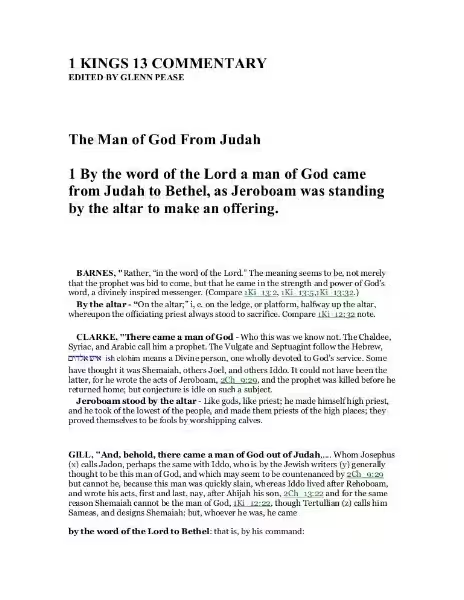
The chapter opens with a dramatic confrontation between a prophet from Judah and Jeroboam I, the king of Israel. This prophet, sent by God, boldly denounces Jeroboam's establishment of idolatrous golden calves in Bethel and predicts the destruction of the altar. This isn't just some distant future prediction; the prophecy is immediately fulfilled with a miraculous sign: the altar is split apart, and Jeroboam's hand withers when he attempts to seize the prophet.
This immediate validation of the prophecy underscores the power and authority of God's word. The miraculous event serves as a powerful demonstration of God's judgment on idolatry and the authority of his prophetic messenger. It's a stark warning against the dangers of apostasy and the consequences of rejecting God's commands. Yet, even in this moment of divine judgment, Jeroboam displays a superficial repentance, pleading for the restoration of his withered hand. His subsequent return to idolatry, however, reveals the shallowness of this repentance.
The Prophet’s Disobedience and its Fatal Consequences
Despite initially refusing Jeroboam's hospitality, in accordance with God's direct command, the prophet from Judah later succumbs to temptation. He accepts an invitation from an older prophet in Bethel to eat and drink, directly disobeying God's explicit instructions. This act of disobedience, seemingly minor, has fatal consequences.
The older prophet, having initially lied to persuade the man of God to eat, then truthfully prophesies the death of the Judah prophet at the hands of a lion. This prophecy is also fulfilled, highlighting the seriousness of even seemingly insignificant acts of disobedience. The narrative emphasizes that God's commands are not suggestions; they are essential for maintaining a right relationship with Him. The death of the prophet serves as a stark warning against the dangers of prioritizing human relationships over obedience to God.
The older prophet from Bethel plays a complex role in the narrative. His deception in persuading the Judah prophet to eat is undeniable, yet his subsequent remorse and actions in burying the deceased prophet suggest a degree of repentance. This contrast highlights the unpredictable nature of God's judgment and mercy. While the older prophet's actions were wrong, his eventual act of burying the dead prophet demonstrates a level of respect and perhaps even a recognition of the gravity of the situation. This element of remorse introduces a layer of complexity to the narrative, leaving room for reflection on the complexities of human nature and divine judgment.
Commentary 1 Kings 13: Interpretations and Lessons
The story of 1 Kings 13 offers several key lessons. First, it emphasizes the power and authority of God's prophetic word. The immediate fulfillment of the prophecy against Jeroboam's altar and the subsequent death of the disobedient prophet serve as powerful demonstrations of God's sovereignty. Second, it highlights the importance of unwavering obedience to God's commands. The prophet's disobedience, even in what might seem a minor infraction, leads to his death, emphasizing the seriousness of even seemingly small transgressions.
Third, the narrative exposes the superficiality of Jeroboam's repentance. His plea for healing is not accompanied by a genuine change of heart, as he continues his idolatrous practices. This underscores the need for true repentance—a change of heart and action—rather than mere outward displays of remorse. Finally, the chapter offers a complex portrayal of divine judgment and mercy. While Jeroboam faces judgment for his idolatry and the disobedient prophet faces death for his transgression, the narrative also contains elements of mercy, particularly in the actions of the older prophet who buried the deceased prophet.
The Unpredictability of Divine Justice
The seemingly contradictory fates of the two prophets—one disobeying and dying, the other deceiving and seemingly escaping immediate punishment—raise questions about the nature of divine justice. Some may see it as unfair, while others may find it a reflection of God's mysterious ways. It is important to remember that the biblical narrative often presents complexities that defy easy answers. God's justice is not always immediately apparent, and the ultimate consequences of actions might not be fully understood in this life.
The narrative of 1 Kings 13 serves as a compelling cautionary tale. It underscores the importance of heeding God's commands, even when they seem inconvenient or counterintuitive. It highlights the dangers of superficial repentance and the unpredictable nature of divine judgment and mercy. The story's enduring relevance lies in its timeless message: unwavering obedience to God's word, however challenging, is essential for a life of faith, and the consequences of disobedience can be severe. Ultimately, 1 Kings 13 challenges us to examine our own obedience and to strive for a deeper understanding of God's will in our lives. As we consider the actions and fates of the prophets in this pivotal chapter, we are called to reflect on the unwavering obedience required for a faithful life and the unpredictable yet ultimately just nature of God’s dealings.
1 Kings 13: Frequently Asked Questions
What is the main narrative of 1 Kings 13?
1 Kings 13 recounts a dramatic encounter between a prophet from Judah and Jeroboam I, king of Israel. The prophet from Judah prophesies the destruction of Jeroboam's idolatrous altar in Bethel and the subsequent judgment upon Jeroboam for his persistent idolatry. This prophecy is immediately confirmed by miraculous signs. However, the narrative also features the prophet's disobedience to a direct command from God, leading to his death, and a contrasting response from an older prophet from Bethel. The chapter explores themes of divine judgment, obedience, and the consequences of both rejecting and disobeying God's word.
What miraculous signs occur in 1 Kings 13?
The immediate and striking sign is the miraculous splitting of Jeroboam's idolatrous altar at Bethel. Jeroboam's hand also withers when he attempts to arrest the prophet from Judah, a punishment later reversed upon his plea for mercy. The preservation of the prophet's body, untouched by scavengers for centuries, also serves as a powerful sign confirming the divine judgment.
Why does the prophet from Judah die?
Despite successfully delivering God's message and witnessing its immediate fulfillment, the prophet from Judah disobeys a direct command from God not to eat or drink in Bethel. He is persuaded by an older prophet from Bethel to break his vow, resulting in his death by a lion. This event highlights the seriousness of disobedience, even in seemingly minor matters after a significant act of obedience.
What is the significance of the older prophet from Bethel?
The older prophet from Bethel presents a complex character. He initially deceives the prophet from Judah, persuading him to disobey God's command. However, he later shows remorse by retrieving and burying the dead prophet. This contrast highlights the unpredictable nature of God's dealings and the possibility of repentance even within flawed individuals. His actions also serve as a cautionary tale, illustrating the dangers of trusting potentially misleading pronouncements, even from a seemingly religious source.
What are the main theological themes in 1 Kings 13?
1 Kings 13 powerfully illustrates several key theological themes:
The power and certainty of God's prophetic word: The immediate fulfillment of the prophecy concerning Jeroboam's altar and the later fulfillment of King Josiah's actions demonstrate the authority of God's pronouncements.
The consequences of disobedience: The death of the prophet from Judah underscores the seriousness of disobeying even seemingly minor commands from God.
God's judgment and mercy: The chapter shows both the swift judgment upon Jeroboam and the prophet’s death, and the potential for repentance and later mercy, as seen in the actions of the older prophet from Bethel.
The importance of discernment: The narrative cautions against blindly following seemingly authoritative figures if their instructions contradict a clear direct command from God. Discernment of God's true will is paramount.
How does 1 Kings 13 relate to the broader context of the Old Testament?
The chapter fits within the broader Old Testament narrative of Israel's disobedience and God's subsequent judgment. Jeroboam's idolatry represents the Northern Kingdom's continued rejection of God's covenant and the consequences that followed. The story serves as a warning against apostasy and the dangers of ignoring God's clear commands. The prophecy of the altar's destruction by Josiah also foreshadows later events in Judah's history, connecting the narrative to the larger story of God's faithfulness and the eventual restoration of His people.