The question of whether people are in heaven right now is a deeply personal and profoundly theological one. It's a question that has occupied humanity for millennia, sparking countless debates and inspiring volumes of philosophical and religious texts. There's no simple, universally accepted answer, and the varied perspectives stem from differing interpretations of scripture, religious traditions, and even our understanding of what heaven itself truly represents.
Understanding the diverse viewpoints on the afterlife is crucial to grappling with the question of whether people are in heaven right now. Many religious and philosophical traditions offer unique perspectives on what happens after death, impacting how we view the immediate state of the soul.
Some believe in an immediate judgment upon death, where individuals are instantly ushered into either heaven or hell based on their earthly deeds. This perspective often emphasizes a direct, immediate connection between the soul and the divine, with the afterlife being a reflection of one's spiritual state during life. The concept of a 'final judgment' in this view might be less about assigning destinations and more about a formal acknowledgment of a pre-existing state.
Conversely, other perspectives posit an intermediary period between death and final judgment. This could involve a state of waiting, unconsciousness, or a process of purification before the soul enters its ultimate destination. The image of soul sleep, for example, paints a picture of a temporary unconsciousness before resurrection, while the concept of purgatory suggests a period of atonement and refinement. In these views, heaven and hell, as traditionally understood, are reserved for the post-judgment period. Are people in heaven right now according to these beliefs? Possibly not in the traditional sense, but their spiritual journey continues.
The Role of Religious Texts and Interpretations
Religious texts, particularly in Abrahamic faiths, offer a rich source of discussion regarding the afterlife. However, interpretations of these texts are often highly varied, leading to a multitude of perspectives on the question at hand. For instance, the Bible contains passages that can be interpreted to support both immediate entrance into heaven and a post-judgment assignment.
The story of the thief on the cross in Luke 23:43, where Jesus promises "today you will be with me in paradise," is often cited as evidence for immediate entry into heaven for believers. This interpretation is bolstered by Paul's words in 2 Corinthians 5:6-8, expressing a desire to "be away from the body and at home with the Lord." However, other passages emphasize the importance of the final judgment and the resurrection of the body, suggesting a distinct separation between the immediate post-death state and the ultimate eternal destiny.
The varied interpretations of these scriptures contribute significantly to the ongoing debate. The same text can be read and understood differently depending on the theological framework and pre-existing beliefs of the interpreter.
The Concept of Heaven Itself
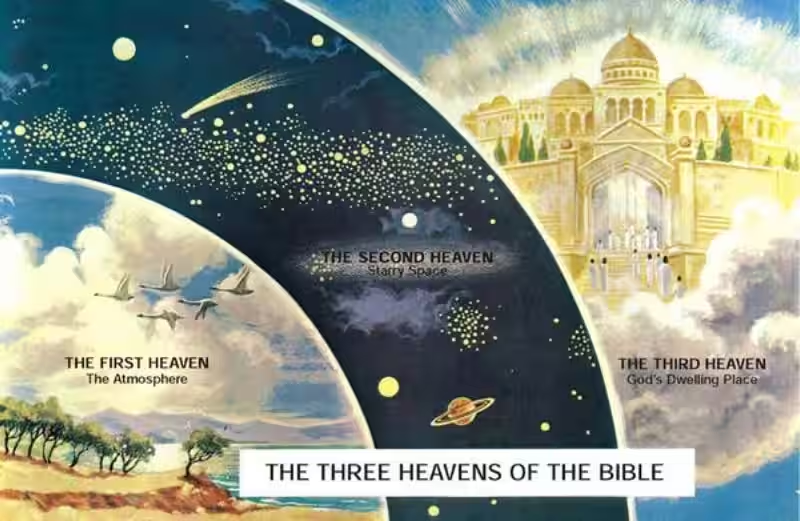
The very definition of "heaven" adds another layer of complexity. Is heaven a physical location, a spiritual state, or a metaphorical representation of ultimate union with the divine? If heaven is understood as a physical place, then the question of whether people are in heaven right now becomes a matter of location. If, however, heaven is seen as a state of being—a state of perfect communion with God—then it's conceivable that believers could experience this state immediately upon death, regardless of a future final judgment. This distinction significantly influences how we answer the central question.
Beyond the Abrahamic Traditions
The question of whether people are in heaven right now extends beyond Abrahamic faiths. Many other religious and spiritual traditions offer unique perspectives on the afterlife, often without the same clear-cut distinctions between heaven and hell. Some emphasize reincarnation and cyclical processes of rebirth, while others focus on different realms of existence that might not readily align with Western notions of heaven or hell.
These diverse perspectives highlight not only the varied understandings of the afterlife but also the cultural and philosophical contexts that shape these beliefs. The answer to the question is not simply a matter of religious dogma but is interwoven with wider worldview considerations.
Ultimately, the question of whether people are in heaven right now remains a matter of faith and personal interpretation. There is no definitive answer that satisfies every belief system or theological perspective. The explorations described above are meant to provide a framework for understanding the complexity and diversity of viewpoints, rather than to provide a conclusive answer. The journey to understanding is a personal one, informed by religious teachings, personal experiences, and continuous reflection on the mysteries of life and death. The question itself invites us to engage deeply with our beliefs and to approach the topic with humility and respect for the diverse perspectives of others.
Frequently Asked Questions: Are People in Heaven Right Now?
The question of whether people are in heaven right now is a complex one with varying interpretations across different religious beliefs and theological perspectives. There's no single, universally accepted answer. The following FAQs explore some key aspects of this debate:
Is there a definitive answer to whether people are in Heaven right now?
No. The question of whether individuals currently reside in Heaven is a matter of faith and theological interpretation. Different religious traditions and denominations hold varying beliefs on the nature of the afterlife, the timing of judgment, and the state of the soul after death. There is no single, universally accepted answer.
What are some of the different theological viewpoints on this topic?
Some theological perspectives support the idea of an immediate, conscious experience of Heaven (or Hell) upon death. This often emphasizes the soul's inherent connection to God and a judgment based on one's life. The Last Judgment, in this view, may be a formal validation of this initial state rather than the definitive assignment.
Other perspectives suggest a period of waiting or unconsciousness between death and the Last Judgment. This might involve a form of sleep, a holding pattern, or a process of purification before final judgment. In this understanding, Heaven and Hell as traditionally envisioned are reserved for the souls judged at the Last Judgment. The post-death state would be different from the ultimate destination.
How do different religious traditions approach this question?
The specifics vary greatly. Within Christianity, for example, Catholic theology traditionally includes purgatory as an intermediate state of purification before Heaven, while some Protestant denominations may favor a more immediate entrance into Heaven or Hell. Other faiths have unique perspectives on the afterlife, often involving realms or levels of existence not easily categorized as "Heaven" or "Hell." Some Eastern religions, for instance, emphasize reincarnation and cycles of rebirth.
What is the significance of the Last Judgment in this context?
The Last Judgment plays a crucial role. Some believe it's the moment of definitive assignment to Heaven or Hell. Others see it as a validation or clarification of a state already experienced after death. The interpretation of the Last Judgment significantly influences the understanding of whether people are already in Heaven.
Does the interpretation of Heaven and Hell as literal places or metaphorical states matter?
Absolutely. If Heaven and Hell are seen as literal physical locations, then a post-judgment assignment is more likely. However, if interpreted metaphorically as states of being (union with or separation from God), then the experience could begin immediately upon death, regardless of a future final judgment.
What are some key biblical passages used to support different viewpoints?
Different passages are interpreted in various ways to support different views. For example, Luke 23:43 (Jesus' words to the repentant thief) is often cited to support immediate entrance into paradise. However, other passages can be interpreted to support an intermediate state or a post-judgment assignment. The interpretation of these texts is central to the debate.
Can I find a definitive answer in the Bible?
The Bible does not offer a single, easily interpreted answer to this question. Different interpretations of biblical texts lead to different conclusions regarding the timing of entrance into Heaven. It's important to consider the various theological perspectives and interpretations to understand the complexity of the issue.