Atonement vs. Propitiation: Understanding the Nuances of Christ's Sacrifice
Atonement vs. Propitiation: Understanding the Nuances of Christ's Sacrifice
Many Christians use the terms "atonement" and "propitiation" interchangeably, but are they truly synonymous? While deeply connected in the context of Christ's sacrifice, a closer examination reveals distinct yet complementary aspects of God's redemptive plan. This article will delve into the crucial differences between atonement and propitiation, clarifying their individual roles in our salvation.
Propitiation, at its core, focuses on God. It addresses the crucial issue of His righteous anger towards sin, a consequence of His perfect holiness. The word itself carries a weight of significance, hinting at the profound necessity of appeasing God's wrath before reconciliation can be achieved.
The Old Testament frequently foreshadows this concept. The Day of Atonement, for instance, involved the high priest making sacrifices to atone for the sins of the people. This act symbolically appeased God's anger, allowing for temporary reconciliation. The mercy seat on the Ark of the Covenant, often translated from the Greek hilastērion, served as a visual representation of this propitiation – a tangible point where God's justice and mercy could intersect.
It's crucial to understand that propitiation doesn't imply a change in God's character or the creation of His love. God's love is eternal and unchanging. Rather, propitiation removes the obstacle – His righteous anger towards sin – that stands between a holy God and sinful humanity, paving the way for the expression of His grace and mercy. It's the necessary bridge allowing God to justly extend forgiveness without compromising His holiness and justice.
The Role of Hilastērion
The Greek word hilastērion, frequently translated as "propitiation" or "mercy seat," is pivotal in understanding this concept. It points to the means by which expiation is achieved. It wasn't simply about covering sin; it was about satisfying God's righteous demand for justice. This is powerfully illustrated in Romans 3:24-25 which speaks of being justified freely by God's grace through the redemption that is in Christ Jesus, whom God put forward as hilasterion through faith in his blood.
This verse highlights the hilastērion as the means by which God demonstrated His righteousness. It wasn't just about forgiving humanity; it was about God demonstrating His justice in a way that allowed for grace to be extended. The sacrifice of Christ, therefore, was not merely an act of atonement but also a profound act of propitiation, satisfying God's righteous judgment on sin.
Atonement: Reconciliation with God
While propitiation focuses on God's response to sin, atonement centers on humanity's experience of forgiveness and reconciliation with God. It's the process of making amends for sin, the practical outcome of propitiation. Atonement highlights the cleansing process, the removal of the stain of sin, and the restoration of a broken relationship.
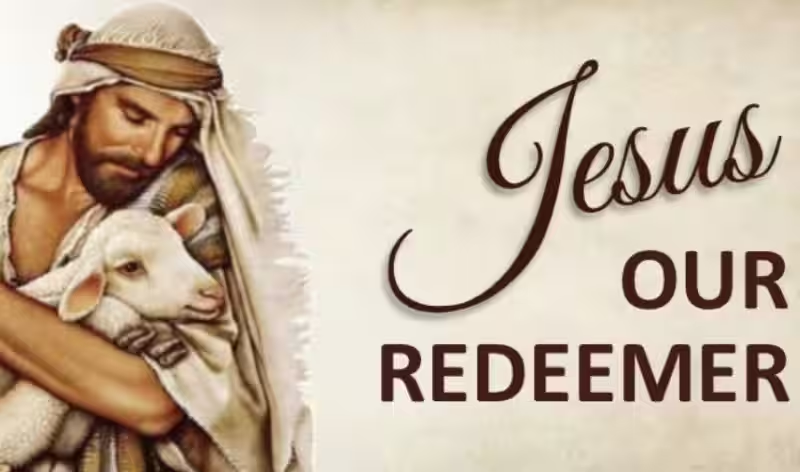
The Old Testament sacrificial system offered a temporary atonement, but only Christ's sacrifice provides a permanent solution. The repeated sacrifices of animals pointed towards a future, ultimate sacrifice – Jesus Christ, the perfect and sinless Lamb of God, who took upon himself the penalty for our sins.
Christ's death was not just a propitiatory act that satisfied God's justice; it was also the ultimate act of atonement, reconciling us to God. This atonement allows us to experience forgiveness, restoration, and renewed fellowship with God. This forgiveness is a free gift, not something earned through our own efforts.
The Difference between Old and New Covenant Atonement
The Old Covenant sacrifices, while offering temporary atonement, couldn't address the root issue of sin. They required constant repetition, highlighting their inadequacy. The New Covenant, established through Christ's sacrifice, is different. Jesus' death, once and for all, conquers the root of sin, providing a permanent atonement and reconciling us to God. The difference lies in the permanence and efficacy of Christ’s sacrifice, offering a complete and lasting solution to the problem of sin.
This permanent atonement removes the burden of guilt and enables a restored relationship with God. It's not merely about removing the penalty for sin; it's about transforming our hearts and minds, enabling us to live a life of gratitude and obedience, empowered by the Holy Spirit.
The Intertwined Nature of Atonement and Propitiation
While distinct, atonement and propitiation are inseparably linked. Propitiation addresses the divine side – appeasing God's wrath – while atonement centers on the human side – experiencing forgiveness and reconciliation. They are two sides of the same coin, representing the complete work of Christ on the cross. One cannot truly exist without the other. Understanding this interplay is crucial for grasping the full scope of Christ's redemptive work.
The confusion often arises from the fact that many modern translations, such as the NIV, often use "atonement" to encompass both concepts. This can obscure the critical distinction between the divine act of appeasing God’s wrath and the human experience of forgiveness and restoration. A deeper understanding of this distinction allows us to appreciate the multifaceted nature of God's grace and mercy, and the complete and perfect work that Jesus accomplished on the cross. It’s a distinction that enriches our understanding of the gospel and deepens our appreciation for the sacrifice of Christ.
Frequently Asked Questions: Atonement vs. Propitiation
What is the difference between atonement and propitiation?
While often used interchangeably, atonement and propitiation represent distinct, yet interconnected, theological concepts related to Christ's sacrifice. Atonement focuses on humanity's reconciliation with God—the process of cleansing and restoring fellowship. Propitiation, however, centers on God, specifically appeasing His righteous wrath and satisfying His justice in response to sin. It addresses the breach between a holy God and sinful humanity, enabling God to justly extend grace without compromising His character. Atonement is the act, propitiation is the result on God's side.
How does propitiation relate to God's wrath?
Propitiation addresses God's righteous anger towards sin. It's not that God's love needs to be created, but rather that the obstacle of His justified wrath against sin needs to be removed to allow His love and grace to be fully expressed towards humanity. This is crucial because God's holiness necessitates a response to sin—a response manifested as righteous anger. Propitiation, therefore, satisfies this divine justice, opening the way for atonement and reconciliation.
How does atonement relate to forgiveness?
Atonement is the process by which sinners are cleansed and reconciled with God. Through Christ's atoning sacrifice, the barrier between God and humanity is removed, allowing for forgiveness. This forgiveness isn't earned but is a gift received through faith in Christ's work. Atonement makes forgiveness possible by addressing the consequences of sin.
What is the significance of the word "hilastērion"?
The Greek word hilastērion, often translated as "propitiation" or "mercy seat," is key to understanding this distinction. It refers to the means of expiation, highlighting the act of appeasing God's wrath. The Old Testament's mercy seat on the Ark of the Covenant, where blood was sprinkled, foreshadowed this concept.
Why is the distinction between atonement and propitiation important?
Understanding the distinction is vital for a complete understanding of Christ's sacrifice. Focusing solely on atonement risks minimizing the vital role of propitiation in God's plan of salvation. Recognizing the God-centered aspect of propitiation highlights the seriousness of sin and the magnitude of God's justice, while simultaneously emphasizing the immeasurable grace offered through Christ's sacrifice.
What role do Old Testament sacrifices play in understanding propitiation and atonement?
Old Testament sacrifices, while temporary and requiring repetition, foreshadowed Christ's ultimate sacrifice. They served as a visual representation of the need to appease God's wrath and atone for sin. Animal sacrifices temporarily atoned for sins, but only Jesus' perfect sacrifice could permanently accomplish both propitiation and atonement.
Does propitiation imply that God was appeased in an unsatisfying way?
No. The concept of propitiation doesn't suggest that God was manipulated or appeased in a way that compromises His holiness or justice. Rather, it highlights that God's righteous response to sin required a perfect sacrifice to satisfy His justice and allow His mercy to flow freely. It's not a matter of changing God's mind, but of fulfilling the necessary requirements of His holy nature.