The Biblical Meaning of Double Rainbow: A Personal Reflection
The Biblical Meaning of Double Rainbow: A Personal Reflection
Have you ever witnessed a double rainbow? That breathtaking spectacle of vibrant, arcing colors, doubled in its majesty, often leaves viewers speechless. But beyond the scientific explanation, what might such a phenomenon signify, particularly within a biblical context? This article explores my personal interpretation of the double rainbow, weaving together scientific understanding with theological reflection, acknowledging that this is a subjective perspective.
A single rainbow is a marvel of nature, formed when sunlight refracts, reflects, and refracts again within water droplets. This process separates white light into its constituent colors, creating the familiar spectrum we see. But a double rainbow? That’s a whole different story!
A double rainbow occurs when sunlight undergoes two internal reflections within the same raindrop. This second reflection produces a second, fainter rainbow above the primary arc. Crucially, the color order is reversed in the secondary rainbow—violet at the top and red at the bottom – a subtle but significant difference. It's a testament to the intricate beauty and physics hidden within a seemingly simple natural event. The fainter second arc highlights the fact that with each reflection, some light is lost, contributing to its reduced intensity.
My First Encounter: A Symphony of Light and Scripture
My first encounter with a double rainbow was a deeply moving experience. Standing in a field after a summer shower, I was captivated by the vibrant hues arching across the sky. The intensity of the colors, the sheer spectacle of it all, felt intensely spiritual. It instantly brought to mind Psalm 19:1, "The heavens declare the glory of God; the skies proclaim the work of his hands."
The two distinct but interconnected rainbows felt like a visual representation of this verse. The brilliant primary arc seemed to represent the majesty of God, His power and glory on full display. The fainter secondary arc, though less vibrant, added another layer of depth, hinting at the unfathomable complexity of His creation. It felt like a profound connection between the natural world and divine revelation.
A Second Sighting and a Deeper Meaning: The First and Second Coming
Years later, I witnessed a double rainbow again, but this time, the experience was even more significant. This sighting coincided with a period of profound spiritual awakening within our church community. The vividness of the double rainbow felt like a confirmation of what we were experiencing. Simultaneously, I felt a clear prompting to read Mark 1:14-15, which emphasizes the urgency of repentance and belief in the Gospel.
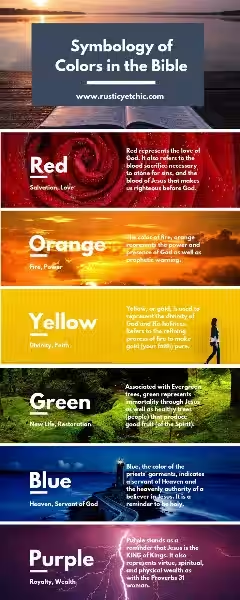
This led me to develop a personal interpretation of the double rainbow: the two arcs representing the first and second comings of Jesus Christ. The primary rainbow, with its violet – often associated with royalty and worth in biblical context – at the bottom, symbolizes Jesus' first coming, his life, death, and resurrection. The secondary bow, with violet at the top, represents his second coming and the glorious ascension of believers to heaven. This interpretation, while deeply personal, resonated profoundly with the spiritual context of that moment.
A Partial Third Rainbow: Imperfection and Grace
Interestingly, on both occasions, I also noted a faint suggestion of a third, incomplete rainbow. This partial arc, less distinct than the other two, felt symbolic to me. It represented the reality of our lives with God – a journey marked by both perfection and imperfection, grace amidst our failings. The incomplete nature of the third rainbow serves as a poignant reminder of our own human limitations and the ongoing need for God's grace.
Contrasting Perspectives: The Biblical Rainbow and Cultural Interpretations
It is important to acknowledge that my interpretation of the biblical meaning of double rainbow is personal and faith-based. The Bible doesn't explicitly mention double rainbows. The single rainbow in Genesis 9 serves as a covenant symbol, a promise from God never to destroy the earth by flood again. This covenant is a potent symbol of hope, new beginnings, and God's unwavering faithfulness.
Many cultures have their own interpretations of rainbows. Some see them as symbols of good luck or pathways to other realms. While these interpretations are valid within their cultural contexts, they differ from my biblically-informed perspective. My understanding is rooted in personal spiritual experience and theological reflection, not a literal interpretation of scripture.
Conclusion: A Personal Journey of Faith and Wonder
The double rainbow, scientifically explainable yet profoundly awe-inspiring, continues to hold a deep spiritual significance for me. Its beauty and complexity serve as a constant reminder of God's power, majesty, and enduring love. While my interpretation of the biblical meaning of double rainbow is deeply personal, it underscores the rich tapestry of meaning that natural phenomena can hold, particularly for those who seek a spiritual connection with the world around them. The experience has deepened my faith and continues to inspire wonder and reflection. It's a reminder that even the most scientifically explainable events can hold profound personal meaning and spiritual significance.
Frequently Asked Questions: The Biblical Meaning of Double Rainbows
This FAQ section addresses common questions about the biblical meaning of double rainbows, acknowledging that interpretations vary and personal faith plays a significant role. It's important to remember that there is no single, universally accepted biblical interpretation of a double rainbow.
What is the scientific explanation for a double rainbow?
A single rainbow forms when sunlight refracts, reflects, and refracts again within a raindrop. A double rainbow occurs when sunlight undergoes two internal reflections within the same raindrop. This second reflection creates a second, fainter rainbow above the first, with reversed color order – violet at the top and red at the bottom.
Does the Bible directly mention double rainbows?
No, the Bible does not explicitly mention double rainbows. The most prominent biblical reference to a rainbow is in Genesis 9, where God sets the rainbow in the clouds as a covenant with Noah, signifying his promise never to destroy the earth by flood again.
What is the common biblical interpretation of a single rainbow?
The single rainbow in Genesis is widely interpreted as a symbol of God's covenant, promise, hope, and enduring love. It represents God's faithfulness and mercy, a sign of new beginnings after a time of devastation.
How might some interpret a double rainbow biblically?
Given the lack of direct biblical reference, interpretations of double rainbows are largely personal and faith-based. Some might see the two rainbows as representing:
The first and second coming of Jesus: One interpretation suggests the first rainbow signifies Jesus' first coming and resurrection (violet at the bottom symbolizing royalty), and the second his second coming and the ascension of believers (violet at the top).
The material and spiritual worlds: Others might see the two rainbows as representing the interplay between the physical and spiritual realms.
An amplified message of God's covenant: The double rainbow could be viewed as a more powerful or visually striking reminder of God's covenant and promise of hope.
It's crucial to remember that these are subjective interpretations and not definitively scriptural.
Are there other cultural interpretations of double rainbows?
Yes, many cultures have their own interpretations of double rainbows, often unconnected to biblical themes. Some cultures view them as good luck, while others associate them with different spiritual meanings entirely.
Is there a single "correct" biblical interpretation of a double rainbow?
No. The Bible does not offer a definitive interpretation of a double rainbow. Any interpretation provided is a personal reflection and should not be presented as a universally accepted or scripturally-derived meaning. It's important to approach such interpretations with humility and respect for diverse perspectives.