Married to God: A Journey of Surrender and Fulfillment
Married to God: A Journey of Surrender and Fulfillment
Many wonder about the concept of a spiritual marriage, particularly the idea of being "married to God." This isn't a literal marriage, of course, but a profound and deeply personal commitment. It's a relationship of unwavering devotion, mutual love, and complete surrender. This article explores this unique bond, drawing upon personal experiences and theological perspectives to illuminate its meaning and significance.
The Call and the Struggle: A Personal Path to Commitment
The journey towards a "marriage to God" is rarely a sudden epiphany. For many, it's a gradual unfolding, a process of discernment, struggle, and ultimately, profound transformation. It begins with a call, a persistent invitation felt deep within the soul – a proposal, if you will, from the Divine. This call might manifest in various ways, from a sudden feeling of conviction to a gradual realization of a life purpose beyond the self.
This initial "proposal" isn't always romantic in the conventional sense. It might present as a demand for complete devotion, a call to relinquish personal ambitions and desires for a life dedicated to a higher purpose. This often leads to internal conflict, a wrestling with the loss of previously cherished goals and dreams. The struggle is real and often agonizing, mirroring the agony of Jesus in the Garden of Gethsemane. It's a testing of faith, a confirmation of the sincerity of the commitment.
Resistance is common during this stage. The individual might actively try to resist the call, seeking comfort in familiar patterns and pursuits. However, these attempts often prove futile, leading to profound unhappiness and a growing awareness that the call is indeed divinely inspired. The heart, despite initial resistance, aches for the promised fulfillment.
Finding Harmony: Feminism and the Theology of the Body
For some, reconciling their personal beliefs with the demands of a religious vocation can be challenging. This was true for one particular nun, who found invaluable guidance in John Paul II's "Theology of the Body." This theological framework helped her understand her feminism within the context of her commitment to God. It helped her reconcile seemingly conflicting aspects of her identity, enabling a deeper understanding of her chosen path. This shows that even seemingly disparate aspects of life can be harmoniously integrated within the framework of a committed relationship with God.
The Sufficiency of God: A Foundation for Fulfillment
The core of this deeply personal commitment lies in the sufficiency of God. His omnipotence, boundless love, and human incarnation make Him the ultimate source of fulfillment. The relationship isn't about deprivation or sacrifice in a negative sense, but about abundant gain and a profound expansion of one's capacity for love and joy. This perspective shifts the focus from self-gratification to a life dedicated to serving a higher purpose.
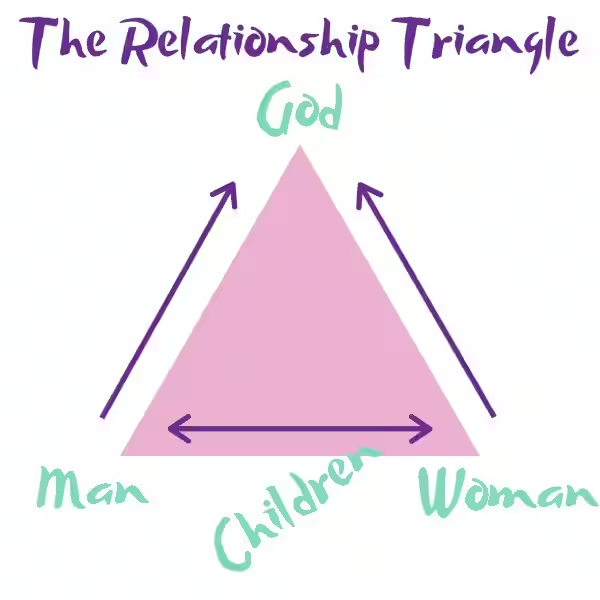
Moreover, this "marriage to God" is not an exclusive privilege; it's a reflection of God's spousal relationship with all humanity. God desires closeness with every single person. This is a key message of inclusivity, emphasizing that the divine love is not limited to a select few. Every person is called to a form of marriage – a union with God and others.
A Model for All Relationships: Mutual Love and Admiration
The nature of this relationship with God serves as a model for all committed unions. It highlights the importance of mutual admiration, respect, and unconditional love. Just as any strong marriage thrives on these elements, so too does this profound spiritual partnership. It's a reciprocal relationship; through prayer, devotion, and service, the individual responds to God's immeasurable love. This mirrors the beautiful dynamism of a healthy marriage, where love and commitment are expressed through action and mutual support.
Beyond Ritual: The Power of Constant Prayer
The key to nurturing this deep and fulfilling relationship is constant prayer. This doesn't necessarily mean formal rituals, but a continuous, organic communication with God. This encompasses thoughts, feelings, and actions. It's about living a life infused with God's presence, allowing the Divine to permeate every aspect of one's existence.
This continuous communion can take many forms – from formal prayers to spontaneous outpourings of the heart. It's about staying connected, cultivating a sense of intimacy and trust that transcends the limitations of time and space. This openness to God's presence transforms even mundane tasks into acts of worship.
The Universal Call: A Message of Hope and Inclusivity
The ultimate message is one of inclusivity and hope. Every soul is invited to experience this profound connection with the Divine. It's not about religious affiliation or spiritual prowess but about the inherent longing for the divine within the human heart. This "marriage to God" is a path accessible to everyone, regardless of their background, beliefs, or life circumstances.
This is a journey of surrender and fulfillment, a path to a life of purpose, joy, and profound spiritual intimacy. It's an invitation to embark on a lifelong adventure of love, growth, and unwavering devotion – a truly beautiful and transformative "marriage to God."
Frequently Asked Questions: A “Marriage” to God
This FAQ section addresses questions that may arise from understanding a deeply committed religious life, described as a "marriage" to God, as explored in a personal account. The perspective emphasizes a literal, not metaphorical, interpretation of this relationship.
What does "married to God" mean in this context?
This phrase describes a total and unwavering commitment to God, mirroring the dedication and devotion found in a human marriage. It's not a metaphorical expression but a lived reality of profound personal connection and lifelong dedication. This commitment involves a complete surrender of oneself to God's will and a pursuit of intimate communion with the divine.
Is this concept exclusive to certain individuals or religious orders?
No. While the account focuses on a specific individual's experience within a religious order, the core principles of total dedication to God and a deep, personal relationship are applicable to all. Every individual is called to a form of "marriage" – a union with God and others. This personal relationship with God is attainable by everyone, regardless of their vocation or perceived spiritual prowess.
How does this "marriage" differ from conventional marriage?
While sharing similarities in commitment and devotion, this relationship differs fundamentally in its object. Instead of a human partner, it centers on a relationship with God. The account uses the analogy to highlight aspects of mutual love, admiration, and unwavering dedication present in all committed relationships. The central focus is on God's sufficiency and His capacity to provide complete fulfillment.
What about the struggles and internal conflicts involved?
The journey to such a deep commitment isn't always easy or immediate. The account details a period of significant internal struggle, resistance, and grappling with the implications of this total devotion. These struggles are presented as authentic and necessary parts of the process, mirroring the spiritual battles faced by others. The account emphasizes that resolving these conflicts through prayer and contemplation leads to a deeper and more fulfilling relationship with God.
How does one cultivate this "marriage" with God?
The account highlights the importance of constant prayer and communication with God, not only through formal rituals, but also through continuous, organic engagement—integrating thoughts, feelings, and actions into a dialogue with God. This continuous communication is seen as the key to a deep and fulfilling relationship.
What about the role of established religious doctrines and practices?
While the account touches on the author's personal integration of established theological frameworks (like John Paul II's "Theology of the Body"), the emphasis remains on a personal, lived experience of faith. The account doesn't diminish the importance of religious practices but emphasizes that the essence of the relationship lies in a continuous, personal connection with God.
Can this concept be understood by those outside of the religious context?
While rooted in a specific religious context, the underlying themes of deep commitment, self-sacrifice, and the pursuit of a fulfilling life are universally relatable. The principles of unwavering dedication to something greater than oneself, the importance of internal struggle and growth, and the pursuit of a meaningful life resonate across diverse belief systems and life experiences.