Understanding the God Marriage Triangle: A Faith-Based Approach to Marital Success
Understanding the God Marriage Triangle: A Faith-Based Approach to Marital Success
The concept of a "God marriage triangle" often arises in discussions about faith and marriage. But what does this actually mean, and is it a helpful framework for building a strong and lasting relationship? This article explores the idea of incorporating faith into marriage, examining both its potential benefits and potential limitations.
The Power of the Third Strand: God as the Apex of the Triangle
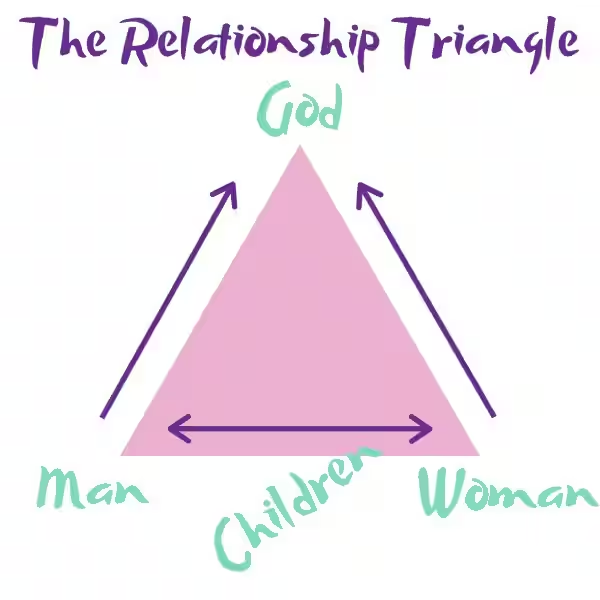
The "God marriage triangle" proposes a model where the husband and wife form the base of a triangle, with God at the apex. This "third strand," as alluded to in Ecclesiastes 4:9-12 ("Two are better than one, because they have a good return for their labor: If either of them falls down, one can help the other up. But pity anyone who falls and has no one to help them up."), represents the strengthening power of faith in a marriage. The idea suggests that a shared faith provides resilience and stability, especially during challenging times.
This isn't simply about attending church together; it's about actively integrating faith into every aspect of your life as a couple. This could involve:
Shared prayer: Praying together regularly, both in times of joy and hardship.
Bible study: Exploring scripture together, discussing its relevance to your lives and marriage.
Spiritual mentorship: Seeking guidance from a pastor or spiritual advisor.
Serving together: Volunteering your time as a couple to a cause you both believe in.
By weaving faith into the fabric of your daily lives, you create a powerful bond that extends beyond your individual relationship, providing a foundation of shared values and purpose. The shared spiritual journey strengthens the couple's connection, providing a common ground for navigating life's inevitable ups and downs.
Addressing Challenges with a Faith-Based Perspective
Inevitably, couples will face difficulties. The God Marriage Triangle model proposes that addressing these challenges through prayer and seeking God's guidance is crucial. However, many couples find themselves turning to friends, family, or therapists before seeking spiritual counsel. This highlights a potential disconnect between professed faith and its practical application within the marriage.
The tendency to prioritize external solutions over internal spiritual ones raises questions about the true depth of one's faith. Is faith a genuine guiding principle, or is it merely a social construct or a convenient fallback when other solutions fail? When difficulties arise, turning to God first, as a team, can foster a stronger reliance on faith and strengthen the bonds within the marriage.
Balancing Spirituality and Secular Life: A Holistic Approach
The God marriage triangle doesn’t mean neglecting the essential elements of a healthy human relationship. A holistic approach is vital, incorporating both spiritual practices and the everyday joys of being a couple. This includes:
Maintaining intimacy: Both physical and emotional intimacy are essential components of a fulfilling marriage.
Shared hobbies: Engaging in activities you both enjoy, fostering connection and laughter.
Date nights: Setting aside regular time for just the two of you, free from distractions.
Open communication: Honesty, vulnerability, and active listening are essential.
This balance ensures that the relationship remains vibrant and fulfilling on all levels, preventing a spiritual focus from overshadowing the earthly connection. It's about integrating faith into every aspect of life, rather than compartmentalizing it.
Limitations and Alternative Perspectives on the God Marriage Triangle
While the God marriage triangle offers a compelling framework for many, it's essential to acknowledge its limitations. Some may find the concept too restrictive or impractical, questioning the role of God in every aspect of marital intimacy, conflict resolution, or personal struggles. For example, how does one incorporate God into navigating a complex issue like sexual dysfunction or mental health challenges? The answer isn't always straightforward, and placing undue pressure on a divine solution can be counterproductive.
Furthermore, some argue that overemphasizing the "third strand" can overshadow the importance of the fundamental human connection between husband and wife. A simpler model, perhaps a line representing the direct connection between the two individuals, might be more appropriate for some couples. While acknowledging the value of faith and spirituality for many, this perspective emphasizes the primary importance of mutual growth, understanding, and effective communication as the foundation of a healthy marriage. The role of faith becomes supportive rather than central to the relationship's dynamics. Ultimately, the most effective approach is the one that best suits the individual needs and beliefs of the couple.
Personal Reflection and Conclusion
The God marriage triangle is not a universally applicable model. It's crucial for couples to assess whether this framework resonates with them, considering both its potential benefits and limitations. While faith can significantly strengthen a marriage, it's essential to maintain a balanced perspective, recognizing the importance of both spiritual growth and the cultivation of a strong human connection. The key takeaway should be prioritizing mutual respect, open communication, and consistent effort in building a healthy and fulfilling relationship, regardless of the chosen framework. The ultimate goal is a lasting, loving union built on mutual respect, understanding, and shared commitment, whether or not the "God Marriage Triangle" metaphor is explicitly utilized.
Frequently Asked Questions: The Marriage Triangle
What is the "Marriage Triangle" concept?
The "Marriage Triangle" is a concept that proposes a successful marriage involves not just the husband and wife, but also a strong faith-based element, often symbolized as God forming the third point of a triangle with the couple. Different interpretations exist regarding the nature and function of this "third strand." Some view it as a source of strength and resilience, helping couples overcome challenges through shared faith and spiritual practices. Others critique this model, arguing that it overemphasizes the role of religion and overshadows the importance of the couple's direct connection.
How does faith strengthen a marriage according to the "Marriage Triangle"?
Proponents argue that a shared faith acts as an anchor, providing stability and guidance during marital conflicts. Shared spiritual practices (prayer, scripture study, church attendance), seeking spiritual counsel, and prioritizing God can foster a stronger bond and enhance communication. It's suggested that drawing closer to God simultaneously strengthens the bond between spouses.
What are some critiques of the "Marriage Triangle" concept?
Critics argue that the "Marriage Triangle" can be overly simplistic and impractical. They question the extent to which God should be directly involved in every aspect of a marriage, including intimate moments, conflict resolution, or leisure time. Some find the concept overly reliant on a specific theological framework and believe it can overshadow the importance of direct communication, mutual effort, and shared experiences between spouses as the foundation of a strong relationship. The emphasis on a God-centered dynamic may diminish the focus on the couple's own agency and responsibility in building a healthy relationship.
Does the "Marriage Triangle" require a specific religious belief?
While often presented within a Christian context, the underlying principle of incorporating a shared spiritual or ethical framework to support the marriage could apply to other faiths or belief systems. The focus is less on a specific religion and more on the shared values and commitment to a higher power or principle that guides the couple's relationship.
How does the "Marriage Triangle" address marital challenges?
Advocates suggest that a shared faith provides a framework for navigating conflict, offering guidance and resilience. Through prayer, scripture study, or spiritual counseling, couples can find strength and understanding to resolve disagreements and rebuild their connection. It provides a shared foundation beyond individual desires or perspectives, potentially promoting forgiveness and understanding.
Is the "Marriage Triangle" applicable to all couples?
The applicability of this model depends on individual beliefs and experiences. For couples who share a strong faith and find spiritual practices beneficial, it may offer a valuable framework. However, for couples who don't share a faith or find the concept restrictive, it may not be relevant or helpful. A healthy relationship can be built on many foundations, including shared values, mutual respect, and effective communication, regardless of religious belief.
What are some alternative approaches to strengthening a marriage besides the "Marriage Triangle"?
Beyond the "Marriage Triangle," there are various approaches to building a strong marriage. These include focusing on open communication, mutual respect, shared experiences, active listening, conflict resolution skills, individual self-improvement, and seeking professional relationship counseling when needed. Prioritizing personal growth and understanding one another's needs are key to successful relationships, irrespective of religious beliefs.