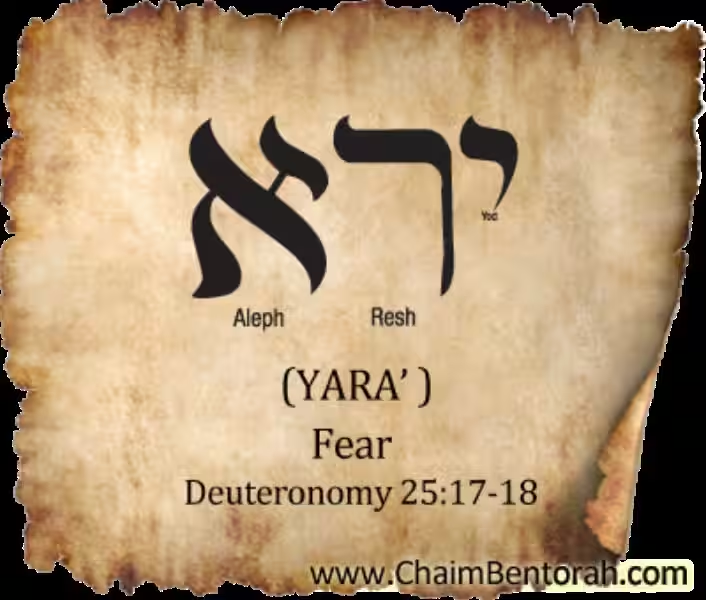
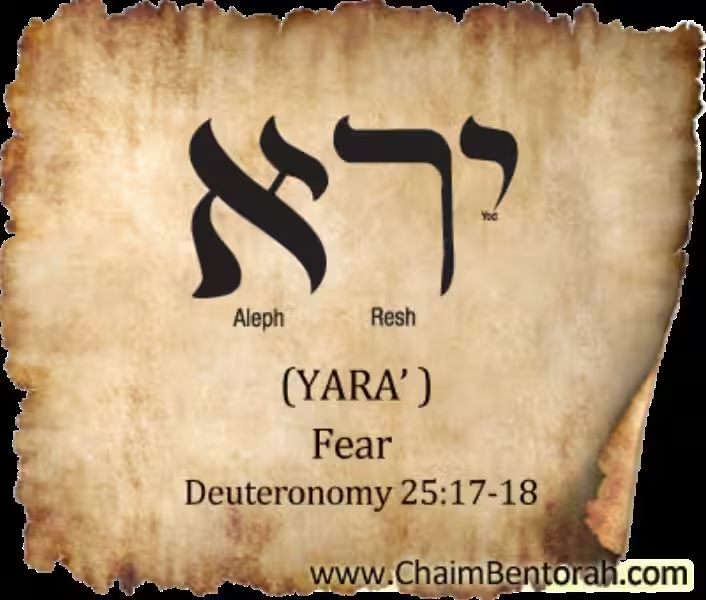
Meaning of Fear of the Lord in Hebrew: Unveiling the Depth of Yirah
Meaning of Fear of the Lord in Hebrew: Unveiling the Depth of Yirah
The phrase "fear of the Lord" often conjures images of trembling submission. However, the Hebrew word used in the Bible to describe this relationship with God, yirah (יראה), offers a far richer and more nuanced understanding. This article delves into the meaning of yirah, exploring its multifaceted nature and its implications for our understanding of faith.
Beyond Simple Fear: Understanding the Nuances of Yirah
The common English translation of yirah as "fear" can be misleading. While yirah initially implied a sense of fear or dread, similar to the Old Scandinavian roots agi, aghi, and aughæ, its biblical usage transcends simple apprehension. It encompasses a profound sense of awe, reverence, and respect in the face of something vastly greater than oneself.
Think of the feeling you experience when standing before a breathtaking natural wonder – the vastness of the Grand Canyon, the towering majesty of Mount Everest, or the infinite expanse of the ocean. This overwhelming sense of wonder, a feeling of being dwarfed by something magnificent and beyond human comprehension, is closer to the essence of yirah. It’s a humbling experience that evokes not just fear, but also a profound sense of respect and wonder.
This awe-inspiring feeling is mirrored in biblical accounts. Moses' encounter with God's glory on Mount Sinai, described as a terrifying and awe-inspiring experience, is a prime example of yirah. The Israelites' trembling response to God's revelation demonstrates the power of this experience. It's a response not solely to a threatening power, but also to an incomprehensible majesty.
Yirah is not simply a single emotion but a complex tapestry of feelings. It includes:
Awe: A profound sense of wonder and amazement in the face of God's greatness.
Reverence: Deep respect and honor for God's holiness and power.
Humility: An understanding of one's own limitations in comparison to God's infinite nature.
Wonder: A sense of amazement and fascination with God's creation and work.
It's important to distinguish yirah from other Hebrew words that denote fear, such as eimah (terror) or pachad (sudden fright). These words express a fear for one's physical safety, whereas yirah represents a deeper, more spiritual reverence.
Three Key Takeaways from Understanding Yirah
Understanding the true meaning of yirah unlocks three vital aspects of a faith-filled life:
1. Yirah Calls to Worship
The Psalms are filled with expressions of yirah, often leading to heartfelt praise and worship. David's awe of God's creation and power inspired him to compose beautiful hymns of adoration. Similarly, Job's experience, initially marked by suffering and questioning, culminates in awe-filled worship after a direct encounter with God. This demonstrates the transformative power of yirah to overcome grief and find peace through a renewed perspective on God's immeasurable power and control. His encounter reorients Job toward a recognition of God's absolute sovereignty.
Proverbs 1:7 famously states, "The fear of the Lord is the beginning of wisdom." This wisdom isn't about intellectual knowledge but a profound understanding that stems from recognizing God's authority and guidance. Yirah encourages a cautious and thoughtful approach to life, avoiding rash decisions and seeking God's counsel. It fosters obedience not out of fear of punishment but out of a deep respect for God's commands – ultimately summarized by Jesus as loving God and neighbor. Conversely, a lack of yirah contributes to societal problems such as disrespect, materialism, and a diminished sense of purpose.
3. Yirah Provides Future Hope
Yirah is not merely a present-tense emotion; it extends to the future. Recognizing God's power and design in creation inspires hope in His promises – the ultimate vision of seeing God face-to-face (1 Corinthians 2:9) and the assurance of salvation through Jesus Christ. Acknowledging the limitations of human understanding and focusing on unseen realities strengthens faith and hope. It provides a foundation for enduring life's challenges with confidence in God's ultimate plan.
Conclusion: Cultivating Yirah in Modern Life
The "fear of the Lord" isn't a fearful cowering, but a profound reverence and awe born from recognizing God's majesty. Yirah is a multifaceted experience leading to worship, wisdom, obedience, and ultimately, a profound hope rooted in understanding God's power and love. Cultivating yirah involves a deeper appreciation of God's creation and a conscious striving for obedience to His commands. It’s about embracing the awe-inspiring wonder of a relationship with the God who is infinitely beyond our comprehension, yet intimately involved in our lives.
Frequently Asked Questions: The Meaning of “Fear of the Lord” in Hebrew
What is the Hebrew word for "fear of the Lord," and what does it truly mean?
The Hebrew word most often translated as "fear of the Lord" is yirah (יראה). While often rendered as "fear" in English translations, yirah encompasses a much broader range of emotions than simple dread. It's more accurately understood as a profound awe, reverence, and respect born from recognizing God's immense power, majesty, and holiness. It's a sense of being overwhelmed by something beyond one's comprehension and capability, similar to the awe inspired by the vastness of nature or a breathtaking work of art. This feeling, while containing an element of fear, ultimately leads to worship and a deeper understanding of one's place in the universe. Other Hebrew words, such as eimah (terror) and pachad (scare), are better suited to describe the fear of physical harm.
How does yirah differ from modern interpretations of "fearing God"?
Modern interpretations often equate "fearing God" with a cringing, terrified submission to a punitive deity. However, yirah is not about a slavish fear of punishment. It's about a respectful admiration and profound reverence for God's incomparable greatness, wisdom, justice, and love. It's acknowledging God's absolute sovereignty and responding with humility and wonder, recognizing our complete dependence on God's grace. This understanding is supported by biblical passages where yirah is used to describe Abraham's respectful awe of God (Genesis 22:12) and the foundational wisdom of revering God (Proverbs 1:7).
How does yirah manifest itself in a person's life?
Yirah manifests in several key ways: First, it fosters obedience rooted in respect for God's character and commandments, a desire to honor and please God rather than slavish adherence out of fear of punishment. Second, it leads to wisdom and understanding, prompting a life of seeking God's guidance in all decisions, recognizing His superior perspective. Third, it cultivates humility, acknowledging our limitations and imperfections and fostering gratitude and dependence on God's grace. Finally, yirah, far from being antithetical to love, is actually its foundation, prompting a relationship with God built on respect, obedience, and unwavering devotion.
What are the key outcomes or benefits of cultivating yirah?
Cultivating yirah leads to several significant benefits: It inspires worship and praise, as seen in the Psalms of David and Job's ultimate response after confronting God's power. It promotes wisdom and obedience, guiding choices based on reverence and understanding of God's will (Proverbs 1:7 highlights this connection). Finally, it provides future hope, encouraging faith in God's promises and strengthening hope in eternal realities, transcending the limitations of human understanding. This understanding moves one beyond a potentially punitive "fear" to respectful, admiring devotion.
Are there examples in scripture that illustrate the meaning of yirah?
Yes, many biblical passages illustrate yirah. Moses' encounter with God's glory on Mount Sinai, the Israelites' trembling response at the revelation of God's law, and Abraham's respectful obedience in the near-sacrifice of Isaac (Genesis 22:12) all display aspects of yirah. The Psalms frequently express David's awe and worship of God's creation and power, exemplifying yirah’s transformative effect on the individual's life. The book of Job demonstrates the journey from suffering to awe-filled worship after a direct divine encounter, showing how yirah can bring peace and a renewed perspective. The proverbs repeatedly emphasize that the fear of the Lord is the beginning of wisdom.