Understanding Baal Worship Symbols: A Journey Through Ancient and Modern Idolatry
Understanding Baal Worship Symbols: A Journey Through Ancient and Modern Idolatry
This article explores the enduring legacy of Baal worship, examining its symbols and arguing that its underlying principles resonate even in contemporary secularism and materialism. We will delve into the historical context of Baal worship, analyze its key symbols, and consider the surprising parallels between ancient Canaanite religion and modern societal values.
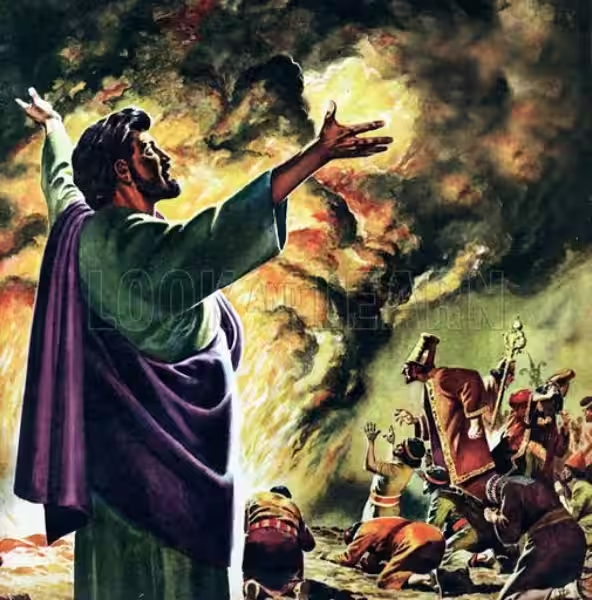
Baal, meaning "owner" or "lord," was the chief deity in the Canaanite pantheon. His worship, extensively documented in cuneiform tablets from Ugarit and frequently mentioned in the Hebrew Bible (approximately 90 times), positioned him as a powerful adversary to Yahweh. Baal wasn't simply a storm god; he was associated with fertility, both agricultural and human, wealth, and kingship. His devotees believed he controlled the cycles of life and death, making his favor essential for prosperity.
The centrality of Baal's role is reflected in the numerous rituals and symbols surrounding his worship. His power was tied to the land's fertility; bountiful harvests were seen as signs of his blessing, while droughts were interpreted as his displeasure, leading to desperate attempts at appeasement through sacrifices and prayer. The association with kingship further solidified his position as a powerful force, capable of influencing both the natural world and human affairs. This intertwining of earthly and spiritual power is a key theme to understanding the enduring appeal of Baal worship, even in its modern manifestations.
Baal Worship Symbols: A Visual Lexicon of Power and Fertility
Baal worship involved a range of symbols, many of which reflected his dominion over various aspects of life. The bull, a potent symbol of fertility and strength, frequently represented Baal. This symbolism extended to other representations of power and abundance. While specific symbols varied across regions and time periods, certain motifs consistently emerged, reflecting core beliefs and practices.
The Bull: A common symbol of Baal, reflecting his association with fertility and strength. The bull's image often appeared in art, sculptures, and ritual objects. Interestingly, the imagery of the bull continues to resonate in modern society, particularly in financial markets, where the bull market symbolizes growth and prosperity, subtly mirroring the ancient association of Baal with wealth and abundance.
Sacred Poles and Asherah: Asherah, Baal’s consort, was often represented by sacred poles or wooden images, symbolizing fertility and feminine power. These poles, placed in sacred groves, served as focal points for worship and ritual activities.
Other Animal Representations: Other animals, such as lions and horses, also featured in Baal worship iconography, often symbolizing strength, power, and royal authority. These representations reinforced Baal's multifaceted nature and his dominion over various aspects of the natural world.
The prevalence of these symbols in archaeological finds throughout the ancient Near East underscores the widespread nature of Baal worship and the importance of visual representations in reinforcing religious beliefs and practices. Even in the absence of explicit textual descriptions, the enduring presence of these iconic symbols provides valuable insights into the religion's significance.
The Unholy Trinity: Baal, Ashtoreth, and Molech
Expanding beyond Baal himself, the Canaanite pantheon included other powerful deities whose worship further highlights the seductive nature of idolatry. Ashtoreth (Ishtar), Baal's consort, was the goddess of unrestrained sexuality and fertility. Her worship often involved temple prostitution, reflecting a disregard for traditional morality and sexual restraint.
Then there was Molech, the god demanding human sacrifice, predominantly of infants. The horrifying practice of child sacrifice, notably carried out in structures known as Tophets, represents the ultimate transgression, a stark contrast to the teachings of monotheistic faiths. The existence of Molech highlights the dark underbelly of Baal worship, revealing a faith system willing to make extreme sacrifices for perceived blessings or to appease an angry deity.
Baal Worship in Modern Society: A Subtle Idolatry
The core tenets of Baal worship—the pursuit of worldly power, wealth, and unrestrained pleasure above all else—find troubling parallels in modern secularism and materialism. The rejection of faith in God, whether on an individual or societal level, can be seen as a subtle form of Baal worship. The prioritizing of material possessions, unchecked ambition, and hedonistic pursuits mirrors the ancient Canaanite's focus on earthly gains and immediate gratification.
This modern manifestation of Baal worship is characterized by a rejection of traditional morality and a focus on self-gratification. The sexual revolution, the erosion of traditional family structures, and the relentless pursuit of wealth can all be seen as echoes of Ashtoreth and Molech's influence. The emphasis on material success and the downplaying of spiritual values reflects a prioritization of earthly concerns, similar to the Canaanites' reliance on Baal for prosperity and security.
The Dangers of Apostasy and the Unpardonable Sin
The Bible warns against apostasy, the complete abandonment of faith after experiencing spiritual enlightenment. Hebrews 6:4-6 speaks of the impossibility of renewing those who fall away, highlighting the seriousness of rejecting God and embracing worldly values. The unpardonable sin, blasphemy against the Holy Spirit (Luke 12:10), represents the ultimate consequence of persistent rejection of God. This persistent rejection of divine guidance, mirroring the worship of Baal, leaves individuals vulnerable to spiritual decline and eternal consequences. It emphasizes the gravity of choosing earthly pursuits over a relationship with God.
Conclusion: Recognizing and Resisting Modern Baal Worship
The worship of Baal wasn't merely a historical phenomenon confined to ancient Canaan. Its core principles—the pursuit of material gain and sensual pleasure above spiritual values—continue to resonate in modern society. Recognizing these subtle parallels between ancient idolatry and contemporary values is crucial for navigating the spiritual landscape of our time. By understanding the historical context of Baal worship and its symbols, we can better resist the temptations of modern idolatry and cultivate a stronger relationship with God. The lingering presence of Baal worship symbols in our collective consciousness serves as a constant reminder of the enduring human struggle between faith and worldly desires.
Frequently Asked Questions about Baal Worship Symbols
What were the primary symbols associated with Baal worship?
While there wasn't a single, universally recognized symbol for Baal, the bull was a prominent and frequently associated symbol. This connection stemmed from Baal's association with fertility, strength, and kingship—qualities often attributed to bulls in ancient Near Eastern cultures. Other symbols likely varied regionally and according to specific Baal cults, and may have included representations of storms, lightning, and other natural phenomena under his dominion. The lack of a singular, consistent symbol reflects the diverse nature of Baal worship across different Canaanite regions and periods.
How does the bull, as a symbol of Baal, relate to modern society?
The text argues that the bull's symbolism as representing strength, fertility, and wealth finds a parallel in modern society's preoccupation with material success and financial power. Just as the golden calf in Exodus served as a tangible symbol of worldly power, the continued emphasis on economic prosperity and the pursuit of wealth, potentially to the detriment of spiritual values, is seen as a modern echo of Baal worship. This interpretation is a key element of the text's argument linking ancient idolatry to contemporary secularism and materialism.
Were there any symbols associated with Ashtoreth and Molech?
While specific symbols for Ashtoreth and Molech are less explicitly documented compared to Baal's bull symbolism, their associations are significant. Ashtoreth, goddess of unrestrained sexuality, might have been represented through symbols of fertility or female power. Given the nature of her worship, symbols related to sexual abundance might have been used, though direct evidence is scarce. Molech, associated with child sacrifice, lacked a specific, widely recognized symbol. The very act of child sacrifice itself was the most prominent and horrific representation of his worship.
Did Baal worship involve specific locations or structures?
Tophet, a designated area often associated with Baal worship, is frequently mentioned in relation to human sacrifice, although the exact nature of activity at these sites is debated among scholars. These locations were likely chosen for their religious significance and may have been marked by specific structures or features, although the precise details vary depending on the region and period. The lack of standardized architectural features for Baal worship underscores the decentralized and regionally diverse nature of the religious practices. It's important to note that the interpretation of archaeological evidence relating to Tophet is still a subject of ongoing scholarly debate.
How does the text connect the symbols of Baal worship to the concept of spiritual apostasy?
The text argues that the rejection of faith in God, and the embrace of worldly values represented by these symbols (wealth, power, unrestrained pleasure), are forms of modern Baal worship. The symbols themselves aren't inherently evil, but their prioritization over faith and spiritual values, as exemplified throughout the text's biblical and historical parallels, represents a spiritual turning away from God and a potential path to apostasy, as described in Hebrews 6:4-6. The text emphasizes the dangers of this spiritual decline and the potential for severe consequences.