Picture of Jesus in the Book Heaven is for Real: Akiane Kramarik's "Prince of Peace"
Picture of Jesus in the Book Heaven is for Real: Akiane Kramarik's "Prince of Peace"
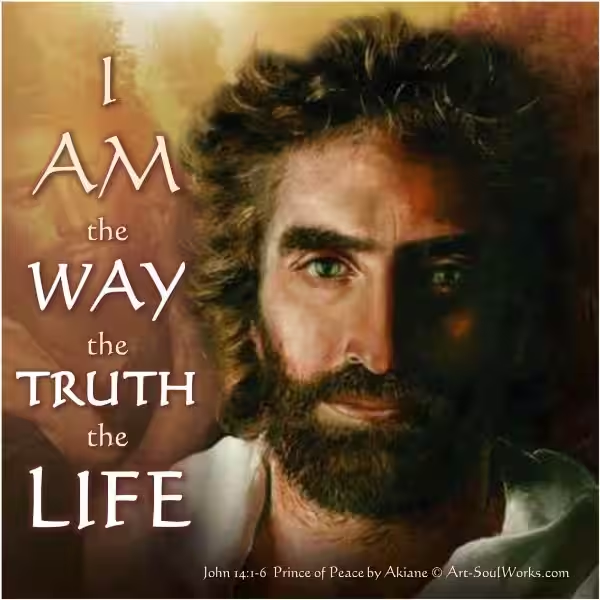
Many viewers of the movie Heaven Is for Real, and readers of the accompanying book, are captivated by Colton Burpo's descriptions of his near-death experience. But one detail stands out above the rest: Colton's striking identification of a specific painting of Jesus as the one he saw in heaven. This article explores the story behind that image, the artist who created it, and the impact it has had on the cultural conversation about faith and the afterlife.
Akiane Kramarik and the “Prince of Peace” Painting
Akiane Kramarik is a self-taught artist whose work gained international recognition, largely thanks to her prominent role in Heaven Is for Real. Her painting "Prince of Peace," depicting a serene, compassionate Jesus, became inextricably linked to Colton Burpo's account of his heavenly visit.
Colton, during his near-death experience as a young child, described seeing Jesus. Years later, when he was shown Akiane's "Prince of Peace," he spontaneously identified it as the very image of Jesus he had encountered in heaven. That moment thrust Kramarik's painting into the spotlight, transforming it from a remarkable piece of religious art into a cultural phenomenon. The story naturally resonated with millions of people, sparking discussions about faith, the afterlife, and the power of artistic representation to convey profound spiritual experiences.
The impact of this identification was immediate and profound. The painting, originally created when Kramarik was just eight years old, became a symbol of faith and a powerful visual representation of a widely discussed spiritual experience. This association significantly boosted the painting's value and fame, eventually leading to its sale for $850,000 in December 2019.
The Accessibility of Kramarik’s Art
While the original "Prince of Peace" now resides in a private collection, the public still has access to Kramarik's work. Limited-edition, signed and numbered giclée canvas reproductions of "Prince of Peace" are available, allowing a wider audience to own a piece connected to this fascinating story. Specifically, 500 large-format prints (36 x 48 inches) were produced, matching the dimensions of the original work. This makes the image accessible beyond the realm of high-end art collecting, sharing its impact more broadly.
This accessibility matters. Colton's story and the painting create a tangible link between faith and a visual representation, making it easier for some to connect with the spiritual message. Viewing a reproduction of the painting offers a unique opportunity to reflect on the story and perhaps deepen one's own personal faith, or consider the possibility of an afterlife.
Beyond “Prince of Peace”: Kramarik’s Other Works
Akiane Kramarik's artistic talent extends far beyond "Prince of Peace." She has created numerous captivating paintings of Jesus, including "Father Forgive Them," "I Am," and "On His Knees," all available for purchase. While "Prince of Peace" and "Father Forgive Them" have received particular attention because of their connection to Colton Burpo's testimony, her other works further demonstrate her unique ability to depict spiritual themes with remarkable skill and emotional depth.
These paintings aren't merely religious art — they're deeply personal expressions of Kramarik's spiritual journey. She states that she receives divine inspiration for her work, describing herself as an artist "taught by God." This claim, though subjective, adds another layer of intrigue to her body of work, further cementing the perception of her paintings as more than simply aesthetically pleasing pieces — many view them as potential visual manifestations of spiritual realities. The convergence of these elements — a child's near-death experience, the divinely inspired creation of a young artist, and a widely shared story — makes the image of Jesus in "Prince of Peace" a potent cultural symbol.
The Impact of “Heaven Is for Real” and the Portrayal of Jesus
The movie and book Heaven Is for Real sparked a widespread conversation about the afterlife and the challenges of communicating faith effectively. Colton Burpo's account, while deeply moving for many believers, also faces skepticism from non-believers. This makes the careful, respectful approach to such discussions, exemplified by many involved in the project, all the more important.
The movie doesn't openly push a specific theological viewpoint — instead, it focuses on the emotional impact of Colton's experience and the enduring power of faith within his family. The inclusion of "Prince of Peace" enhances this impact by giving the story a visual anchor. The painting serves as a focal point, allowing viewers to connect with the story on an emotional level, whether or not they fully accept Colton's testimony. The artistic merit of the painting itself is undeniable, and its inclusion adds another layer of complexity and visual interest to an already captivating story.
The overall message of Heaven Is for Real, and the role Akiane Kramarik's art plays within it, ultimately centers on the importance of how we communicate our faith. The movie encourages viewers to approach conversations about faith with truth and love — a sentiment deeply rooted in biblical teaching. The visual representation of Jesus in "Prince of Peace" acts as a catalyst, prompting reflection on the intangible aspects of faith and the challenges of conveying deeply personal spiritual experiences to others.
Whether or not one accepts Colton Burpo's account, the impact of Akiane Kramarik's "Prince of Peace" remains undeniable. It serves as a compelling visual representation of a spiritual experience, fueling conversations about faith, the afterlife, and the power of art to convey profound truths. The painting's continued availability, through its reproductions, ensures its message keeps resonating with audiences for years to come.
Frequently Asked Questions: Akiane Kramarik’s “Prince of Peace” and Heaven Is for Real
What's the connection between Akiane Kramarik's "Prince of Peace" painting and the book/movie Heaven Is for Real?
Akiane Kramarik's "Prince of Peace" became incredibly famous after Colton Burpo, the subject of the book and movie Heaven Is for Real, identified it as a strikingly accurate depiction of the Jesus he saw during his near-death experience. Colton, who was four years old at the time of his experience, independently recognized the painting, significantly boosting its fame and linking it to the widely discussed story.
Who painted "Prince of Peace"?
"Prince of Peace" was painted by Akiane Kramarik when she was eight years old. She is a self-described divinely inspired artist who began receiving visions of Jesus and heaven from an early age.
Is the original "Prince of Peace" painting available for purchase?
No — the original "Prince of Peace" painting was sold to a private collector in December 2019 for $850,000.
Yes, limited-edition, signed and numbered giclée canvas reproductions of "Prince of Peace" are available for purchase. 500 large-format prints (36 x 48 inches) were produced, matching the dimensions of the original work.
Are there other paintings by Akiane Kramarik that depict Jesus?
Yes, Akiane Kramarik has created numerous other paintings of Jesus, including "Father Forgive Them," "I Am," and "On His Knees," among others. These are also available for purchase through various channels. "Prince of Peace" and "Father Forgive Them" are specifically mentioned in connection with Colton Burpo's testimony.
What's the significance of the connection between "Prince of Peace" and Colton Burpo's story?
The connection between the painting and Colton's testimony weaves together artistic talent with a widely publicized near-death experience. Colton's identification of the painting as Jesus fueled the already considerable interest in Kramarik's work, transforming "Prince of Peace" into a cultural phenomenon beyond a simple piece of religious art. It presents a visual representation tied to a widely believed account of a heavenly encounter.
How does the story of "Prince of Peace" and Heaven Is for Real relate to faith and belief?
The narrative surrounding "Prince of Peace" and its connection to Heaven Is for Real sparks conversations about faith, the afterlife, and the challenges of communicating spiritual experiences. While the story resonates deeply with believers, it also invites skepticism and discussion among those with differing viewpoints. The overall impact underscores the intersection of art, faith, and personal testimony.