Did Paul Kill Christians? Unpacking the Apostle's Past
Did Paul Kill Christians? Unpacking the Apostle's Past
The question of whether the Apostle Paul, before his conversion to Christianity, directly killed Christians is a complex one, sparking ongoing debate among scholars and theologians. While the Bible doesn't contain a verse explicitly stating that Paul murdered Christians, the available evidence strongly suggests his complicity in the persecution of early Christians, a reality that needs careful consideration. This article will explore the available evidence, examining Paul’s own words and the historical context to understand the full extent of his involvement.
Paul’s Own Testimony: A Zealous Opponent of Christianity
Paul himself provides crucial insight into his actions before his conversion. In Galatians 1:13, he describes himself as having "persecuted the church of God and tried to destroy it." This confession, though not specifying acts of murder, reveals a fierce opposition to the nascent Christian movement. This wasn't passive opposition; it was an active, zealous pursuit to suppress what he considered a heretical sect of Judaism. The intensity of his words suggests a level of involvement beyond mere verbal attacks. The phrasing implies a concerted effort involving multiple actions, the exact nature of which are left to interpretation.
The lack of explicit details in his own writings doesn’t mean that he was entirely innocent. Rather, it highlights the difficulty in definitively answering the question of direct involvement in killings. His intensely negative feelings and actions speak volumes, even in the absence of specific descriptions of physical violence. It's important to consider the historical context to fully understand the implications of his confession.
The Narrative in Acts: Complicity and Approval of Violence
The book of Acts further illuminates Paul’s role in the persecution of Christians. Acts 9:1 describes him as "breathing threats and murder against the disciples of the Lord." The Greek word used, "ἀναπνέων" (anapneon), implies a sustained, active pursuit of harm, going beyond simple verbal threats. This paints a picture of a man actively engaged in organizing and perhaps even directing the persecution, rather than simply being a passive bystander.
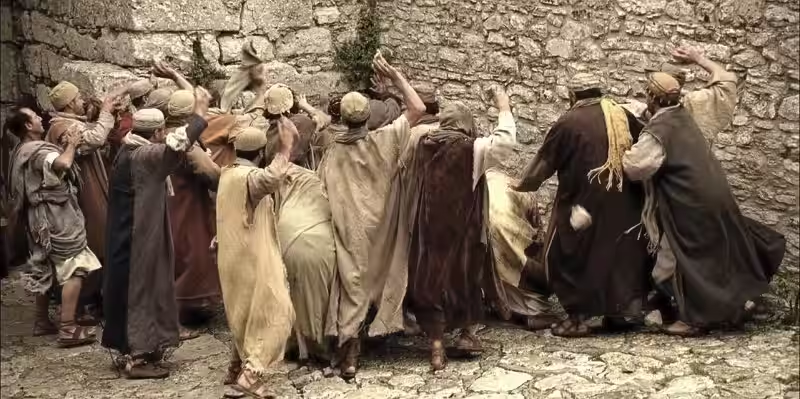
Furthermore, Acts 7:58 and 8:1 places Paul at the scene of the stoning of Stephen, the first Christian martyr. While the text doesn't explicitly say Paul threw stones, his presence and approval clearly indicate his complicity. His active participation in supporting this act of violence, even without directly participating in the physical act, is undeniable. He was not merely a passive observer but an active participant in the persecution of Christians, showing approval and support for the violence inflicted.
The Significance of Context: Roman Persecution and Legal Violence
To understand Paul's actions, we must consider the historical context of Roman persecution of early Christians. The period was marked by brutal violence, with various forms of punishment, including death. The Roman authorities often employed legal and extra-legal methods to suppress the Christian movement.
Paul benefited from his position within the Jewish Pharisaic establishment, and he likely used his influence to legitimize and even orchestrate the persecution of Christians. His actions likely involved authorizing arrests, participating in trials that resulted in executions, or supporting the actions of others who carried out the violence. This indirect involvement is equally significant to the overall question of whether Paul killed Christians.
Did Paul Personally Kill Christians? The Ambiguity of Evidence
The question remains: did Paul personally wield the weapon to kill Christians? The available evidence does not provide a definitive "yes" or "no" answer. However, it paints a clear picture of someone deeply involved in the machinery that led to the deaths of Christians. The focus should shift from the search for definitive proof of direct murder to the acknowledgment of his complicity in a system of violence that resulted in the deaths of many Christians. The absence of a single verse explicitly stating he personally killed someone doesn't negate the overwhelming evidence demonstrating his active participation in the overall persecution.
His involvement, whether direct or indirect, should not be minimized. The moral weight of his actions before his conversion remains substantial, regardless of the precise level of his involvement in the actual killings. The significance lies in understanding the extent of his complicity and the profound transformation that his conversion represented.
The Importance of Acknowledging Paul's Past and Transformation
The discussion of Paul's past should not be used to excuse or minimize his actions. His participation, whether direct or indirect, in the persecution of Christians was reprehensible. However, his subsequent conversion and transformation into one of Christianity's most influential figures is a testament to the transformative power of faith and God's capacity for forgiveness. Understanding the severity of his actions before his conversion enhances the recognition of the profound impact of his metamorphosis.
It’s crucial to distinguish between acknowledging his past and using that past to justify harmful actions by others. Paul's story is one of repentance and transformation, not a license for violence. The narrative serves as a powerful illustration of God's grace and forgiveness, not an excuse for perpetrating violence or minimizing its severity. The focus should remain on learning from the past, not replicating it. His conversion serves as a powerful message of redemption, not a justification for any modern-day repetition of persecution and violence. The question of whether Paul killed Christians, therefore, should be viewed within this broader context of faith, forgiveness, and the profound implications of his life's journey.
Here are some frequently asked questions about the Apostle Paul's actions before his conversion and whether he directly killed Christians:
Did the Bible say Paul directly killed Christians?
No, there is no single verse explicitly stating that Paul personally murdered Christians. The biblical accounts focus more on his role in the persecution of early Christians and his approval of acts of violence against them.
What evidence suggests Paul was involved in the persecution of Christians?
The evidence is largely circumstantial but compelling:
Acts 9:1: Describes Paul (then Saul) as "breathing threats and murder against the disciples of the Lord," indicating an active and ongoing pursuit of harming Christians. The Greek word used suggests more than just verbal threats.
Acts 7:58-8:1: While not directly participating in the stoning of Stephen, Paul’s presence and approval strongly suggest complicity in the act. Stephen is considered the first Christian martyr.
Galatians 1:13: Paul himself states, "I persecuted the church of God and tried to destroy it." This reveals a zealous commitment to opposing Christianity, implying a level of involvement which likely included violence.
Historical Context: The Roman persecution of early Christians was brutal, often resulting in death. Paul's position and zealous nature make it highly probable he was involved in the legal and extra-legal violence of that era, even if not personally carrying out each killing.
Did Paul participate in the stoning of Stephen?
The biblical text doesn't state definitively that Paul threw stones at Stephen. However, his presence and approval of the event make him complicit in the first Christian martyrdom. His actions point to a level of involvement that extends beyond mere passive observation.
If Paul didn't personally kill Christians, why is his involvement considered significant?
Even if Paul didn't personally execute Christians, his significant role in the persecution is undeniable. He likely authorized arrests, participated in trials resulting in executions, or supported those who carried out violence. His actions, direct or indirect, contributed to the death of Christians. The focus should be on the severity of his actions before his conversion, regardless of the precise level of his direct involvement in each individual death.
Does the lack of explicit mention of Paul killing Christians prove his innocence?
No. The absence of a specific verse stating Paul killed Christians shouldn't be interpreted as proof of his innocence. The combination of his own testimony, the narrative in Acts, and the historical context strongly suggests a high probability of involvement in actions that led to the deaths of Christians, whether directly or indirectly.
How should we understand Paul's past actions in light of his later conversion?
Paul's dramatic conversion and subsequent life as an apostle demonstrate the transformative power of faith and God's grace and forgiveness.. However, acknowledging the severity of his pre-conversion actions is crucial. His story isn't an excuse for violence or a justification for minimizing the harm he inflicted. Instead, it highlights the radical nature of God's forgiveness. The focus should remain on the profound change in his life and the message of redemption he later proclaimed.