Understanding the Unfathomable: Words to Describe God's Love
Understanding the Unfathomable: Words to Describe God's Love
Have you ever struggled to put into words the overwhelming feeling of God's love? It's a sentiment so profound, so vast, that it often transcends our human capacity for expression. This article explores the many ways we can attempt to describe this naturally occurring, powerful force, drawing upon theological understanding and personal experience.
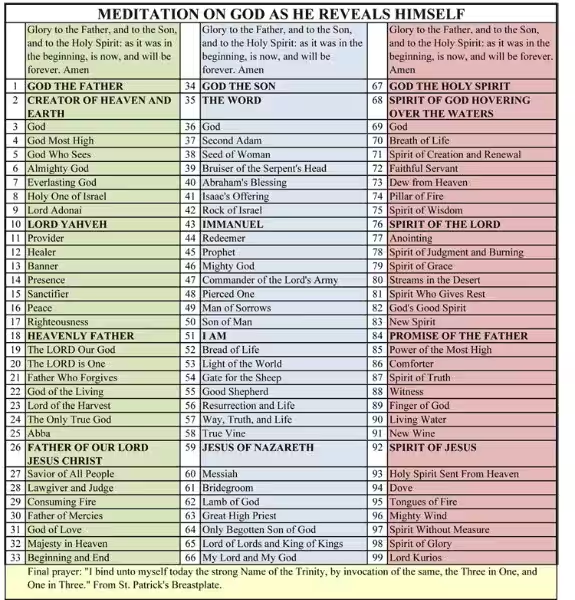
Robert D. Pace's devotional, "One-Word Descriptions of God’s Love," offers a compelling approach to grappling with this very challenge. Pace presents a list of approximately 200 single words attempting to capture the multifaceted essence of God's love, revealed most powerfully through the birth of Jesus Christ.
The sheer diversity of these words is striking. They range from traditional theological terms like "Eternal," "Merciful," and "Redeeming," to more evocative and emotionally charged words such as "Awesome," "Delicious," "Joyful," and "Passionate." This breadth demonstrates the vastness and complexity of God's affection, encompassing both the powerful and the tender aspects.
Consider the impact of words like "Comforting," "Healing," and "Protective" – they emphasize the tangible and supportive nature of God's love. Conversely, words like "Unconditional," "Unfailing," and "Eternal" highlight its enduring and steadfast qualities. The list isn't merely a catalog; it's a tool for personal spiritual growth, encouraging deeper engagement with this central tenet of faith.
Exploring the Experiential and Communal Aspects
Pace emphasizes the importance of experiencing and sharing God's love within a community. He suggests a group activity where individuals contribute their own one-word descriptions, fostering collective exploration and a shared understanding. This interactive element beautifully highlights the relational nature of both divine love and the Christian community.
The act of collaboratively compiling descriptors emphasizes the abundance and diversity of ways God's love manifests itself in our lives. It underscores the reality that God's love is not a singular, monolithic concept, but a boundless ocean of grace, experienced uniquely by each individual, yet shared universally through faith.
Ten Key Attributes of God’s Love
Understanding God's love requires differentiating it from potentially flawed human experiences. While humans may experience conditional, abusive, or inconsistent forms of love, God's love stands apart, possessing unique and unwavering attributes. Let's explore ten of these, grounded in scripture:
God's love is characterized by gentleness and offers rest to the weary (Matthew 11:28-29). This isn't a passive gentleness, but a strength tempered with compassion, a powerful force that gently guides and supports.
2. Faithful and Merciful
His love is unwavering and consistently merciful, renewed daily (Lamentations 3:22-23). It's a love that doesn't waver despite our failings, a steadfast commitment that endures through trials and tribulations.
3. Compassionate and Forgiving
God is described as compassionate, merciful, slow to anger, and full of unfailing love and faithfulness (Psalm 86:15). His compassion transcends our understanding, offering forgiveness even when we fall short.
4. Unfathomable and Grace-Filled
The extent of God's love surpasses human comprehension (Ephesians 3:18-19). It's a grace-filled love that surpasses our ability to grasp its magnitude, a love that continually astounds.
5. Ever-Present and Protective
God's love accompanies believers through hardship and suffering (Isaiah 43:2-3), offering comfort, protection, and constant reassurance. It's a shield against the storms of life.
6. Eternal and Unbreakable
God's love endures beyond earthly limitations, even if mountains move and hills disappear (Isaiah 54:10). Nothing—death, life, angels, demons, or any earthly or heavenly power—can separate us from God's love (Romans 8:38-39).
7. Sacrificial and Redeeming
God's love is exemplified by the sacrifice of His son, Jesus, to provide eternal life (1 John 4:9-10). This ultimate act of sacrifice reveals the immeasurable depth of His love.
8. Intimate and Personal
This love is not a distant, cold concept; it is profoundly personal. God knows every detail of our lives, our hearts, and our thoughts, yet cherishes us unconditionally.
God’s love extends to every aspect of our being and our world, influencing everything from the smallest detail to the largest events, demonstrating his involvement and care.
10. Holiness and Sovereignty
God’s love is expressed through both His holiness and His sovereignty. His holiness reminds us of the standard he sets, and His sovereignty reassures us that He is in control, working for our ultimate good.
The Personal Resonance of God’s Love
The experience of God's love is profoundly personal. Consider Ephesians 3:18 which speaks of the "width, length, height, and depth" of His love. The length represents His unwavering faithfulness throughout our lives, the width His omnipresence, the depth His intimate knowledge of us, and the height His supreme holiness and sovereignty.
Different attributes will resonate more deeply at different times, offering comfort and guidance precisely when we need it most. It is an invitation to embrace the transformative power of God’s love in a deeply personal and unique way. The message is one of comfort, assurance, and the invitation to experience this transformative love.
Ultimately, the words we use to describe God's love, whether from Pace's extensive list or our own personal reflections, serve as mere pointers towards a reality that surpasses our human vocabulary. God's love is, ultimately, revealed in Jesus Christ. May we continue to seek, explore, and experience the boundless depth of this divine affection.
Frequently Asked Questions about Describing God’s Love
What are some words to describe God's love?
The possibilities are vast and varied! God's love can be described using words ranging from traditional theological terms like "Eternal," "Merciful," and "Redeeming," to more emotional and evocative words such as "Awesome," "Delicious," "Joyful," and "Passionate." It encompasses words that highlight its power ("Mighty," "Unstoppable") and its tenderness ("Gentle," "Comforting," "Nurturing"). The best words will depend on your personal experience and understanding.
How can I find the right words to describe God's love?
Consider your personal relationship with God. What aspects of His love have you experienced? Reflect on moments of comfort, guidance, forgiveness, or protection. The words that resonate most deeply with your own experiences are the ones that best capture the essence of God's love for you. A helpful exercise is to brainstorm a list of words and then reflect on which ones feel most authentic and meaningful.
Is there a definitive list of words to describe God's love?
No single list can fully capture the immensity and complexity of God's love. While many words attempt to describe it, the experience of God's love is ultimately personal and unique to each individual. Think of any list, including extensive ones, as a starting point for your own contemplation and exploration.
Why are so many different words needed to describe God's love?
The multifaceted nature of God's love requires a diverse vocabulary. It’s not just one thing; it's a vast ocean of compassion, mercy, justice, grace, and so much more. Different words highlight different facets, allowing for a richer and more complete understanding. The variety of words reflects the breadth and depth of God's character and His interaction with humanity.
How does the concept of Jesus Christ relate to describing God's love?
In Christian theology, Jesus Christ is the ultimate embodiment of God's love. The life, death, and resurrection of Jesus are viewed as the perfect expression of God's sacrificial love for humanity. All the words used to describe God's love ultimately point towards this central truth: God's love is fully revealed in the person of Jesus Christ.
Can I use my own words to describe God's love?
Absolutely! In fact, this is encouraged. The most meaningful descriptions will come from your own heart and personal experience. Sharing your own words with others can also foster a deeper understanding and appreciation within a community of faith.
What are some key attributes of God's love based on scripture?
Scripture portrays God's love as gentle, faithful, merciful, compassionate, forgiving, grace-filled, ever-present, eternal, protective, sacrificial, and unbreakable. These attributes, supported by various biblical passages, highlight the unwavering, boundless, and transformative nature of God's love.
How does God's love differ from human love?
While human love can be beautiful and meaningful, it is often imperfect, conditional, and fleeting. God's love, in contrast, is unconditional, unwavering, eternal, and boundless. It transcends human limitations and offers a transformative power that heals and restores. Understanding this difference is crucial to grasping the true nature of divine love.
How can I experience God's love more deeply?
Through prayer, meditation on scripture, and participation in Christian community, you can foster a deeper relationship with God and experience His love more fully. Seeking to live a life of love and service towards others can also deepen your understanding of God's love. Remember, the journey to understanding God's love is a lifelong process of growth and discovery.
What is the purpose of thinking about and describing God's love?
Reflecting on God's love is a spiritual practice that deepens our faith and strengthens our connection with God. It encourages gratitude, hope, and a greater understanding of God’s character. It also helps us better love ourselves and others as we strive to reflect God's love in our actions.