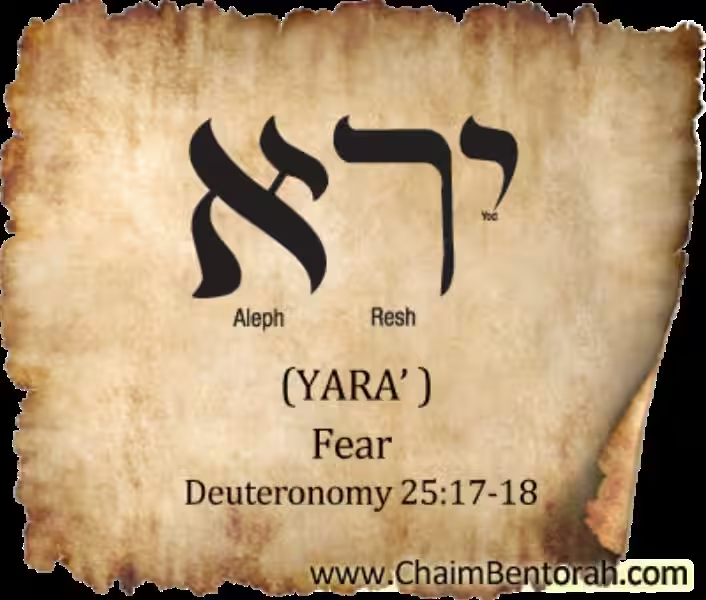
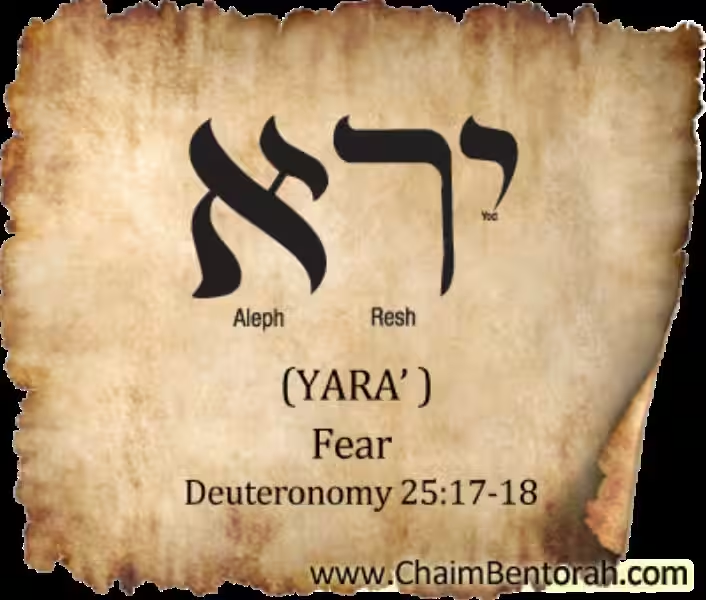
The phrase "fear of God" often conjures images of trembling subservience. But what if the Hebrew word traditionally translated as "fear," yir'ah (יראה), conveyed something richer, something beyond simple dread? This article delves into the multifaceted meaning of yir'ah, revealing a profound sense of awe, reverence, and respect.
The English word "fear" encompasses a wide spectrum of emotions, from mild apprehension to paralyzing terror. Hebrew, however, offers a more nuanced vocabulary. While yir'ah is frequently translated as "fear," a closer examination reveals a deeper meaning. It’s not the cowering fear of punishment, but rather a profound sense of awe inspired by the majesty and power of God. This awe isn't a negative emotion leading to avoidance; rather, it's a respectful admiration that fosters a deeper connection with the divine.
Consider other Hebrew words for fear. Eimah (אימה) signifies terror, a primal, overwhelming dread. Pachaḍ (פחד) denotes a sudden fright or scare. Yir'ah, however, occupies a distinct space, suggesting a more considered, respectful, and even loving response to the divine.
Experiencing Yir’ah: Personal Reflections and Biblical Examples
To grasp yir'ah, consider personal experiences of awe. Standing before the Eiffel Tower, the sheer scale inspires a sense of wonder; gazing at the vast ocean, its power evokes a similar feeling; traversing the Negev desert, its timeless expanse fills one with a profound sense of the sublime. These experiences, though not religious in nature, echo the yir'ah experienced by those encountering God's majesty.
The Bible brims with examples. Moses' encounter with God's glory on Mount Sinai filled him with yir'ah, not terrified cowering, but a reverence born from witnessing God's unparalleled power. Similarly, the Israelites' reaction to God's descent was one of awe and trembling, a respectful response to the divine presence.
Genesis 22:12 narrates Abraham's yir'ah upon being prevented from sacrificing Isaac. Many interpret this as relief from impending punishment. However, the context suggests something more profound. Abraham's yir'ah was an expression of respect and trust in God's ultimate plan, a recognition of God's sovereignty even in the face of incomprehensible events. It was an awe-filled acknowledgment of God's power, not a terror-stricken submission.
Proverbs 1:7: The Beginning of Wisdom
Proverbs 1:7 states, "The fear of the Lord is the beginning of knowledge." (Yirat Adonai reshit da'at) Here, yirat (יראת), a related form of yir'ah, signifies the profound reverence that underpins true wisdom. This isn't a fearful obedience born from coercion, but a respectful pursuit of knowledge guided by God's principles. It's the recognition that true wisdom stems from understanding one's place in relation to the divine.
Yir’ah in the New Testament and Beyond
The concept of yir'ah extends beyond the Old Testament. In Acts 13:16, Paul addresses "men of Israel and you who fear God." The phrase "those who fear God" referred to God-fearers, Gentiles who revered the God of Israel without fully converting to Judaism. This demonstrates that yir'ah isn't a barrier to relationship; it's an invitation, a path towards a deeper understanding of God.
Analogy: Self-Sacrifice and Divine Power
Consider a military commander who sacrifices himself to save his troops. This act, far from expressing weakness or fear, demonstrates ultimate power—the power of selfless love. God's power, similarly, is not a threat, but an act of ultimate love and self-sacrifice, a source of awe and reverence.
Cultivating Yir’ah in Modern Life
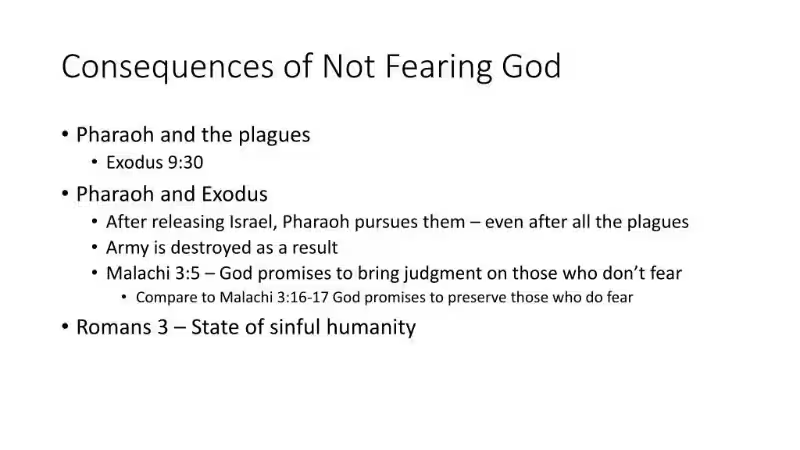
In a world often characterized by disrespect and materialism, cultivating yir'ah is crucial. It's not about superstitious fear, but about developing a healthy respect for the divine that informs our actions and relationships. It calls for humility, a recognition of our limitations, and a willingness to surrender to a power greater than ourselves. The result is a life of greater wisdom, obedience, and love.
The Hebrew word yir'ah is far richer than a simple translation of "fear" can convey. It represents a profound awe, respect, and reverence for God's power and majesty. Understanding this nuanced meaning offers a more accurate interpretation of scripture and fosters a deeper, more meaningful relationship with God. This exploration of yir'ah is just a glimpse into a broader study of biblical Hebrew and its impact on our understanding of faith. For a more detailed analysis, please refer to my upcoming book, "[Title of your book here]," which delves deeply into the linguistic subtleties of the Hebrew Bible.
Frequently Asked Questions: The Hebrew Word for Fear – Yir’ah
What is the Hebrew word yir'ah (יראה) commonly translated as, and is that translation accurate?
The Hebrew word yir'ah is often translated as "fear" in English Bibles. However, this translation can be misleading. While it can encompass a sense of fear, it more accurately conveys a profound sense of awe, reverence, and respect, particularly when directed toward God. A simple translation of "fear" doesn't capture the complex nuances of the word.
How does yir'ah differ from other Hebrew words expressing fear?
Yir'ah is distinct from other Hebrew words expressing fear, such as eimah (terror) and pachaḍ (sudden fright or scare). These words describe a feeling of dread or panic, while yir'ah denotes a deeper, more respectful awe inspired by the majesty and power of God or something awe-inspiring. It's a feeling of wonder and humility in the face of something overwhelming.
Can you provide biblical examples illustrating the meaning of yir'ah?
Yes, several biblical passages exemplify yir'ah. Genesis 22:12 describes Abraham's yir'ah as a demonstration of respect and trust in God, not fear of punishment. Proverbs 1:7 uses yirat (a related word) to indicate that the beginning of wisdom is reverence for God, not terrified obedience. Acts 13:16 refers to "those who fear God," or "God-fearers," Gentiles who respected and revered the God of Israel. These examples show yir'ah as a positive, awe-filled respect rather than a negative, fear-based avoidance.
How does the modern understanding of yir'ah compare to its historical interpretation?
Historically, the understanding of yirah evolved. Early interpretations emphasized the element of fear and trembling. However, later interpretations, influenced in part by the Romantic movement's emphasis on the sublime, shifted towards an understanding of yir'ah as reverence and awe. Both interpretations, however, share a common thread: the overwhelming experience of confronting something beyond human comprehension.
What are the implications of yir'ah for a believer's life?
Yir'ah calls believers to worship and obedience. It fosters humility by acknowledging God's sovereignty. It inspires wisdom, guiding believers to make wise decisions aligned with God's principles. Importantly, this "fear of the Lord" is intrinsically linked to love – a love born from understanding God's sacrifice and goodness. It's not a fear that opposes love, but a fear that underpins and deepens it.
Does yir'ah offer a future hope?
Yes. The awe inspired by God's creation and power connects to the hope of eternal life and a deeper relationship with God. While Moses couldn't directly see God's face, Christians have the promise of experiencing God's full glory in the afterlife, inspiring awe and reverence. This future hope motivates a life lived in accordance with yir'ah.