Experiencing God's Awesomeness: A Journey into Divine Majesty
Experiencing God's Awesomeness: A Journey into Divine Majesty
Understanding God's awesomeness is a journey of discovery, one that leads to profound reverence and a deeper relationship with the divine. It's not merely about acknowledging power; it's about grasping the multifaceted nature of a being whose attributes surpass human comprehension. This article explores the biblical concept of God's awesomeness, moving beyond a casual understanding to reveal the awe-inspiring depths of His character.
The word "awesome" is often used casually today, but its application to God requires a more profound understanding. In the Hebrew Bible, the word yare' encapsulates a much richer meaning than our modern usage. It encompasses fear, awe, astonishment, reverence, and respect—a reverential fear born from understanding God's immense power and holiness. This is a far cry from the diluted, everyday meaning we sometimes attach to the word.
This deeper understanding is crucial. To truly grasp God's awesomeness is to acknowledge His unparalleled might, His unwavering justice, and His boundless love. It's a recognition that surpasses mere admiration; it's a response of the heart to the infinite. It is a recognition that compels us to both celebrate and tremble before His majesty, acknowledging both His blessings and His judgment.
Biblical Examples of God's Awesomeness
The Bible repeatedly describes God and His works as "awesome" or using synonyms that convey similar meanings. Consider these powerful examples:
Job 37:22: This passage highlights God's majestic power displayed in the natural world, inspiring awe and wonder.
Psalm 99:3: This psalm emphasizes God's holiness, a quality that demands reverence and respect.
Exodus 15:11: This powerful passage celebrates God's glorious deeds, showcasing His might and sovereignty.
Psalm 65:5: Here, God's mighty acts are described, leaving the reader in awe of His power and intervention.
These verses, and countless others throughout the scriptures, paint a picture of a God whose awesomeness is not just worthy of acknowledgment, but demands a response of worship and obedience.
The term "awesome" only begins to scratch the surface of God's nature. The Bible uses a rich tapestry of adjectives to describe Him, each revealing a different facet of His glorious being. He is:
The Most High: Emphasizing His supreme authority and position above all creation.
Almighty: Highlighting His unlimited power and sovereignty over everything.
Great, Eternal, Everlasting: Underscoring His timeless existence and unchanging nature.
Father, Holy, Righteous, Majestic, King: Revealing His relational aspect, moral perfection, and regal authority.
Savior, Redeemer, Judge: Displaying His grace, mercy, and just judgment.
This is just a partial list. Other descriptors include His immortality, immutability, incomparable nature, faithfulness, mercy, forgiveness, goodness, and His role as our refuge and refiner.
Addressing Potential Discomfort
Some may feel uncomfortable with certain biblical descriptions of God, such as "jealous," "avenging," or "judge." It's crucial to understand these attributes within the context of God's holiness and perfect justice. His jealousy is not petty; it's a righteous protection of His relationship with His people. His avenging is an expression of justice against evil and oppression. His judgment is a necessary aspect of His unwavering commitment to righteousness.
These challenging aspects of God's character should not diminish our understanding of His awesomeness. Instead, they add depth and complexity to the picture, reminding us that He is not a simplistic deity but one whose nature is vast and infinitely complex.
God’s Awesomeness in Psalm 8: A Powerful Reflection
Psalm 8 stands out as a compelling example of contemplating God's awesomeness. It starts by emphasizing God's supreme power and authority, yet shows that this power is selectively exercised, primarily to protect and avenge His followers. Think of Daniel in the lion's den or the Jewish people's deliverance from Haman—powerful instances of divine intervention.
The psalm then shifts to the awe-inspiring order and beauty of the universe – the moon, stars, and planets. The intricate design and interconnectedness of celestial bodies point towards an intelligent creator. These celestial wonders are not mere accidents; they are a testament to God's care and provision, created for humanity's benefit.
Finally, the psalm culminates in the profound statement of God's love for humanity, establishing humans as rulers and beneficiaries of His creation. Even with our failings, God's love remains steadfast, ultimately culminating in the ultimate sacrifice of Jesus Christ (John 3:16).
Reflect on your own experiences. Have you witnessed God's power and protection in your life? This psalm invites us to reflect on the tangible evidence of God's awesomeness in our personal lives and in the world around us.
The Impact of Understanding God’s Awesomeness
Understanding God's awesomeness should inspire wonder, gratitude, and a longing for a deeper relationship with Him. It should foster joyful obedience born from a heart filled with love and reverence. It’s a response that blends both joyful obedience and a reverent fear, acknowledging both His blessings and His judgment. Ultimately, it leads to a life of humble service, dedicated to praising and glorifying His magnificent name. God's glory is the source and the end of all things; His awesomeness is beyond human comprehension, yet intimately experienced by those who open their hearts to Him.
The word "awesome," in its modern usage, often lacks the depth of meaning it holds when applied to God. Biblically, describing God as "awesome" (often using the Hebrew word yare, which encompasses fear, awe, astonishment, reverence, and respect) reflects a profound understanding of His power, holiness, and majesty. It's a reverential fear born from recognizing His supreme nature, not a simple expression of casual admiration. It's about acknowledging God's unmatched power and the weight of His presence.
How does the Bible portray God's awesomeness?
The Bible frequently describes God and His works using terms that convey His overwhelming awesomeness. Passages from Job, Psalms, Deuteronomy, and Nehemiah highlight His majesty, holiness, glory, and mighty deeds. He is portrayed as the Creator of the universe, the sustainer of all life, and the ultimate Judge. The hymn "Awesome God" serves as a modern example reflecting this theological understanding.
What are some of the attributes of God that contribute to His awesomeness?
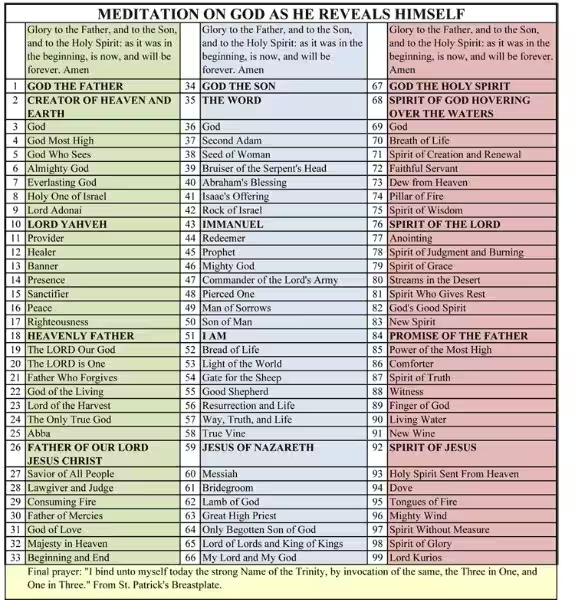
The Bible uses a rich tapestry of words to describe God. He is the Most High, Almighty, Great, Eternal, Everlasting, Father, Holy, Righteous, Majestic, King, Savior, Redeemer, and Judge, among many others. These attributes underscore His supreme power (omnipotence), His all-knowing nature (omniscience), His ever-present nature (omnipresence), His immortality, immutability, faithfulness, mercy, forgiveness, goodness, and justice. While some descriptions, such as "jealous" or "avenging," might initially seem unsettling, they are contextualized within His holiness and the upholding of justice.
How does Psalm 8 illustrate God's awesomeness?
Psalm 8 beautifully portrays God's awesomeness through two key lenses: His power and His love. It begins by emphasizing His supreme authority and selective use of power, primarily for protecting and avenging His followers. This is illustrated through biblical examples like Daniel in the lion's den. The psalm then shifts to the breathtaking order and beauty of the universe, questioning how such intricate celestial bodies could arise by chance. Crucially, it highlights that these wonders exist for humanity's benefit. Finally, the psalm culminates in God's profound love for humanity, making us stewards of His creation, even in the face of our failings. This love is ultimately demonstrated through the sacrifice of Jesus Christ (John 3:16).
How does God's awesomeness relate to His justice and mercy?
God's awesomeness is inextricably linked to both His unwavering justice and His boundless mercy. Passages from Deuteronomy emphasize His impartiality and integrity, His commitment to justice. Yet, this justice is tempered by His mercy and love, as seen in numerous instances where God forgives and shows compassion. The combination of these aspects – His perfect justice and His unfailing mercy – is a crucial element of His awe-inspiring nature. 1 John 1:9 perfectly encapsulates this: God is faithful and just to forgive sins.
What is the response to God's awesomeness?
Understanding God's awesomeness should inspire wonder, gratitude, joyful obedience, and a reverent fear. It should cultivate a deeper longing for a relationship with Him, acknowledging both His blessings and His judgment. Ultimately, recognizing His sovereignty should lead to praise, humble service, and a life dedicated to glorifying Him, the source and end of all things.