Worship of Baal Today: Is Modern Culture a New Canaan?
Worship of Baal Today: Is Modern Culture a New Canaan?
The worship of Baal today might seem like an anachronism, a relic of ancient Canaanite religion. Yet, a compelling argument suggests that many aspects of modern culture subtly mirror the practices and spirit of Baal worship, posing a significant spiritual challenge for contemporary individuals and communities. This isn't about literal sacrifices on altars; rather, it's about the underlying principles and priorities that shaped Baal worship then and, some argue, influence our society today.
The Parallels Between Ancient Baal Worship and Modern Culture
Ancient Baal worship was characterized by extravagant public displays, a focus on fertility and worldly success, and a demand for unquestioning conformity. The Old Testament frequently condemns Baal worship, highlighting its immorality and rejection of God's covenant. For example, 2 Kings 21:1-9 vividly depicts the reign of Manasseh, whose idolatry led to widespread societal degradation.
The parallels to contemporary culture are striking. Consider the scale and spectacle of many modern entertainment events – concerts, sporting events, theatrical productions. These often feature elements that echo the licentiousness associated with Baal worship. Think of the overt sexualization in much of popular media, from music videos to mainstream films. This constant exposure desensitizes individuals, normalizing behaviors that directly contradict biblical values. While not explicit worship of a deity, this pervasive display of sexuality mirrors the public and ritualistic nature of ancient Baal worship.
Furthermore, the relentless pursuit of worldly success and social acceptance—prominent themes in our culture—finds a parallel in the perceived benefits of Baal worship in ancient times. Those who embraced Baal often experienced material prosperity and social standing, mirroring the allure of celebrity culture and the relentless pressure to achieve in today's world. The pressure to conform, to adopt certain lifestyles and opinions to gain acceptance, resembles the social pressure faced by those who dared to question Baal worship in ancient Israel.
The Idolization of Celebrities and the Pursuit of Success
The veneration of celebrities and influencers in modern society bears a disconcerting resemblance to the reverence given to powerful figures in ancient Baal worship. We often prioritize the opinions and lifestyles of celebrities over biblical principles, placing faith in their endorsements and choices. This, in essence, is a form of idolatry – the worship of created things instead of the Creator. Psalm 101:1, 3 emphasizes the importance of choosing righteous conduct. Ignoring this principle and following secular trends instead is a direct parallel to prioritizing Baal over Yahweh.
The pursuit of worldly success, often presented as the ultimate goal in many spheres of life, also echoes the perceived rewards of Baal worship. The pressure to achieve career advancement, financial security, and social status can create an environment where spiritual values are sidelined. This mirrors the material incentives associated with Baal worship. This isn't to say that success is inherently sinful, but the relentless pursuit of success at the expense of one's faith and moral integrity echoes the dangerous allure of Baal worship.
The Modern Face of Child Sacrifice: Abortion
Perhaps the most jarring parallel between ancient Baal worship and modern society is the practice of child sacrifice. While the ancient ritual was horrifyingly literal, the modern equivalent could be argued to be abortion. The willingness to terminate a pregnancy for convenience, career advancement, or social acceptance represents a rejection of life in pursuit of worldly desires. This resonates with the ancient practices where children were sacrificed to appease Baal, highlighting a disturbing indifference to the value of human life.
The sheer scale of abortion globally is staggering. The callous disregard for the sanctity of life, justified under various socio-political arguments, mirrors the spiritual apathy that characterized the ancient Israelites during periods of Baal worship. This isn't a judgmental statement; it's a call for critical reflection on the values we prioritize. Are we sacrificing the vulnerable for our own convenience, echoing the ancient practices of Baal worship?
Confronting the Modern Baal: A Call to Action
The parallels between ancient Baal worship and modern culture are not meant to condemn or judge individuals. Instead, they serve as a wake-up call. We must critically examine our own lives and the cultural influences that shape our values and priorities. Are we prioritizing worldly success, social acceptance, and fleeting pleasures over our faith in God? Are we allowing the seductive allure of modern entertainment to distract us from the eternal truths of the Gospel?
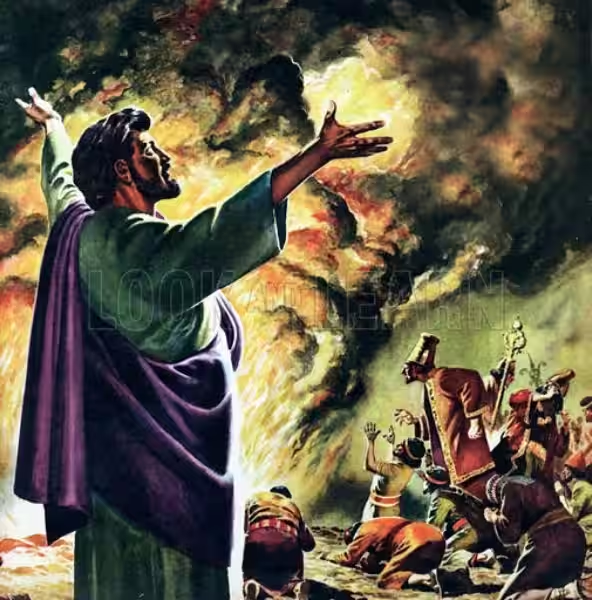
The worship of Baal today is not about literal temples and sacrifices but about the subtle ways idolatry can infiltrate our lives. It requires vigilance, discernment, and a commitment to living according to biblical principles. It calls for courage, much like Elijah's courage in confronting Ahab and Jezebel, to challenge the status quo and stand firm in our faith. The path to overcoming this modern form of idolatry is found in returning to a genuine relationship with God, grounded in prayer, scripture, and a community of believers. Only then can we truly break free from the seductive but ultimately destructive allure of the modern Baal.
Frequently Asked Questions: Modern Interpretations of Baal Worship
This FAQ section addresses concerns raised by various authors regarding parallels between ancient Baal worship and contemporary cultural and religious practices. It's important to note that these are interpretations and not universally accepted theological positions.
What is the core argument regarding "modern Baal worship"?
Several authors argue that aspects of modern society and even some within Christianity mirror the practices and values associated with ancient Baal worship. These parallels aren't about literal worship of a deity named Baal, but rather the identification of similar patterns of idolatry, valuing worldly success, sensual indulgence, and the rejection of certain biblical principles. This includes prioritizing social acceptance over adherence to religious teachings, celebrating worldly achievements over spiritual growth, and potentially condoning actions deemed morally objectionable by some religious interpretations.
What are some specific modern parallels to ancient Baal worship practices?
Different authors highlight various parallels. Some suggest that:
Public displays of sexuality in media: The pervasive sexualization of media (movies, TV, internet) mirrors the licentious public rituals associated with Baal.
Celebrity worship: The idolization of celebrities and the prioritization of their opinions and lifestyles over biblical values parallel the reverence shown to figures within ancient Baal worship.
Abortion: This is equated by some authors with the child sacrifice practiced in Baal worship, arguing both reject life in pursuit of worldly desires.
Sensual worship styles in some churches: Loud, worldly music, and elaborate stage productions are seen as parallels to the boisterous, sexually charged rituals of Baal worship.
Acceptance of LGBTQ+ lifestyles within the church: This is viewed by some as a rejection of specific biblical interpretations and a deviation from traditional religious teachings.
Climate change activism: The emphasis on climate change is seen by some as diverting attention from God's sovereignty over creation, mirroring Baal's supposed control over weather.
Social justice movements: Some interpret these movements as promoting division rather than focusing on spiritual unity, thus distracting from core religious tenets.
Women's ordination: Opposition to women's ordination is presented by some as a defense of traditional interpretations of biblical principles.
Church policies over biblical truth: Prioritizing church policies over biblical interpretations is seen as prioritizing human authority over divine guidance.
Is it accurate to label these modern practices as "Baal worship"?
The term "Baal worship" in this context is used metaphorically to highlight the perceived parallels in values and behaviors, not to suggest literal worship of the ancient Canaanite god. The authors use this analogy to draw attention to potential spiritual dangers and encourage critical reflection on modern values and practices. It is a provocative and potentially controversial analogy, and its validity is subject to interpretation and debate.
What is the suggested response to these concerns?
The authors generally advocate for a return to what they see as core biblical principles, critical examination of one's own values and cultural influences, and a renewed focus on spiritual growth and adherence to religious teachings, as interpreted by them. The specific actions proposed vary, ranging from personal repentance and a reevaluation of media consumption to calls for specific changes in church practices and societal norms. These calls for action should be considered within their respective theological frameworks.
What are the potential criticisms of this interpretation?
This interpretation is not universally accepted. Criticisms may include:
Oversimplification: Reducing complex modern issues to a simple analogy with ancient Baal worship can be seen as overly simplistic and potentially misleading.
Selective interpretation: Critics may argue that the authors selectively choose evidence to support their claims while ignoring counterarguments or alternative interpretations.
Lack of nuance: The analogy may fail to account for the diversity of views and practices within both modern society and various religious groups.
Potential for judgmentalism: The strong condemnation of certain practices can be seen as judgmental and exclusionary.
It's crucial to approach these interpretations with critical thinking, considering diverse perspectives, and engaging in respectful dialogue. This FAQ is not meant to endorse any specific theological viewpoint but to provide an overview of the arguments presented.