Was the Pool of Bethesda Pagan? Unpacking the Historical and Theological Implications
Was the Pool of Bethesda Pagan? Unpacking the Historical and Theological Implications
The Gospel of John's account of Jesus healing a paralytic at the Pool of Bethesda has captivated theologians and historians for centuries. The narrative, however, is shrouded in mystery, prompting questions about its historical accuracy and the pool's possible origins. Was the Pool of Bethesda, a site of miraculous healing in the biblical account, actually a pagan site? Let's explore this intriguing possibility.
The Archaeological Evidence and Initial Interpretations
The initial skepticism surrounding the Pool of Bethesda stemmed from a lack of archaeological evidence corroborating the biblical description. The Gospel speaks of a pool with healing properties, a feature seemingly absent from Jerusalem's archaeological landscape. This lack of evidence fueled interpretations that viewed the account as either allegorical or geographically inaccurate. The narrative's veracity seemed questionable.
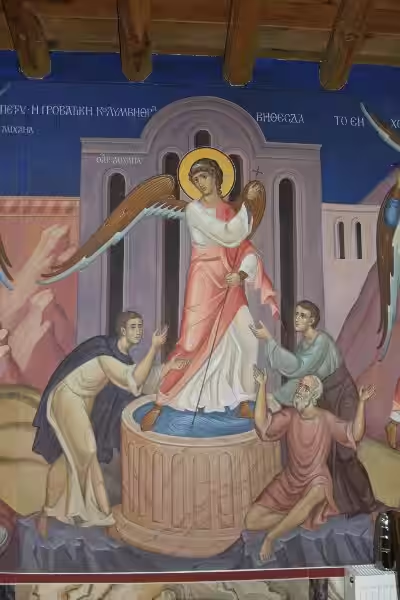
However, the discovery of a large pool with five colonnades near the Sheep Gate in Jerusalem dramatically shifted the perspective. This discovery, remarkably matching John's geographical description, significantly bolstered the historical credibility of the Gospel account. The archaeological evidence now vindicated the accuracy of the biblical location, forcing a reevaluation of previous interpretations that dismissed the story as purely symbolic.
A Novel Interpretation: Bethesda as a Greco-Roman Asclepion
This article proposes a novel interpretation: the Pool of Bethesda was not solely a Jewish mikvah (ritual bath), but also, or perhaps primarily, a healing center dedicated to the Greco-Roman god Asclepius. This theory finds support in several key areas.
Firstly, Asclepeions, healing centers dedicated to Asclepius, were widespread throughout the Roman Empire. Jerusalem, during Jesus' time, experienced significant Hellenistic influence. The presence of Roman structures – a theatre, sports complex, baths, and the Antonia Fortress – all point to a strong Hellenistic presence in the city. Even the Qumran community's commentary on Nahum 2:12b, interpreting Jerusalem as a dwelling for Gentile wickedness, alludes to this Hellenization, hinting at the integration of pagan practices into the city’s fabric.
Secondly, comparing the Bethesda healing with the healing of the blind man at the Pool of Siloam offers further insight. Jesus instructs the blind man to wash at Siloam, a site intrinsically linked to the Jerusalem Temple. However, no such instruction is given to the man healed at Bethesda. This discrepancy suggests that Bethesda held a distinct, possibly pagan, identity separate from the Temple's religious sphere.
A crucial element supporting the Asclepion theory is the absence of John 5:3b-4 (the passage about an angel stirring the pool's waters) in the earliest manuscripts. This passage, likely added by a later scribe, may represent a misinterpretation of the original narrative. The scribe, attempting to clarify the healing process within a Jewish framework, may have mistakenly introduced a detail consistent with Jewish religious practices, obscuring the pool's original, potentially pagan, context. The absence of this detail in early manuscripts lends credence to the possibility of a pre-existing pagan association.
The Paralytic’s Desperation and Jesus’s Transcendent Healing
The narrative highlights the desperation of the thirty-eight-year paralytic, seeking healing as a last resort within a potentially pagan context. His inability to enter the pool during the "stirring of the waters" – possibly the opening of connecting pipes between water reservoirs – emphasizes his helplessness. He was dependent on a system, potentially pagan in origin, for his healing.
Jesus's method of healing is also significant. He simply commands the man to walk, echoing the creation narrative where God brings order from chaos through His word. This act of healing within a potentially pagan Asclepion underscores Jesus' power to transcend religious boundaries and bring healing directly through divine authority, demonstrating his power over even potentially pagan influences. The subsequent encounter with the healed man in the Temple, where Jesus warns him against sin, further highlights the contrast between the healing's pagan context and the moral implications within a Jewish framework. The healing transcends the location and points directly to the power of Jesus.
Theological Implications: Faith, Syncretism, and Divine Intervention
The question of whether the Pool of Bethesda was pagan raises crucial theological questions. It challenges traditional interpretations and forces a reconsideration of the relationship between faith, miraculous healing, and the potential for syncretism in ancient religious practices.
Some argue that the pool's healing, if real, may have been a manifestation of something other than God's direct intervention, suggesting a blending of religious practices. Others maintain that the miraculous healing was a direct act of God, regardless of the pool's origins. The question remains: if God directly intervened at the pool, why would people seek healing there instead of relying solely on Jesus? This leads to interpretations that view the pool's healing as a foreshadowing of Jesus's ministry – a prefiguration of the ultimate healing offered through faith in Christ.
The lack of a single, universally accepted answer highlights the complexities of biblical interpretation and the continued debate surrounding the Pool of Bethesda's true nature. Was it a purely Jewish mikveh, a Greco-Roman Asclepion, or a complex mixture of both? The answer remains elusive, but exploring this possibility greatly enriches our understanding of the historical and theological context of the Gospel narrative. The ultimate healing power, however, remains firmly attributed to Jesus Christ, regardless of the context in which it occurred.
Frequently Asked Questions: Was the Pool of Bethesda Pagan?
Was the Pool of Bethesda a purely Jewish mikvah (ritual bath)?
The traditional view identifies the Pool of Bethesda as a Jewish mikvah. However, a compelling argument suggests it may have also served as a healing center dedicated to the Greco-Roman god Asclepius. This theory is supported by the widespread presence of Asclepeions throughout the Roman Empire, the significant Hellenistic influence in Jerusalem during Jesus' time, and the lack of explicit instructions from Jesus to wash in the pool, unlike the healing at Siloam, a site directly associated with the Jewish Temple. The presence of Roman structures in Jerusalem further supports this Hellenistic context.
What evidence supports the theory that the Pool of Bethesda was also an Asclepion?
The presence of numerous Asclepeions throughout the Roman Empire establishes a precedent for such healing centers. Jerusalem's Hellenistic context, evidenced by Roman structures like a theatre and sports complex, makes the existence of an Asclepion plausible. The absence of the "angel stirring the waters" passage (John 5:3b-4) in early manuscripts suggests a later addition that attempts to explain the healing within a purely Jewish framework, potentially obscuring the original, pagan context. The difference between Jesus' instructions at Bethesda and Siloam also supports this argument. At Siloam (associated with the Temple), he instructs the healed man to wash, but at Bethesda, no such instruction is given.
If Bethesda was an Asclepion, how does that affect the interpretation of Jesus's healing?
The argument suggests that Jesus's healing at Bethesda, performed within a pagan context by simply commanding the man to walk, underscores his ability to transcend religious boundaries and bring healing directly through divine authority. This act highlights the power of Jesus to heal irrespective of the religious setting, contrasting his method with the pagan rituals practiced at the Asclepion. The subsequent encounter with the healed man in the Temple further reinforces the contrast between the pagan context of the healing and the moral implications within a Jewish framework.
What is the significance of the missing passage about the angel stirring the waters (John 5:3b-4)?
The absence of this passage in early manuscripts is crucial. It suggests that the description of an angel stirring the waters is a later addition, possibly by a scribe unfamiliar with the Greco-Roman healing practices associated with Asclepius. This addition might reflect an attempt to reinterpret the original narrative within a purely Jewish context, replacing the pagan understanding with a more familiar Jewish one.
How does the healing at Bethesda compare to the healing at Siloam?
The contrast between the healings at Bethesda and Siloam is significant. Jesus instructs the man healed at Siloam (associated with the Jewish Temple) to wash, but gives no such instruction to the man healed at Bethesda. This difference suggests that Bethesda held a distinct identity, possibly as a pagan healing center. The healing at Siloam is clearly connected to Jewish religious practice, while Bethesda's association remains ambiguous, leaning towards the possibility of pagan influence.
Does this theory deny the miraculous nature of Jesus' healing?
No. This theory doesn't deny the miraculous nature of Jesus' healing. Instead, it proposes a reinterpretation of the context in which the miracle occurred. The argument suggests that Jesus' power transcends religious boundaries, demonstrating his authority to heal even within a pagan setting. The miracle remains powerful; its location is re-evaluated.
What are the potential theological implications of this interpretation?
This interpretation raises several theological considerations, including the nature of faith, the relationship between Jewish and pagan practices in first-century Jerusalem, and Jesus's ability to intervene regardless of religious context. It challenges traditional interpretations, potentially fostering a deeper understanding of the interplay between religious traditions and miraculous events. The interpretation also leads to reflections on the nature of healing, both physical and spiritual, and questions the reliance on ritualistic practices compared to faith in divine intervention.